
Quick Answer
Yes—but the correct cleaning method depends on the bottle material and component.
According to Owala’s official care guidance:
- Stainless steel Owala bottles: The lid is top-rack dishwasher safe, and the straw can go in the silverware basket. The cup body is technically dishwasher safe, but Owala strongly recommends hand washing it to preserve the exterior finish.
- Tritan plastic Owala bottles: The cup, lid and other components are top-rack dishwasher safe.
For a stainless steel Owala bottle, the safest routine is:
Hand-wash the cup body, place the lid on the top rack, and put the straw in the silverware basket.
Always follow the care instructions for your exact model because materials, coatings and components may differ.
Owala Dishwasher-Safety Guide
| Owala Component | Dishwasher Guidance | Recommended Cleaning |
|---|---|---|
| Stainless steel cup | Technically dishwasher safe | Hand-wash to protect the finish |
| Lid | Dishwasher safe | Top rack |
| Straw | Dishwasher safe | Silverware basket |
| Tritan plastic cup | Dishwasher safe | Top rack |
| Tritan lid and parts | Dishwasher safe | Top rack |
| Removable gaskets | Clean separately | Follow the product care guide |
Remove detachable gaskets where possible so water can reach the sealing grooves. Allow every component to dry completely before reassembling the bottle.
Why Does Owala Recommend Hand-Washing the Stainless Steel Cup?
The stainless steel itself is not usually the main concern. The exterior coating, logo and complete bottle construction determine whether repeated dishwasher cleaning is appropriate.
A dishwasher exposes the bottle to:
- Heat
- Detergent
- Pressurized water
- Repeated wet-and-dry cycles
- Contact with racks and other dishes
These conditions may gradually affect a powder coating, painted finish or printed logo. The bottle may remain functional while its color, gloss or decoration changes.
Hand washing with warm water, mild detergent and a soft sponge reduces these risks. Avoid bleach, abrasive cleaners and rough scouring pads unless the manufacturer specifically approves them.
Does “Dishwasher Safe” Apply to the Entire Bottle?
Not necessarily.
A reusable bottle may contain:
- Stainless steel body
- Powder-coated or painted finish
- Printed or engraved logo
- Plastic lid
- Silicone gasket
- Straw
- Handle or carry loop
Each component can react differently to heat, detergent and water pressure. A dishwasher-safe lid does not automatically mean that the coated cup body should receive the same care.
For brands and B2B buyers, dishwasher resistance should be evaluated on the complete finished product, not assumed from the stainless steel material alone.
TOPNOVO’s Three-Cycle Dishwasher Test
At TOPNOVO, dishwasher resistance can be evaluated on the finished cup or bottle before bulk production.
For projects requiring dishwasher resistance, samples using the intended coating, logo and components are placed through three consecutive dishwasher cycles.
After testing, our QC team checks:
- Coating condition
No obvious peeling, blistering, cracking or unacceptable discoloration. - Logo condition
The logo remains legible without obvious fading, lifting or loss of clarity. - Surface appearance
No unacceptable scratches, staining or major change in gloss. - Component condition
Plastic parts, silicone gaskets and other components show no obvious warping, loosening or damage. - Leak resistance
The product is reassembled and checked for leakage. - Normal function
The lid opens, closes and seals as intended after washing.
Learn more about TOPNOVO’s complete water bottle quality-control process.
Test Record
| Test Item | Recorded Information |
|---|---|
| Test object | Powder-coated stainless steel cups |
| Coating colors | Black and white |
| Number of cycles | Three consecutive dishwasher cycles |
| Test scope | Complete coated cup samples |
| Inspection points | Coating, color, surface and visible deformation |
| Visible result | No obvious large-area peeling, blistering or major discoloration |
This is an initial in-house evaluation. It should not be interpreted as evidence of unlimited dishwasher life.
If a brand wants to advertise a claim such as “tested for 50 dishwasher cycles,” the required number of cycles, program, detergent, temperature, loading method and acceptance criteria should be agreed and validated separately.
Real Dishwasher Testing at TOPNOVO
The following photographs document an actual dishwasher test of TOPNOVO powder-coated stainless steel cups.
1. Dishwasher Used for Testing
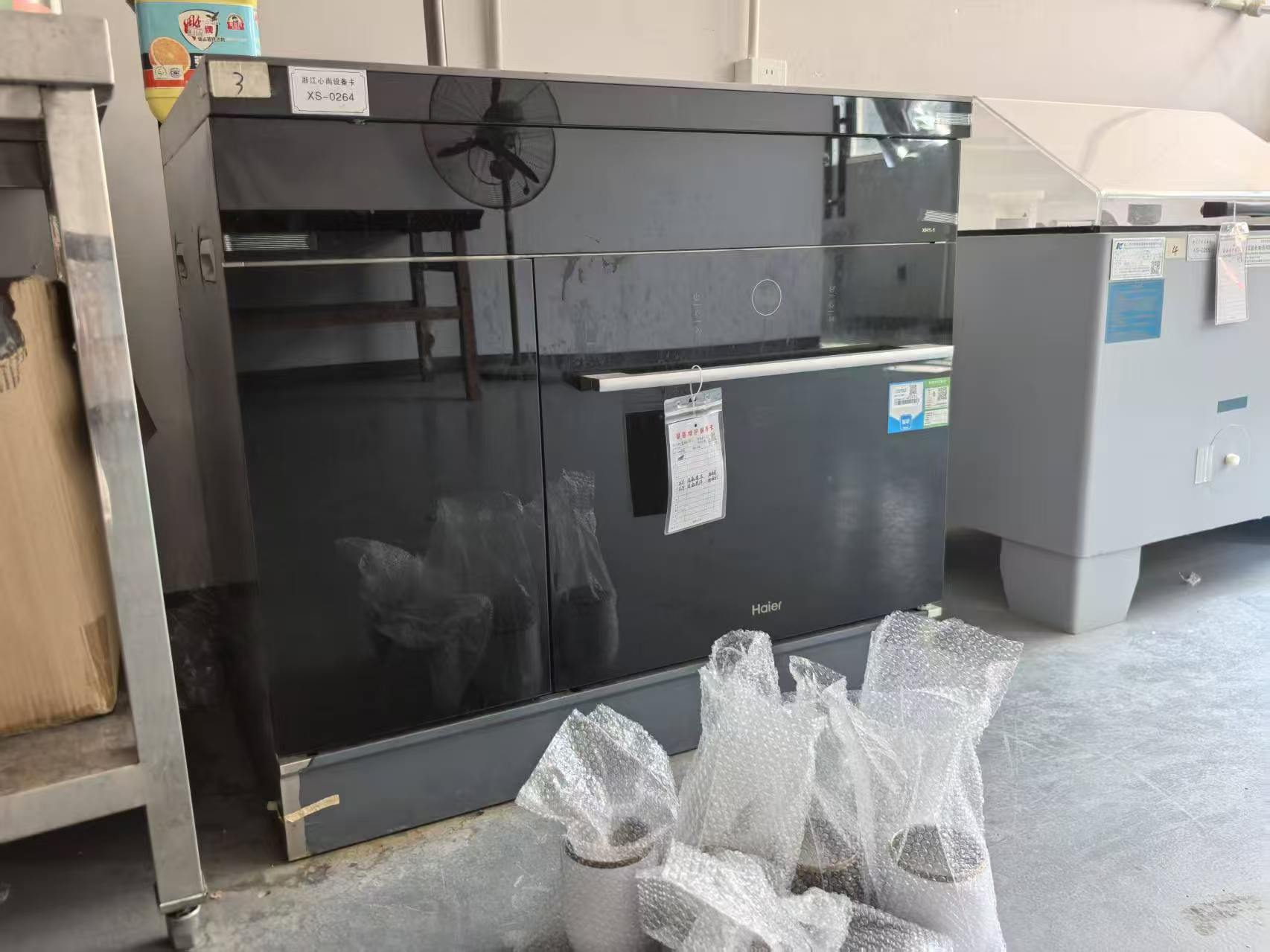
TOPNOVO’s in-house dishwasher used to evaluate finished drinkware samples.
2. Powder-Coated Cups Loaded Into the Dishwasher
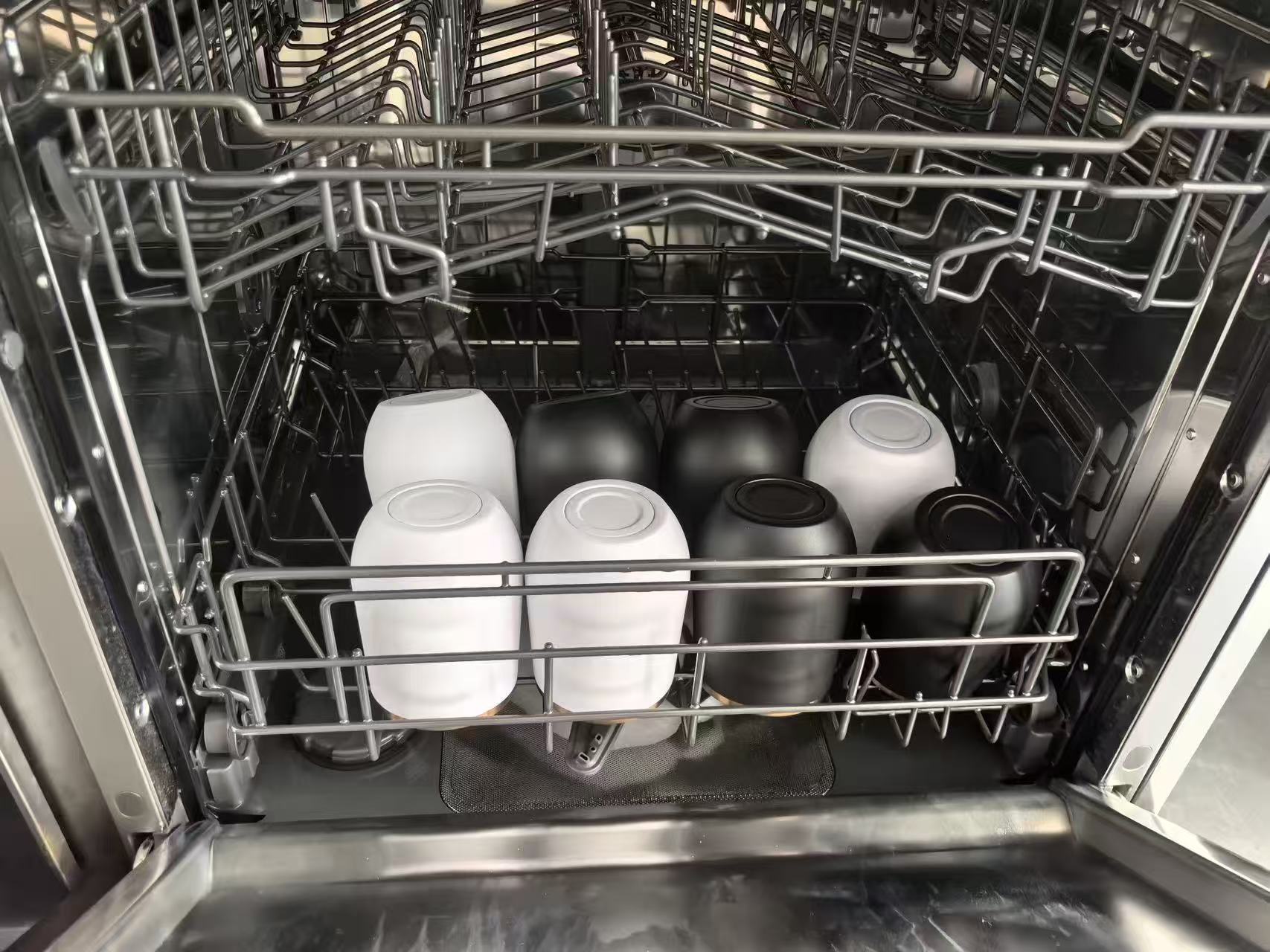
Black and white powder-coated stainless steel cups positioned inside the dishwasher.
3. Cups During the Dishwasher Test
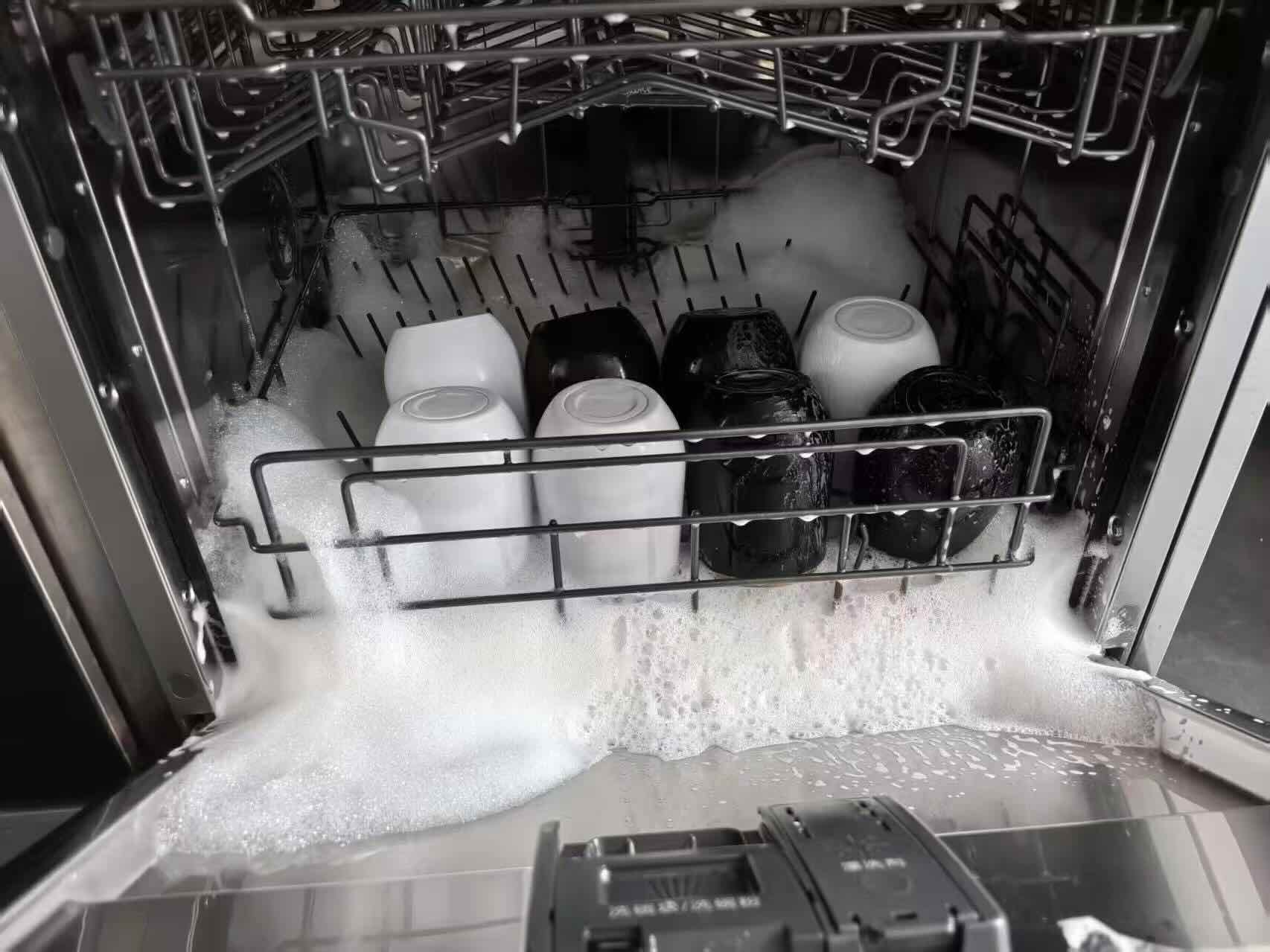
The coated cups during a dishwasher cycle, exposed to water, detergent and the selected washing program.
4. Cups After Three Dishwasher Cycles

Representative black and white powder-coated cups inspected after three consecutive dishwasher cycles.
No obvious large-area peeling, blistering or major discoloration is visible in the photographed samples after the three-cycle evaluation.
Final approval should compare the tested samples with the original approved reference under consistent lighting.
Can Powder-Coated Cups Pass Dishwasher Testing?
Yes. Properly prepared and cured powder coatings can pass dishwasher testing.
TOPNOVO’s qualified powder-coated stainless steel cup samples can pass our initial three-cycle dishwasher evaluation when they are produced according to the approved specification.
Performance depends on:
- Surface preparation
- Powder formulation
- Coating thickness
- Curing temperature and time
- Product geometry
- Logo method
- Dishwasher program and detergent
- Sample placement
“Powder coated” describes a finishing category—not one universal quality level. The coating, logo and complete finished product should be tested together.
Why Are Some Lower-Cost Bottles Better Hand-Washed?
Many lower-cost bottles are best washed by hand when their coating, ink, curing process or plastic components have not been verified for dishwasher use.
Repeated dishwasher cleaning may cause:
- Coating discoloration
- Peeling or blistering
- Faded printed logos
- Surface scratches
- Warped plastic parts
- Loose or distorted gaskets
- Reduced lid performance
A low price does not automatically mean a bottle will fail. The key question is whether the finished product has been tested against a defined standard.
If a supplier cannot provide care instructions or test evidence, hand washing is the safer recommendation.
What Should B2B Buyers Confirm Before Making a Dishwasher-Safe Claim?
Before printing “dishwasher safe” on packaging or product listings, confirm:
- Which parts are dishwasher safe
- Whether the body, lid and straw require different instructions
- Top-rack or any-rack placement
- Dishwasher program and detergent
- Required number of test cycles
- Coating acceptance criteria
- Logo durability requirements
- Leak and function checks after washing
- Whether hand washing is still recommended to preserve appearance
The customer-facing care statement must match the actual product tested.
Frequently Asked Questions
Can Owala FreeSip Bottles Go in the Dishwasher?
The lid is top-rack dishwasher safe, and the straw can go in the silverware basket. Owala says the stainless steel cup is technically dishwasher safe but recommends hand washing it to preserve the finish.
Are Plastic Owala Bottles Dishwasher Safe?
Owala states that its Eastman Tritan plastic bottles and components are top-rack dishwasher safe. Check the instructions for the exact model.
Can Powder Coating Survive a Dishwasher?
A properly prepared and cured powder coating can pass dishwasher testing. The finished product should still be tested because powder formulations and production quality vary.
Does Dishwasher Testing Include the Logo?
It should. Screen printing, UV printing and other decoration methods may react differently to detergent and heat. Testing should use the actual production coating and logo.
Is Hand Washing Better for Stainless Steel Bottles?
Hand washing is generally the safest option for preserving powder coating, printed logos and decorative finishes, especially when the bottle does not have a verified dishwasher claim.
Final Answer
Owala lids and straws can generally be cleaned in the dishwasher. Owala recommends hand washing its stainless steel cup bodies to preserve their finish, while Tritan plastic models can be placed on the top rack.
TOPNOVO’s qualified powder-coated stainless steel cups can pass our initial three-cycle dishwasher evaluation when produced according to the approved specification. We evaluate the complete finished product rather than judging dishwasher resistance from the base material alone.
For custom projects, buyers should define the required dishwasher cycles, care claim and acceptance criteria before approving the sample.
Explore Custom Stainless Steel Water Bottles →
16:36