
Global Buyer Guide for Custom Insulated Water Bottle Manufacturing
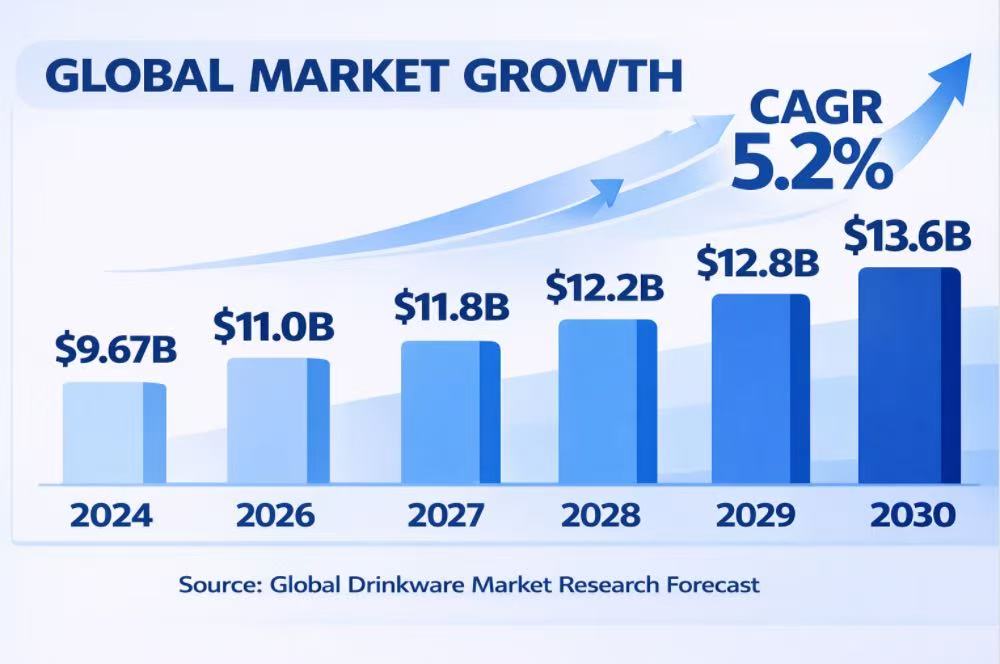
As global demand for premium reusable drinkware continues to grow, choosing the right manufacturing partner has become a strategic decision for brands and distributors. Beyond pricing, buyers must evaluate effective communication, production capabilities, product innovation, material safety, quality control systems, and supply chain reliability. This buyer guide provides a practical framework to help global companies source insulated water bottles with confidence and build strong, long-term manufacturing partnerships.
Market Drivers Behind the Global Insulated Water Bottle Industry
The global insulated water bottle market has entered a period of rapid growth, driven by sustainability initiatives, health-conscious lifestyles, and the rising influence of lifestyle branding.
Governments, environmental organizations, and major retail chains are actively encouraging alternatives to single-use plastic bottles, accelerating the adoption of reusable stainless steel water bottles. As sustainability becomes a core purchasing factor, many brands now prioritize BPA-free, eco-friendly drinkware as part of their long-term product strategy.
At the same time, growing awareness of hydration and wellness has expanded the use of insulated bottles across everyday scenarios, including outdoor recreation, fitness, commuting, travel, and campus life. High-performance drinkware capable of keeping beverages cold for up to 24 hours or hot for 12 hours has become an essential lifestyle product.
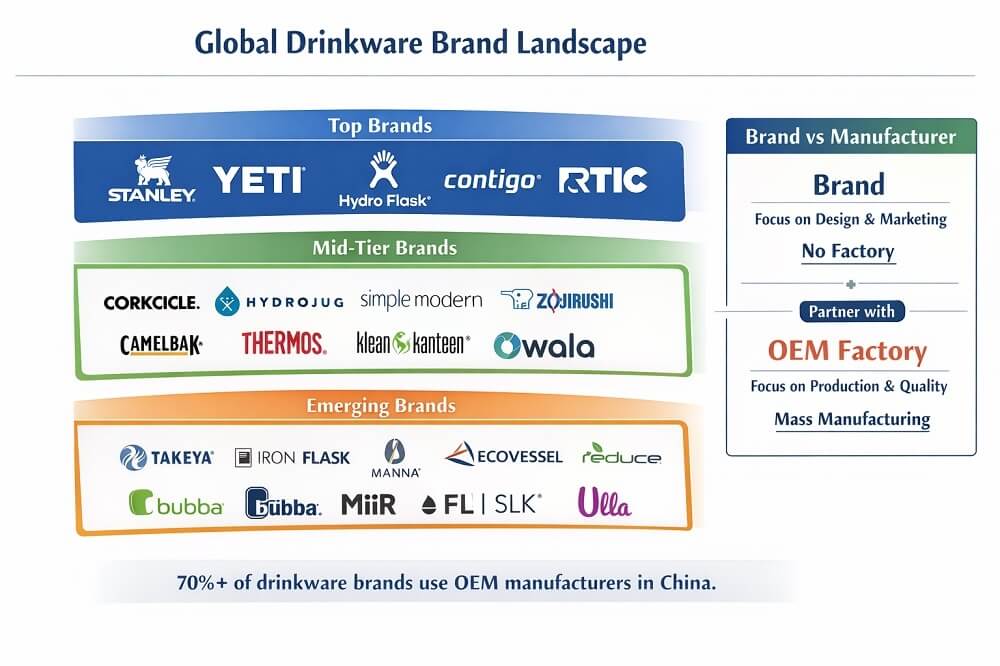
Social media platforms such as Instagram, TikTok, and YouTube have further transformed drinkware into a lifestyle and branding category, helping global brands like Owala, YETI, Stanley, and Hydro Flask achieve rapid market growth.
From a sourcing perspective, Asia dominates insulated drinkware manufacturing, with China serving as the global production hub due to its mature supply chain, advanced vacuum insulation technology, and highly scalable manufacturing capacity.
Understanding Vacuum Insulated Water Bottle Technology
The performance of premium stainless steel water bottles is driven by double-wall vacuum insulation technology, the industry standard in modern drinkware manufacturing.
The inner wall of the bottle is typically made from food-grade 304 stainless steel, ensuring material safety, corrosion resistance, and preventing flavor transfer. For higher-end products or children’s drinkware, 316 stainless steel is often used to provide enhanced durability and improved material safety.
The outer wall provides structural strength and supports various surface finishes, such as powder coating or painted textures, which enhance both durability and product aesthetics.
Between the inner and outer walls lies a vacuum insulation chamber that minimizes heat transfer. In premium models, copper plating technology is often added to further enhance thermal performance.
With these technologies, high-quality insulated bottles can typically keep beverages cold for up to 24 hours and hot for up to 12 hours, meeting global consumer expectations for premium drinkware performance.
Materials Used in High-Quality Insulated Water Bottles
Material quality plays a crucial role in product safety and durability.
Drinkware Material Comparison Chart
Choosing the right materials is essential when developing high-quality insulated drinkware. The following comparison helps buyers understand the most commonly used materials in stainless steel water bottle manufacturing.
| Material | Typical Application | Key Advantages | Market Position |
|---|---|---|---|
| 304 Stainless Steel (18/8 Stainless Steel) | Inner wall of insulated water bottles and tumblers | Excellent corrosion resistance, food-safe, durable, prevents metallic taste | Industry standard material for most insulated drinkware |
| 316 Stainless Steel | Premium bottles, children’s drinkware, high-end products | Higher corrosion resistance, stronger durability, improved chemical resistance | Premium material used for high-end or specialty drinkware |
| Tritan Plastic | Bottle lids, straw lids, flip lids | BPA-free, impact resistant, transparent, durable | Widely used in premium lid systems |
| Food-Grade Silicone | Sealing rings and gaskets | Flexible, leak-proof, heat resistant, long service life | Essential component for leak-proof performance |
304 vs 316 Stainless Steel Comparison
When sourcing premium insulated bottles, many buyers compare 304 stainless steel vs 316 stainless steel. Both are food-grade materials, but they differ in corrosion resistance and cost.
| Feature | 304 Stainless Steel | 316 Stainless Steel |
|---|---|---|
| Industry Name | 18/8 Stainless Steel | Marine-grade Stainless Steel |
| Corrosion Resistance | Very good | Excellent |
| Durability | High | Very high |
| Cost | Standard industry cost | Higher cost |
| Typical Use | Most insulated bottles and tumblers | Premium drinkware, children’s bottles, marine environments |
| Market Position | Global standard drinkware material | High-end product upgrade |
Summary:
For most drinkware products, 304 stainless steel offers the best balance of cost and performance, while 316 stainless steel is typically used for premium products that require higher corrosion resistance.
Global Material Safety Standards for Drinkware
Professional drinkware manufacturers should comply with international material safety regulations to ensure products meet global market requirements.
| Standard | Region | Purpose |
|---|---|---|
| FDA | United States | Ensures materials are safe for food contact |
| LFGB | Europe / Germany | Strict food safety testing standard |
| BPA-Free Testing | Global | Confirms materials contain no BPA chemicals |
| REACH Compliance | European Union | Regulates chemical safety in consumer products |
These certifications help ensure that stainless steel water bottles and insulated tumblers meet international safety and compliance requirements, making them suitable for global retail and e-commerce markets.
Popular Stainless Steel Water Bottle and Tumbler Types
Different global markets favor different drinkware styles and capacities. Understanding these trends helps buyers build a product lineup that matches consumer demand and retail channels.
Some of the most popular stainless steel drinkware categories include:
- 40oz tumblers with handles (popularized by Stanley-style tumblers)
- 32oz insulated water bottles similar to Owala or Hydro Flask designs
- 20oz vacuum insulated tumblers, commonly associated with YETI-style products
- 40oz large-capacity tumblers with handles, widely used for sports and daily hydration
- Simple stainless steel water bottles and tumblers for everyday use
- Insulated coffee mugs, inspired by Thermos-style drinkware
These product formats dominate both retail and e-commerce markets, particularly on platforms such as Amazon and Shopify.
Customization Options for Private Label Water Bottles
Professional drinkware manufacturers offer OEM and ODM customization to help brands develop distinctive products with custom logos, finishes, structures, and packaging.
Strategic Insight for Buyers
Strong customization capabilities help brands accelerate product development, strengthen differentiation, and support scalable private label growth.
How to Choose the Right Insulated Water Bottle Manufacturer
Selecting the right manufacturing partner is critical for long-term business success. Global buyers should evaluate suppliers based on several key factors.
Effective Communication
Clear and responsive communication ensures smooth project management and efficient problem-solving.
Manufacturing Experience
Experienced factories understand international product standards and global market trends.
Production Capacity
Reliable manufacturers must be able to support stable production and growing order volumes.
Research and Development
Strong R&D teams help develop innovative designs and improve product performance.
Quality Control System
A structured quality control process ensures consistent product quality from raw materials to final shipment.
Certifications
Buyers should verify certifications such as FDA, LFGB, BSCI, and ISO, which demonstrate compliance with international safety and manufacturing standards
Quality Control in Insulated Water Bottle Production
Quality control is a critical part of insulated drinkware manufacturing. Professional manufacturers typically follow a three-stage inspection system to ensure consistent product quality.
Incoming Quality Control (IQC)
Raw materials are carefully inspected before production begins to ensure they meet required standards.
In-Process Quality Control (IPQC)
Products are inspected during manufacturing to detect and correct defects at an early stage.
Final Quality Control (FQC)
Finished products undergo comprehensive testing before shipment.
Common tests include vacuum insulation testing, leak-proof testing, temperature retention testing, powder coating adhesion testing, and drop testing, ensuring durability, safety, and reliable performance for global markets.
Understanding Insulated Water Bottle Cost Structure
The cost of insulated water bottles is influenced by several key factors. Understanding these elements helps buyers plan budgets and optimize sourcing strategies.
Raw Material Costs
Prices of stainless steel fluctuate with global metal markets and directly impact production costs.
Mold Development
Custom bottle designs require tooling investment for mold development.
Surface Finishing
Advanced coating processes such as powder coating or gradient finishes can increase manufacturing costs.
Packaging
Customized retail packaging or gift boxes add additional production expenses.
Order Quantity
Larger order volumes typically reduce the unit cost due to economies of scale.
Understanding these factors allows buyers to balance cost, customization, and product quality when sourcing insulated drinkware.
Typical Order Process for Custom Water Bottles
The sourcing process for custom insulated water bottles typically follows six key steps:
- Product Inquiry
- Quotation Confirmation
- Sample Development
- Sample Approval
- Mass Production
- Inspection and Shipment
Working with an experienced insulated water bottle manufacturer helps ensure a smooth, efficient, and reliable ordering process from initial inquiry to final delivery.
Global Shipping and Logistics
Due to their size and weight, insulated water bottles are typically shipped by sea freight for bulk orders, offering the most economical transportation solution.
Common shipping options include:
Sea Freight – The most cost-effective method for large-volume shipments.
Air Freight – Faster delivery but significantly higher transportation costs.
Express Shipping – Commonly used for sample shipments or urgent small orders.
Buyers should also understand key international trade terms such as FOB, CIF, and DDP, which define responsibilities for transportation, insurance, customs clearance, and import duties. A clear understanding of these terms helps ensure efficient logistics planning and smooth global trade operations.
Risk Control in International Sourcing
Global sourcing requires effective risk management strategies to protect product innovation and ensure supply chain stability.
Recommended practices include:
NDA Agreements – Protect confidential product designs and intellectual property.
Patent Protection – Help prevent product imitation and market copycats.
Production Monitoring – Maintain visibility and control throughout the manufacturing process.
Supplier Diversification – Reduce supply chain risks by avoiding over-reliance on a single supplier.
Why Global Buyers Choose Topnovo
At Topnovo, we specialize in manufacturing high-quality insulated water bottles and delivering custom drinkware solutions for global brands.
Our mission is simple:
Reduce Cost · Improve Efficiency · Lower Risk
Experienced Drinkware Manufacturer
With years of experience in stainless steel drinkware manufacturing, Topnovo supports brands, distributors, and retailers across global markets.
Professional Design Team
Our design team develops 20–26 new drinkware products every year, helping clients stay ahead of market trends. Over 80% of our new product designs attract new global customers.
Patented Product Designs
Topnovo currently holds over 26 design patents, helping clients protect product differentiation and avoid price competition.
Strict Quality Control
We operate a structured quality management system with 16 full-time QC inspectors. Each product undergoes multiple performance tests, including three temperature retention tests, ensuring consistent product quality.
Long-Term Partnerships
Many of our clients have worked with us for more than six years, demonstrating our reliability as a trusted long-term manufacturing partner.
Conclusion
The insulated water bottle market offers strong opportunities for brands, retailers, and distributors worldwide. However, successful sourcing requires careful planning, reliable suppliers, and a trusted manufacturing partner.
By understanding insulation technology, materials, customization options, quality control systems, and global logistics, buyers can effectively reduce sourcing risks and improve procurement efficiency.
Partnering with an experienced manufacturer like Topnovo enables companies to develop competitive drinkware products while building stable, long-term supply chain partnerships