
Starting a coffee mug business requires more than choosing a mug, adding a logo and listing it online.
A commercially viable product must connect five elements:
Target customer + product differentiation + landed cost + sales channel + reliable supply
For brands, Amazon sellers, retailers and wholesalers, mistakes in any of these areas can result in weak margins, excess inventory or customer complaints.
Quick Answer: How Do You Start a Coffee Mug Business?
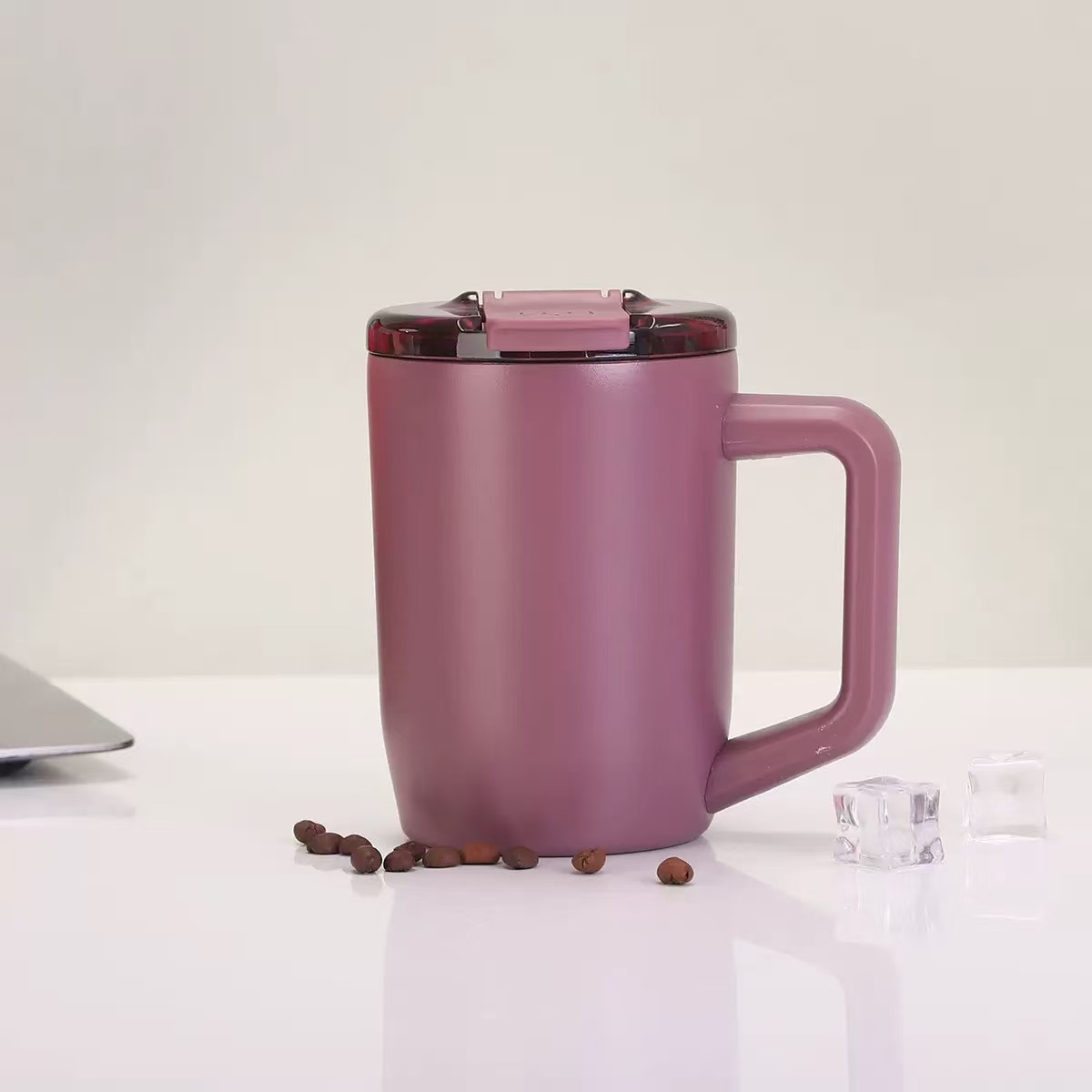
To start a coffee mug business in 2026:
- Define your target customer and sales channel.
- Research competing products and price ranges.
- Select one to three focused mug designs.
- calculate your complete landed cost and contribution margin.
- Check your brand name and intellectual-property risks.
- Choose between an existing product and new product development.
- Find a suitable coffee mug manufacturer.
- Approve product and packaging samples.
- Place a controlled first order and inspect it before shipment.
- Launch, collect real market data and scale proven products.
A focused launch is generally safer than introducing a large collection before you understand which products, capacities, colors and prices customers prefer.
Is a Coffee Mug Business Still Worth Starting in 2026?
Yes, a coffee mug business can still be commercially viable, but the opportunity is not simply to sell another generic mug.
Coffee mugs serve several markets:
- Retail and e-commerce
- Coffee shops
- Lifestyle brands
- Corporate gifts
- Promotional programs
- Private-label collections
- Wholesale and distribution
A mug business is more likely to work when the product solves a defined need and leaves enough margin after manufacturing, freight, fulfillment, platform fees, advertising and returns.
Stainless steel coffee mugs can be differentiated through:
Capacity · lid · handle · insulation · color · finish · logo · packaging
Instead of asking, “Which coffee mug is popular?” ask:
Which customer need can our coffee mug serve better or more clearly?
Define Your Target Customer
Your customer should influence the product before you select colors or create a logo.
| Target customer | Product priorities |
|---|---|
| Lifestyle consumers | Color, finish, design and brand identity |
| Commuters | Lid function, portability and insulation |
| Office users | Drinking comfort, stability and easy cleaning |
| Coffee shops | Brand visibility and customer experience |
| Corporate buyers | Logo, packaging, delivery and bulk pricing |
| Retailers | Shelf appeal, barcodes and repeat supply |
| Wholesalers | Landed cost, multi-SKU supply and consistency |
A mug developed for a lifestyle brand may need premium finishes and retail packaging. A corporate gift mug may prioritize logo visibility, delivery time and cost control.
Write a simple positioning statement:
We sell a
for [target customer] who needs [main benefit], differentiated by [feature or brand proposition].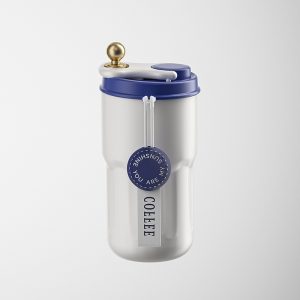
Mug
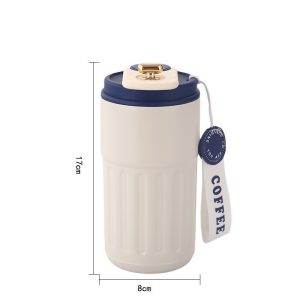
If this sentence is unclear, the product specification will probably be unclear too.
Choose the Right Coffee Mug Type
Different mug formats serve different use cases.
| Product type | Best suited to | Main buying consideration |
|---|---|---|
| Classic handled mug | Coffee brands and corporate gifts | Comfort and branding area |
| Insulated coffee mug | Office and lifestyle use | Thermal performance |
| Travel mug | Commuters and e-commerce | Portability and lid |
| Leak-resistant mug | Travel and office use | Defined sealing performance |
| Coffee tumbler | Retail and Amazon | Capacity and lifestyle appeal |
| Mug gift set | Retail and corporate programs | Packaging and presentation |
For a first launch, one to three focused products are usually easier to manage than ten or twenty SKUs.
Every additional model, color and package can increase:
- MOQ exposure
- Inventory investment
- Forecasting difficulty
- Photography and listing costs
- Packaging complexity
- Reorder risk
Explore TOPNOVO’s wholesale stainless steel coffee mugs and tumblers to compare possible product formats.
Research Demand and Competition
Before requesting factory quotations, review products already serving your target customer.
Record:
- Product type and capacity
- Selling price
- Lid style
- Materials
- Colors and finishes
- Review themes
- Packaging
- Main advertised benefit
- Common complaints
- Areas where products appear similar
Do not treat the number of reviews as proof that a new product will sell. Reviews describe past performance and may reflect years of advertising, inventory and brand recognition.
Look for a specific market gap, such as:
- A more portable capacity
- Easier cleaning
- Better handle ergonomics
- A lid designed for a defined use
- A distinctive finish
- Gift-ready packaging
- A coordinated color program
- A product designed for a specific profession or activity
Before investing in packaging and inventory, search for conflicting brand names and trademarks. US sellers can begin with the USPTO trademark search system, but a database search is not a substitute for professional legal advice when the risk is material.
Calculate Landed Cost and Contribution Margin
Do not calculate profitability from the factory price alone.
Landed-cost formula
**Product cost
- customization
- packaging
- testing
- tooling allocation
- international freight
- duties and import charges
- domestic delivery
= Landed cost**
After calculating landed cost, estimate the amount remaining from each sale:
Contribution-margin formula
Selling price
− landed cost
− marketplace or payment fees
− fulfillment cost
− advertising allowance
− return and damage allowance
= Estimated contribution margin
Contribution margin is not the same as net profit. Business overhead, salaries, software, taxes and other operating expenses may still need to be deducted.
Unit economics worksheet
| Cost item | Amount per unit |
|---|---|
| Product and lid | Buyer input |
| Logo and customization | Buyer input |
| Individual packaging | Buyer input |
| Testing and tooling allocation | Buyer input |
| Freight, duty and delivery | Buyer input |
| Total landed cost | Formula |
| Selling price | Buyer input |
| Platform/payment fees | Buyer input |
| Fulfillment | Buyer input |
| Advertising allowance | Buyer input |
| Returns allowance | Buyer input |
| Estimated contribution margin | Formula |
If selling through Amazon US, use current category, dimensions, weight and fulfillment details rather than relying on an old fee estimate. Amazon’s 2026 pricing page lists a Professional selling plan at $39.99 per month and explains that referral fees vary by category. FBA costs can also include fulfillment, storage, inbound placement, returns processing and aged-inventory charges. Use the official Amazon pricing and revenue calculator for the current estimate.
A mug with a low factory price can still be unprofitable if its packaging creates high dimensional weight or its size increases fulfillment costs.
Choose a Development Route
Not every coffee mug business needs a completely new product.
Customize an existing mug
This is generally faster and requires less development investment.
Customization may include:
- Pantone color
- Powder coating or another finish
- Logo
- Existing lid
- Accessories
- Printed packaging
This route can suit private-label brands, promotional programs and market testing.
Develop a new product
Greater differentiation may require changes such as:
- New lid
- New handle
- New capacity
- New component
- New body structure
The process may involve:
Requirements → engineering → prototype → tooling → testing → sample approval → mass production
New development requires more time and investment. It makes sense when the change solves a meaningful customer need—not simply because an original mold sounds more impressive.
Explore TOPNOVO’s drinkware customization process before deciding which route fits your launch.
Prepare a Complete RFQ
Sending only a product photograph and asking for the “best price” will produce quotations based on different assumptions.
Provide:
- Product type and reference
- Capacity and dimensions
- Inner- and outer-wall materials
- Lid, handle, straw and accessories
- Quantity by model and color
- Pantone color and surface finish
- Logo method, size and position
- Individual packaging
- Target market
- Testing requirements
- Destination and postal code
- Incoterm
- Required delivery date
If a field is undecided, write “open for supplier recommendation.”
Ask every shortlisted manufacturer to quote the same specification, quantity, packaging and delivery scope.
Choose a Suitable Coffee Mug Manufacturer
The lowest quotation does not necessarily represent the lowest total sourcing cost.
Evaluate:
Product fit
Does the factory manufacture the mug structure and quality level you require?
Customization
Can it support the colors, finishes, logos, lids and packaging in your specification?
Quality control
How are approved samples, incoming materials, production inspections and final inspections managed?
Compliance support
Can the supplier coordinate appropriate testing for the product and destination market?
Scalability
Can specifications be maintained when order volumes or SKU quantities increase?
Communication
Does the team identify unclear requirements and production risks before mass production?
A supplier that produces one attractive sample is not automatically capable of maintaining consistent repeat orders.
Approve Samples, Compliance and Packaging
Do not move directly from a quotation to a large production order.
Depending on the project, sample stages may include:
- Stock sample
- Custom color sample
- Logo sample
- Packaging sample
- Pre-production sample
The approved sample and written specification should confirm:
- Capacity and dimensions
- Materials
- Lid operation
- Required sealing performance
- Insulation
- Handle
- Color and finish
- Logo
- Accessories
- Packaging
Food-contact requirements depend on the product, materials, intended use and destination market. The US FDA explains that the regulatory status of food-contact materials depends on the substances and conditions of use—not simply on a generic “FDA approved” statement. FDA food-contact guidance
For products sold in the EU, food-contact materials must meet the applicable requirements of Regulation (EC) No 1935/2004 and relevant material-specific or national rules. European Commission food-contact guidance
Compliance requirements should be confirmed for the actual product and market.
Match Packaging to the Sales Channel
Packaging affects protection, presentation, shipping volume and customer experience.
| Sales channel | Packaging priorities |
|---|---|
| Amazon/FBA | Protection, labels, carton data and fulfillment requirements |
| Own website | Brand experience and parcel-shipping protection |
| Retail | Shelf presentation, barcode and product information |
| Corporate gifts | Logo visibility and presentation |
| Wholesale | Efficient carton packing and repeatable labeling |
Confirm:
- Individual box type
- Insert
- Surface protection
- Barcode
- Country-of-origin marking
- Units per carton
- Carton dimensions
- Gross weight
- Drop or transportation-test requirements
Packaging should be developed before the final landed-cost calculation—not after the product is finished.
For more details, see the custom water bottle and mug packaging guide.
Launch Small, Validate and Scale
A controlled first launch helps you learn which assumptions were correct.
Monitor:
- Conversion rate
- Customer acquisition cost
- Return reasons
- Review themes
- Product defects
- Color and SKU performance
- Inventory sell-through
- Reorder timing
- Contribution margin
Do not expand only because revenue is increasing. Check whether the product remains profitable after advertising, fulfillment and returns.
A practical roadmap is:
- Define one primary customer.
- Select one to three products.
- Calculate landed cost.
- Approve product and packaging samples.
- Place a controlled first order.
- Inspect before shipment.
- Launch through one primary channel.
- Review sales and customer feedback.
- Improve the product where evidence supports a change.
- Expand only the proven SKUs.
This approach reduces inventory risk and gives the manufacturer clearer information for repeat production.
Common Coffee Mug Startup Mistakes
| Mistake | Commercial risk | Better approach |
|---|---|---|
| Choosing only by factory price | Hidden costs and quality problems | Compare complete landed cost |
| Launching too many SKUs | Excess inventory | Begin with one to three products |
| Treating the lid as an accessory | Poor user experience | Define lid function early |
| Delaying packaging decisions | Higher cost and damage risk | Develop packaging with the product |
| Copying a competitor | Weak differentiation and IP risk | Solve a specific customer need |
| Skipping sample approval | Bulk-production disputes | Approve product and specification |
| Ordering without margin analysis | Sales without profit | Calculate contribution margin |
Frequently Asked Questions
Is a coffee mug business profitable?
It can be profitable when selling price, demand and total costs work together. Calculate contribution margin after landed cost, marketplace fees, fulfillment, advertising and return allowances rather than using factory price alone.
What coffee mug should a new business start with?
Choose a mug for a clearly defined customer and sales channel. A focused launch with one to three products is usually easier to test and manage than a large collection.
What is the MOQ for custom coffee mugs?
MOQ is project-specific. It can depend on the mug model, color quantity, logo process, lid, packaging and whether new tooling is required. Ask whether MOQ applies per model, color or total order.
How long does custom coffee mug production take?
Timing depends on product availability, customization, samples, packaging, quantity, testing and factory schedule. Ask the supplier to identify the sample time, production time and the event from which each period begins.
Do I need a new mold?
Not always. Existing mugs can often be customized with colors, finishes, logos and packaging. Structural changes to the body, lid, handle or components may require new tooling.
How should I choose a coffee mug manufacturer?
Evaluate product capability, customization, quality control, compliance support, production capacity, communication and repeat-order consistency—not only unit price.
Ready to Start Your Coffee Mug Project?
Start with a defined customer, focused product range and realistic cost model. Then validate the product before increasing inventory.
TOPNOVO supports coffee mug projects through:
Product selection · customization · sampling · manufacturing · quality control · packaging
Send us your product reference, capacity, estimated quantity, color, logo, lid, packaging, target market and required delivery date.
Explore Custom Coffee Mugs → Review Our Quality Control → Request a Sample → Start Your Project
Better Drinkware. Easier Business.