
For most stainless steel water bottles, 304 stainless steel is the best practical choice because it is food-contact safe, durable, corrosion-resistant, cost-effective, and widely used in drinkware manufacturing.
316 stainless steel is better for premium bottles, coastal markets, outdoor products, marine-related use, or brands that want stronger corrosion resistance and a higher-end selling point. However, 316 stainless steel is more expensive, and many everyday customers may not notice the difference in normal daily use.
For brands, wholesalers, Amazon sellers, and corporate gift buyers, the best choice is not simply “304 or 316.” The right material depends on your target customer, price range, sales channel, product positioning, and compliance requirements.
304 vs 316 Stainless Steel: Simple Comparison

| Factor | 304 Stainless Steel | 316 Stainless Steel |
|---|---|---|
| Common use | Most stainless steel bottles and tumblers | Premium bottles and higher corrosion-resistance products |
| Corrosion resistance | Strong for daily use | Stronger, especially against chloride and salt exposure |
| Cost | Lower | Higher |
| Market positioning | Standard to premium | Premium and high-end |
| Best for | Daily bottles, tumblers, mugs, corporate gifts, Amazon products | Outdoor, coastal, marine, premium retail, high-end gifts |
| Customer awareness | Most customers know “stainless steel” | Some premium buyers recognize 316 |
| Best business use | Better cost-performance | Better premium story and differentiation |
The short answer: 304 is usually enough for most bottle brands. 316 is useful when your product needs a premium material story or stronger corrosion resistance.
What Is 304 Stainless Steel?

304 stainless steel is the most commonly used stainless steel grade for drinkware, kitchenware, food containers, and daily consumer products.
In the water bottle industry, 304 is widely used because it offers a strong balance of:
- Food-contact suitability
- Corrosion resistance
- Durability
- Formability
- Cost control
- Stable mass production
For most custom stainless steel water bottles, 304 stainless steel is the standard choice for the inner wall. It works well for water, coffee, tea, sports drinks, and daily hydration products when properly manufactured and tested.
For brands selling through Amazon, retail, wholesale, corporate gifts, or promotional channels, 304 stainless steel usually provides the best balance between product quality and cost.
What Is 316 Stainless Steel?
316 stainless steel is another food-contact stainless steel grade, often used when stronger corrosion resistance is needed. Compared with 304, 316 contains molybdenum, which improves resistance to certain corrosive environments, especially chloride-related corrosion.
In drinkware, 316 stainless steel is usually used for:
- Premium water bottles
- High-end travel bottles
- Outdoor bottles
- Coastal market products
- Marine lifestyle products
- Premium corporate gifts
- Brands that want a stronger material story
316 stainless steel can be a good selling point if your customers understand material quality or if your brand focuses on premium durability.
However, 316 is not always necessary. If your customers mainly use the bottle for daily office, gym, school, car, or home use, 304 is usually enough.
Is 316 Stainless Steel Safer Than 304?
Not necessarily.
Both 304 and 316 can be suitable for food-contact drinkware when the materials, lid, silicone ring, coating, and production process meet the required standards for the target market.
For food-contact safety, buyers should not only focus on the steel grade. They should also check:
- Plastic lid material
- Silicone sealing ring
- Straw material
- Coating or paint
- Logo ink
- Food-contact test reports
- BPA-free confirmation for plastic parts
For the US market, buyers can refer to FDA food contact substances. For the EU market, buyers can refer to EU food contact materials. If selling in Europe, buyers may also need to consider REACH.
A 316 bottle with a poor lid or weak coating is not automatically better than a well-made 304 bottle with proper quality control.
When Should Buyers Choose 304 Stainless Steel?
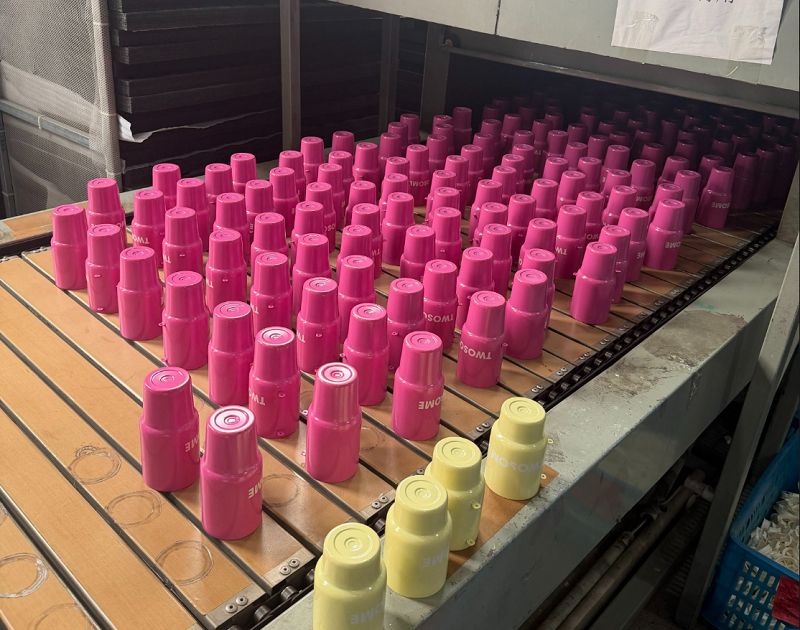
304 stainless steel is the better choice for most standard and mid-range drinkware projects.
Choose 304 if you are selling:
- Daily water bottles
- Insulated tumblers
- Coffee mugs
- Travel mugs
- Corporate gift bottles
- Amazon private label bottles
- Wholesale drinkware
- Promotional bottles
- School or office bottles
304 is especially suitable when your business needs:
- Competitive pricing
- Stable supply
- Lower MOQ
- Faster production
- Broad customer acceptance
- Good cost-performance
- Reliable daily-use durability
For many new brands, 304 is the smarter first step. It allows you to control cost, test the market, and build a strong product line before investing in more expensive materials.
When Should Buyers Choose 316 Stainless Steel?
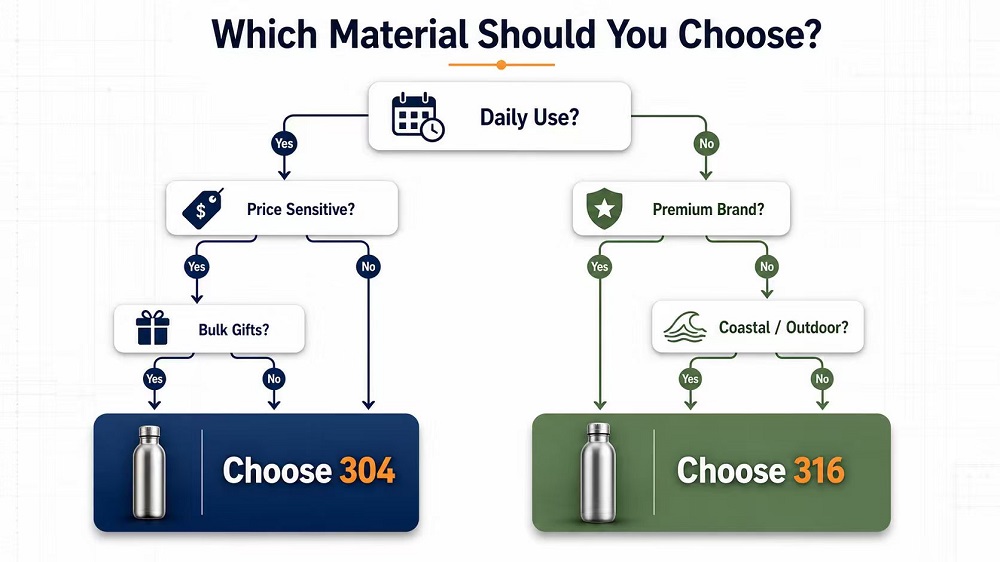
316 stainless steel is worth considering when material quality is part of your brand story.
Choose 316 if your product is positioned for:
- Premium retail
- Outdoor lifestyle
- Coastal or marine markets
- Luxury corporate gifts
- High-end wellness brands
- Customers who care about material upgrades
- Brands that want stronger differentiation
316 may also be useful if your marketing focuses on stronger corrosion resistance. However, buyers should make sure the higher material cost can be supported by the final retail price.
If your customers are not willing to pay more for 316, the upgrade may reduce your profit without improving sales.
Which Sells Better: 304 or 316 Stainless Steel Bottles?
For most markets, 304 stainless steel bottles sell better by volume because they are more affordable and already meet the expectations of most customers.
Most consumers want a bottle that is:
- Safe for daily use
- Leak-resistant
- Good-looking
- Durable
- Easy to clean
- Good at keeping drinks hot or cold
- Reasonably priced
They may not care whether the bottle is 304 or 316 unless the brand clearly explains the difference.
316 stainless steel bottles can sell well in premium niches, but they need the right positioning. If you use 316, make sure the product also has premium packaging, better design, strong photos, and a clear material story.
Buyer Decision Table
| Buyer Type | Better Choice | Reason |
|---|---|---|
| New water bottle brand | 304 | Lower cost and easier market testing |
| Amazon seller | 304 | Better price control and broader demand |
| Premium retail brand | 316 or 304+premium finish | Depends on customer price tolerance |
| Corporate gift buyer | 304 | Better for budget and bulk orders |
| Luxury gift project | 316 | Stronger premium story |
| Outdoor brand | 304 or 316 | 316 if corrosion resistance is part of positioning |
| Coastal market brand | 316 | Better material story for salt-air environments |
| Wholesale buyer | 304 | Better cost-performance and repeat supply |
Common Mistakes Buyers Make
Many buyers choose materials too quickly without considering the full product strategy.
Avoid these mistakes:
- Choosing 316 only because it sounds more premium
- Choosing 304 only because it is cheaper
- Ignoring lid and silicone material safety
- Not checking food-contact test reports
- Assuming all “stainless steel” bottles are the same
- Not matching material choice with target price
- Forgetting that coating, lid, and packaging also affect quality
- Using 316 but weak packaging or poor logo quality
- Not testing samples before bulk production
Material choice is important, but it is only one part of a successful bottle project.
What Should Buyers Ask the Manufacturer?
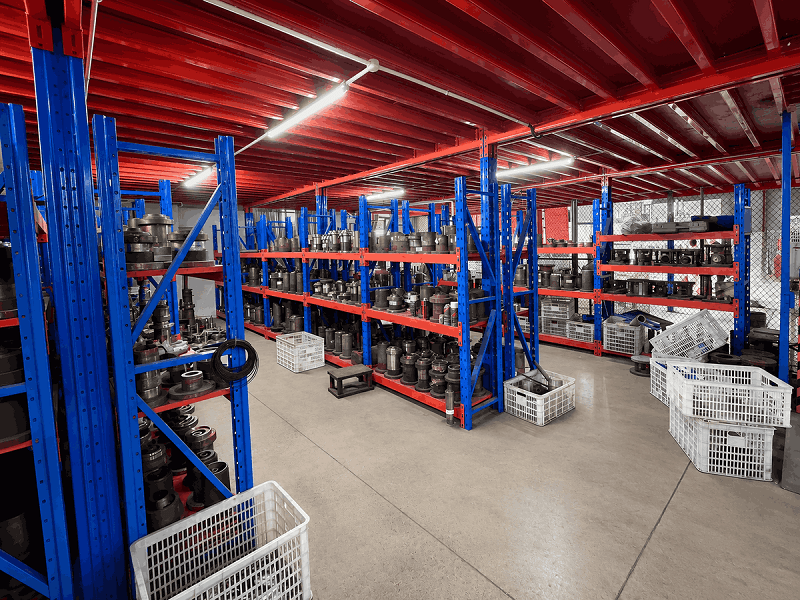
Before placing an order, ask your supplier:
- Is the inner wall 304 or 316 stainless steel?
- What material is used for the outer wall?
- What material is used for the lid?
- Is the silicone ring food-grade?
- Are plastic parts BPA-free?
- Can you provide food-contact test reports?
- Does the report match this exact bottle model?
- Can I test samples before mass production?
- How do you test leakage and insulation?
- How do you inspect coating and logo quality?
A reliable manufacturer should answer clearly and help you choose the right material based on your market, budget, and product positioning.
How Topnovo Helps Buyers Choose the Right Material
Topnovo supports brands, wholesalers, Amazon sellers, and promotional buyers with stainless steel drinkware projects.
Topnovo can help buyers with:
- 304 and 316 stainless steel material selection
- OEM/ODM drinkware development
- Private label water bottles
- Custom logo water bottles
- Custom colors and finishes
- Packaging development
- Sample production
- Water bottle quality control
- Bulk production for global B2B buyers
For most projects, Topnovo will recommend the material based on target customer, retail price, order quantity, use scenario, and compliance needs.
FAQ
Is 304 stainless steel good for water bottles?
Yes. 304 stainless steel is widely used for water bottles, tumblers, mugs, and food-contact drinkware. It offers good corrosion resistance, durability, and cost-performance for daily use.
Is 316 stainless steel better than 304 for bottles?
316 stainless steel has stronger corrosion resistance, especially in chloride or salt-related environments. However, 304 is usually enough for most daily water bottle applications.
Is 316 stainless steel worth the higher cost?
It depends on your market. If your brand targets premium buyers, coastal users, outdoor customers, or luxury gifts, 316 may be worth it. If your market is price-sensitive, 304 is usually more practical.
Which stainless steel is safer, 304 or 316?
Both can be suitable for food-contact drinkware when properly manufactured and tested. Safety also depends on lids, silicone rings, coatings, and other materials, not only the steel grade.
Do customers care about 304 vs 316 stainless steel?
Most everyday customers care more about appearance, leakage, insulation, price, and packaging. Premium customers may care more about material grade if the brand explains the difference clearly.
Which material should Amazon sellers choose?
Most Amazon sellers should start with 304 stainless steel because it offers better cost control and broader customer acceptance. 316 may work for premium listings with higher retail prices.
Conclusion
304 and 316 stainless steel are both useful materials for water bottles, but they serve different business goals.
304 stainless steel is the best choice for most daily-use bottles because it is durable, food-contact suitable, cost-effective, and widely accepted. 316 stainless steel is better for premium products, coastal markets, outdoor positioning, or brands that want a stronger corrosion-resistance story.
For B2B buyers, the best material is not the most expensive one. It is the one that fits your customer, price range, sales channel, and brand positioning.
Need help choosing between 304 and 316 stainless steel for your bottle project?
Topnovo supports custom stainless steel water bottles, OEM/ODM drinkware, private label packaging, custom logo options, sample development, quality control, and bulk production for global buyers.
Request a water bottle sample or contact Topnovo to discuss the best material for your next drinkware project.