
To avoid quality problems when buying stainless steel water bottles in bulk, buyers should confirm the material, lid structure, insulation performance, coating durability, logo method, packaging, compliance documents, and inspection standards before mass production starts.
Most bulk order problems happen because the sample is approved too quickly, product details are not clearly written, or the supplier does not control the same standard from sample to bulk production.
For brands, wholesalers, Amazon sellers, promotional gift buyers, and distributors, the goal is not only to buy bottles at a good price. The real goal is to receive consistent products that do not leak, lose insulation, scratch easily, smell unpleasant, or arrive with damaged packaging.
At Topnovo, we help buyers reduce these risks through sample approval, leak testing, insulation testing, coating checks, logo inspection, packaging review, and pre-shipment quality control.
Why Quality Problems Happen in Bulk Water Bottle Orders

A stainless steel water bottle looks simple, but a finished product includes many details: stainless steel grade, vacuum insulation, welding, polishing, coating, lid, silicone gasket, straw parts, logo decoration, retail box, carton marks, and shipping protection.
When buyers focus only on unit price, they may miss the details that affect real customer experience. A lower price may come from a weaker lid, thinner coating, less protective packaging, lower inspection standards, or unclear material control.
That is why quality should be controlled before production, not after shipment.
Confirm the Right Stainless Steel Material
Material is the foundation of product safety and durability. For most daily-use bottles, 304 stainless steel is the practical choice. For premium, coastal, marine, or outdoor-positioned products, 316 stainless steel may be considered because it offers stronger chloride resistance.
Before placing a bulk order, confirm:
| Item | What to Check |
|---|---|
| Inner wall | 304 or 316 stainless steel |
| Outer wall | 201, 304, or 316 depending on product positioning |
| Lid parts | BPA-free plastic and food-grade silicone |
| Documents | Material reports or food-contact test documents |
Do not simply ask, “Is it food grade?” Ask which part uses which material. The inner wall, outer wall, lid, gasket, straw, and coating may involve different materials.
For U.S. market buyers, the FDA provides useful information about food-contact substances. For EU buyers, confirm relevant food-contact and LFGB-related documents with your supplier.
Test the Lid Before Approving Production
Many customer complaints come from the lid, not the stainless steel body. A bottle can look premium but still fail if the lid leaks, cracks, smells, or is difficult to clean.
Common lid problems include:
- Leakage from the silicone gasket
- Loose thread matching
- Broken flip button
- Straw not fitting properly
- Weak carry handle
- Odor from plastic parts
- Splash-resistant lid being sold as leak-proof
How to prevent it:
Always test the exact lid and bottle combination. Do not approve a lid only from photos. Fill the bottle, close the lid, turn it upside down, shake it, and check for leakage.
For sports bottles, kids bottles, school bottles, and travel bottles, also test repeated opening, closing, and carrying. If the bottle will be placed inside bags or backpacks, lid sealing should be treated as a critical quality point.
Verify Real Insulation Performance
For insulated stainless steel bottles, temperature retention is one of the main selling points. Poor insulation can lead to customer disappointment even if the bottle looks good.
Common causes include weak vacuum performance, welding defects, loose lid sealing, unsuitable structure, or exaggerated product claims.
How to prevent it:
Ask your supplier to perform an insulation test using a clear method. A practical test is to fill the bottle with hot water, record the starting temperature, and measure temperature loss after a fixed number of hours.
Also remember that insulation performance depends on structure. A narrow-mouth screw lid bottle usually performs differently from a wide-mouth straw lid bottle or coffee tumbler.
Before bulk production, approve a physical sample and check whether the insulation result supports your selling claim. For a deeper process, see How to Test Insulated Water Bottles Before Bulk Production.
Check Coating and Logo Durability
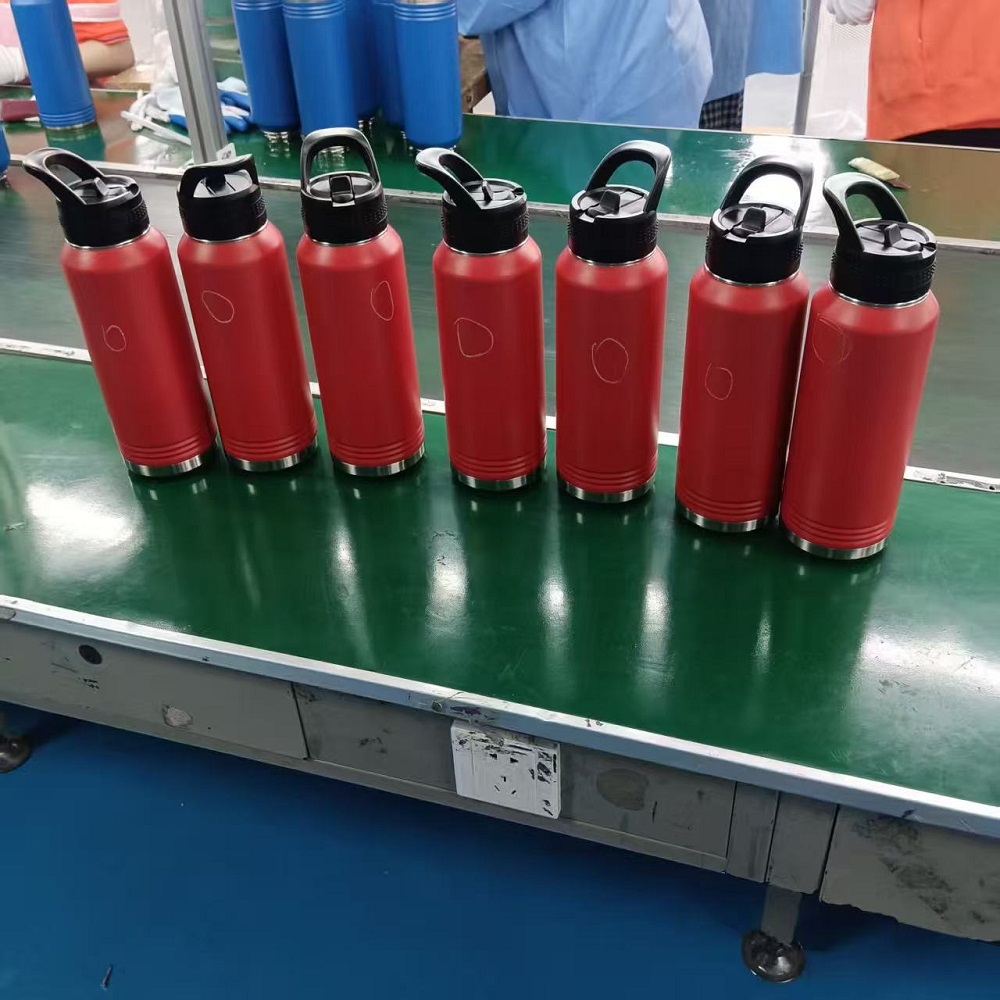
Surface finish affects both appearance and customer satisfaction. Coating problems are common in bulk orders because samples may look perfect, but production handling, packaging, or shipping can cause scratches.
Common coating defects include:
- Scratches
- Peeling near the rim or base
- Uneven color
- Color difference from approved sample
- Weak adhesion
- Dust marks
- Poor laser engraving contrast
Logo problems are also common in custom orders. A logo may be off-center, too small, too large, faded, scratched, or different from the artwork.
How to prevent it:
Approve a physical color and logo sample before production. If using powder coating, check hand feel, scratch resistance, adhesion, and laser engraving effect. If using spray painting, check gloss, metallic effect, gradient effect, and color consistency.
For logo decoration, choose the method based on the surface finish and brand positioning:
| Logo Method | Best For | Watch Out For |
|---|---|---|
| Laser engraving | Durable branding, powder-coated bottles | Contrast depends on coating color |
| Screen printing | Simple logos and large orders | Adhesion should be tested |
| UV printing | Colorful artwork and detailed logos | Surface compatibility matters |
| Heat transfer | Full-color decorative designs | Durability should be checked |
For more details, see Topnovo’s custom logo water bottles service.
Control Odor, Cleanliness, and Packaging
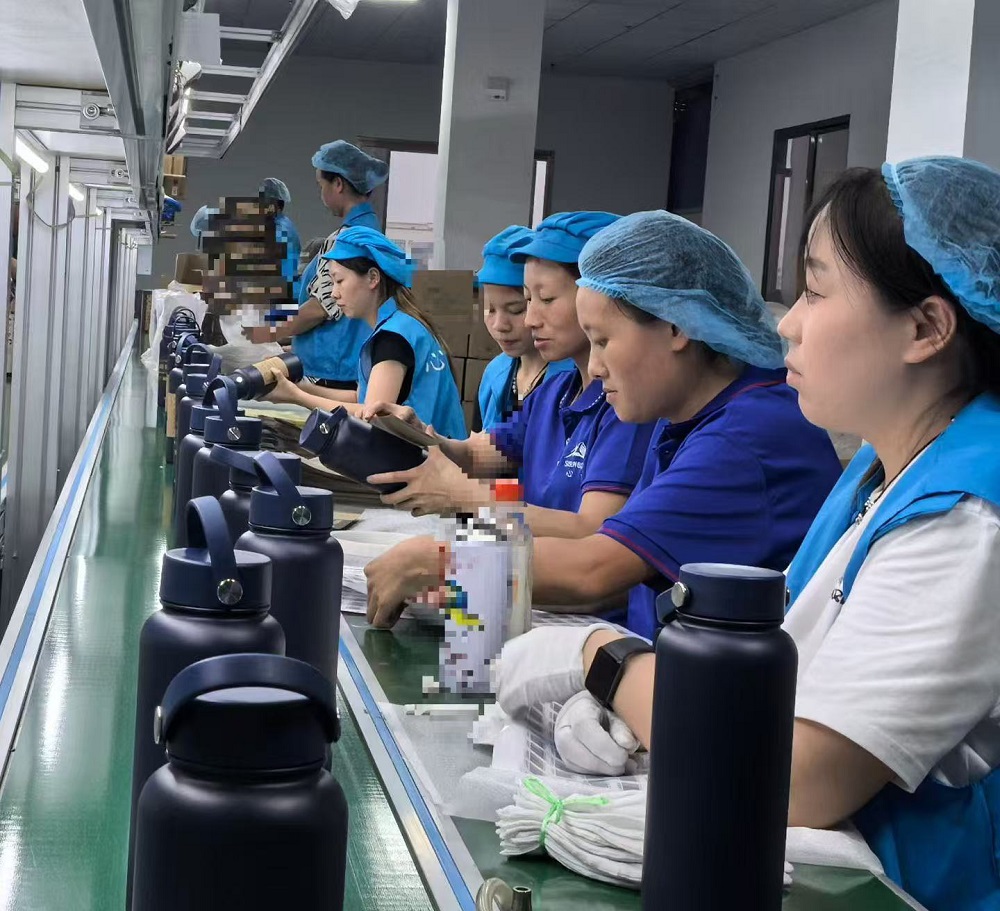
Odor is a small detail that can create big complaints. It may come from plastic lids, silicone rings, straws, coating, packaging, or poor storage.
Buyers should inspect the complete product, not only the bottle body. Check the lid, straw, silicone gasket, box, and inner packaging. For kids bottles, school bottles, and premium gift sets, odor control should be included in sample approval.
Packaging is just as important. A good bottle can still become a bad order if it arrives scratched, dented, or packed in a crushed box.
Before production ends, confirm:
- Unit box structure
- Inner protection
- Master carton strength
- Carton size and gross weight
- Barcode labels
- Carton marks
- SKU separation
- Amazon FBA label requirements if needed
For Amazon sellers and retail buyers, packaging quality affects both product protection and customer experience.
Match Customization Level with Order Quantity
Another common mistake is asking for too much customization in a first order. More customization means more production variables, higher MOQ, longer lead time, and more quality risks.
A practical approach is:
| Buyer Stage | Recommended Approach |
|---|---|
| First test order | Existing bottle, stock color, simple logo |
| Growing brand | Custom color, logo, and retail packaging |
| Stable sales | Custom lid, exclusive finish, private label system |
| Mature brand | ODM mold and exclusive bottle structure |
This reduces risk. You can test the market first, then increase customization after sales become stable.
Real Buyer Example: Coating Damage After Shipping
A buyer once approved a powder-coated bottle sample based only on appearance. The bottle color and logo looked good, so the order moved into bulk production quickly.
However, the packaging was not tested together with the final coating. During transportation, bottles rubbed against inner packaging and some units arrived with visible scratches near the base.
The product itself was not structurally defective, but the customer experience was still damaged. The problem could have been prevented by testing the coating, logo, and packaging together before mass production.
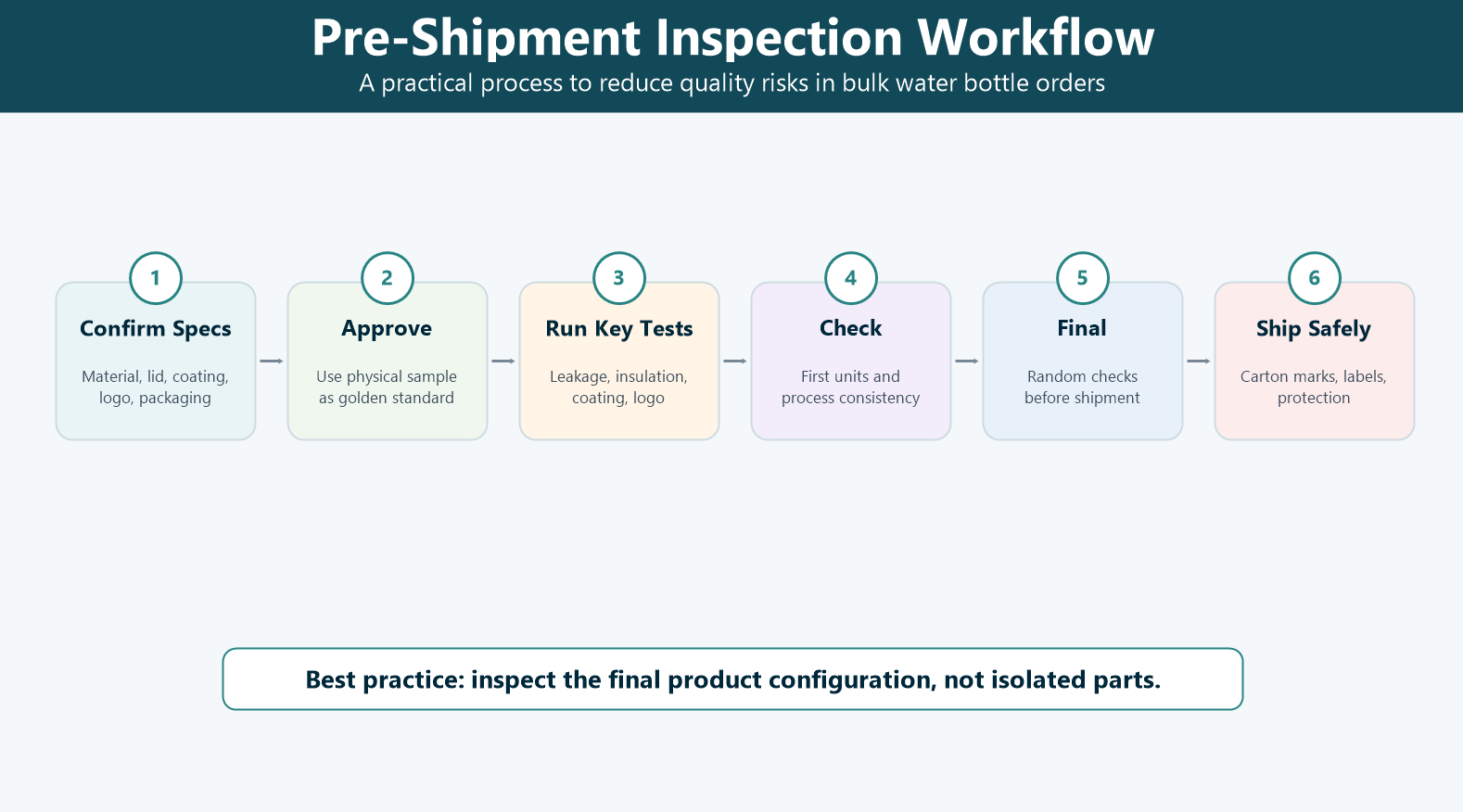
This is an important lesson: do not approve the bottle, logo, and packaging separately. Approve them as one complete retail product.
Pre-Shipment Quality Control Checklist

Quality inspection should be planned before shipment, not after problems appear. For bulk orders, buyers can use random inspection based on agreed standards. ISO explains that ISO 2859-1 covers AQL-indexed sampling procedures for lot-by-lot inspection.
A practical inspection checklist should include:
| Quality Area | What to Check |
|---|---|
| Appearance | Scratches, dents, stains, deformation |
| Material | Stainless steel grade, BPA-free lid parts |
| Lid | Fit, sealing, opening, closing, gasket |
| Leakage | Invert, shake, and check sealing |
| Insulation | Temperature retention test |
| Coating | Color, adhesion, peeling, scratches |
| Logo | Position, size, color, durability |
| Packaging | Box, carton, barcode, labels, protection |
| Quantity | SKU, accessories, units per carton |
For overall quality systems, buyers can also refer to ISO’s page about ISO 9001 quality management.
How Topnovo Helps Buyers Avoid Bulk Order Problems
At Topnovo, we support brands, wholesalers, Amazon sellers, promotional gift buyers, and distributors with custom stainless steel water bottle projects.
Our support includes:
- Product selection based on target market
- Custom stainless steel water bottles, tumblers, and mugs
- Logo, color, lid, packaging, and private label options
- Sample approval before bulk production
- Leak testing and insulation testing
- Coating and logo inspection
- Packaging and carton mark support
- Pre-shipment quality control
- Export and Amazon FBA order support
If you are developing a new drinkware project, the safest first step is to approve a real sample before bulk production. You can request a custom water bottle sample or review Topnovo’s water bottle quality control process before confirming your order.
FAQ
What is the most common quality problem in bulk water bottle orders?
Leakage is one of the most common problems, especially for straw lids, flip lids, kids bottles, and sports bottles. It is usually caused by weak sealing, poor gasket quality, or incorrect lid matching.
How can I reduce coating scratches during shipping?
Test coating adhesion, approve the final packaging structure, and make sure bottles do not rub against each other during transportation. Packaging should be tested together with the final bottle finish.
Should I choose 304 or 316 stainless steel?
304 stainless steel is suitable for most daily-use bottles. 316 stainless steel is better for premium, coastal, outdoor, or marine-positioned products because it has stronger chloride resistance.
Why does bulk production sometimes differ from the sample?
This often happens when the approved sample is not clearly controlled, or when the supplier changes material, coating, lid parts, printing settings, or packaging without buyer approval.
What should I confirm before placing a bulk order?
Confirm material, lid type, coating, logo method, packaging, MOQ, lead time, sample approval, testing standards, inspection process, and defect responsibility.
Final Thoughts
Avoiding quality problems in bulk stainless steel water bottle orders is not about checking one detail. It is about controlling the full process: material, lid, insulation, coating, logo, packaging, inspection, and shipment.
For B2B buyers, a reliable bottle is not only a product. It protects your brand reputation, customer reviews, repeat orders, and profit margin.
The best supplier is not always the cheapest one. It is the one that helps you prevent problems before they become expensive.