
Quick Answer
To choose a stainless steel tumbler manufacturer, do not compare suppliers by unit price alone.
A reliable manufacturer should support the full project, including material selection, tumbler structure, lid design, logo customization, surface finish, packaging, compliance documentation, sampling, quality control, production lead time, and export preparation.
For brands, Amazon sellers, wholesalers, corporate gift buyers, and retailers, the best stainless steel tumbler manufacturer is not always the biggest factory or the cheapest supplier. The right partner is the one that can help you choose the right specification, identify product risks, validate samples, control mass production, and deliver consistent products to your sales channel.
This is especially important for private-label and OEM/ODM tumbler projects, where small decisions made before production can affect quality, reviews, returns, and repeat orders.
Quick Manufacturer Evaluation Table

Before you compare quotations, use this table to evaluate whether a supplier is suitable for your tumbler project.
| Evaluation Area | What to Check | Why It Matters |
|---|---|---|
| Product Focus | 20oz, 30oz, 40oz, coffee, handle, skinny tumblers | Confirms real tumbler experience |
| Material | 304/316 stainless steel, BPA-free lid, food-grade silicone | Supports safety and durability |
| Customization | Logo, color, finish, lid, packaging, mold | Helps build brand differentiation |
| QC Process | Insulation, coating, lid, logo, packaging tests | Reduces complaints and returns |
| OEM/ODM Support | Existing molds, private label, custom development | Matches different business stages |
| Compliance | FDA, LFGB, REACH, Prop 65 if required | Helps enter target markets |
| Export Experience | Carton marks, barcode, pallets, shipping documents | Reduces delivery and warehouse risk |
Why Choosing the Right Tumbler Manufacturer Matters
A stainless steel tumbler may look simple from the outside. But behind a successful bulk order are many details: stainless steel grade, steel thickness, vacuum insulation, lid fit, silicone sealing, handle strength, coating durability, logo method, color consistency, packaging protection, and inspection standards.
If these details are not confirmed before production, problems may appear later:
- The tumbler does not keep drinks hot or cold as expected.
- The lid leaks or feels difficult to clean.
- The coating scratches too easily.
- The logo looks different from the approved artwork.
- The handle feels weak.
- The packaging does not protect the product during shipping.
- The finished product does not match your market requirements.
For B2B buyers, these are not simply “factory problems.” They can become customer complaints, Amazon returns, negative reviews, retailer claims, replacement costs, delayed launches, and brand reputation problems.
That is why supplier selection should begin with one question:
Can this manufacturer consistently deliver the product specification my market requires?
Manufacturing Insight: Why Similar Tumblers Can Have Different Quality
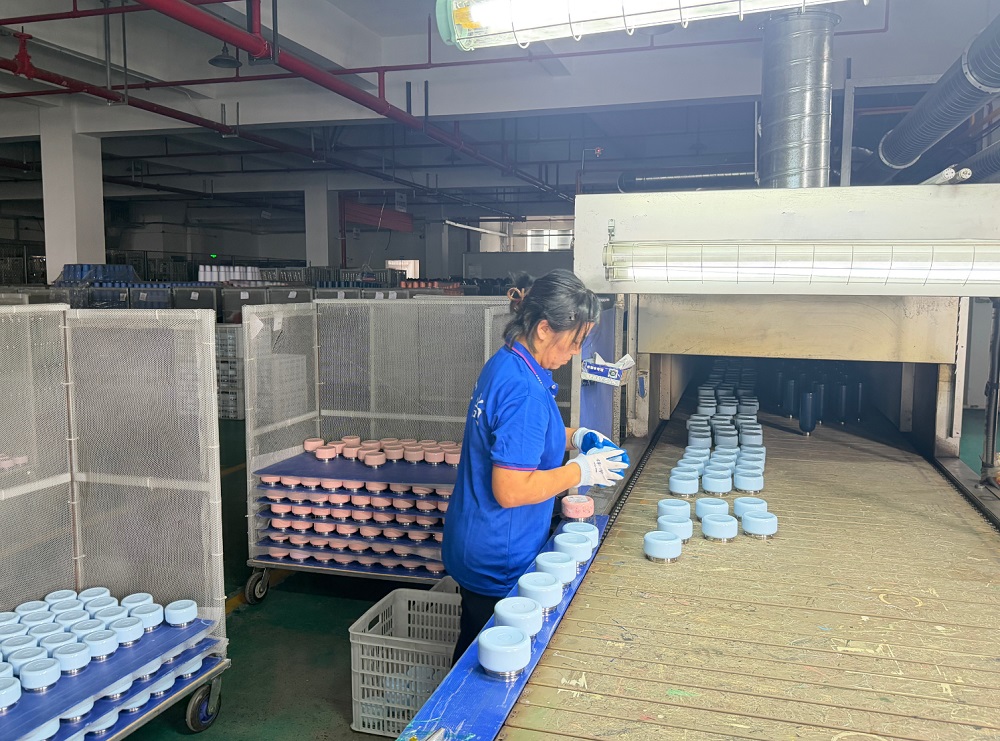
Two stainless steel tumblers can look almost identical in photos but perform very differently in real use. The differences are usually hidden in manufacturing details.
Stainless Steel Specification
Two suppliers may quote the same-looking tumbler but use different inner-wall material, outer-wall material, material thickness, or production tolerance. These differences affect cost, durability, weight, and perceived quality.
Most daily-use insulated tumblers use 304 stainless steel for the inner wall. Some premium or coastal-positioned products may use 316 stainless steel for stronger corrosion resistance.
Vacuum Insulation
Good insulation depends on more than double-wall structure. It also depends on welding quality, vacuum control, production consistency, and inspection standards.
Insulation performance should be tested, not assumed.
Lid Tolerance
Many customer complaints come from the lid, not the tumbler body. Small differences in thread fit, silicone position, straw opening, slider structure, or lid dimensions can change the user experience.
Coating Consistency
A premium powder-coated tumbler needs consistent surface preparation, coating thickness, color, adhesion, and texture. If coating near the mouth or fitting area is not controlled properly, it may affect lid fit.
Assembly
A good sample does not automatically guarantee that thousands of production units will perform the same way. Mass production also requires control of silicone installation, lid assembly, handle assembly, logo position, and packaging.
Experienced buyers evaluate the manufacturing system, not only the sample or quotation.
Confirm Whether the Supplier Is a Real Manufacturer

The first step is to understand who actually controls production.
A stainless steel tumbler manufacturer should be able to provide:
- Factory address
- Business license
- Workshop photos or videos
- Main equipment information
- Manufacturing process explanation
- Quality-control workflow
- Sample process
- Mass-production schedule
- Export experience
A trading company is not automatically a bad supplier. The important issue is transparency.
Ask these questions:
- Do you own the factory or work with partner factories?
- Which production processes are done in-house?
- Which components are outsourced?
- Who supplies lids, silicone rings, straws, and packaging?
- Can you arrange a live factory video tour?
- Can you accept third-party pre-shipment inspection?
- Who is responsible if outsourced components fail?
A professional supplier should be able to answer these clearly.
Check the Manufacturer’s Product Focus
Not every drinkware manufacturer is equally strong in stainless steel tumblers. Some factories mainly produce water bottles, coffee mugs, plastic drinkware, promotional cups, or food jars.
Before selecting a supplier, check whether its experience matches your target product.
| Tumbler Type | Best For | Important Checks |
|---|---|---|
| 20oz tumbler | Office, coffee, corporate gifts | Lid comfort, hand feel, insulation |
| 30oz tumbler | Travel, premium gifts | Capacity, cup-holder fit, coating |
| 40oz handle tumbler | Fitness, hydration, car use | Handle strength, lid, straw, balance |
| Coffee tumbler | Commuting, cafés, office | Sip lid, heat retention, spill resistance |
| Skinny tumbler | Events, lifestyle gifts | Printing area, color, packaging |
| Wine tumbler | Hospitality, events | Coating, logo, gift presentation |
If a supplier says it can manufacture every type of drinkware, ask to see similar projects. The closer the previous experience is to your product, the lower your development risk.
Evaluate Stainless Steel and Food-Contact Materials
Before ordering, confirm:
- Inner stainless steel grade
- Outer stainless steel grade
- BPA-free plastic lid material
- Food-grade silicone components
- Surface coating
- Final product configuration
- Product-specific test reports when required
For the U.S. market, buyers can review FDA food contact information. For the EU market, refer to European Commission food contact materials. For California sales, Proposition 65 may also need to be considered.
Do not only ask, “Do you have FDA?”
Ask instead:
Which material, lid, coating, silicone component, and product configuration does this report apply to?
A report for another product does not automatically validate your final specification.
Review OEM, ODM, and Private-Label Capability
Different buyers need different customization levels.
| Project Type | What It Means | Best For |
|---|---|---|
| Logo customization | Logo added to an existing tumbler | Corporate gifts, test orders |
| Private label | Existing model + logo + color + packaging | Growing brands, Amazon sellers |
| ODM | Factory-developed product customized for your brand | Faster launch, lower development risk |
| OEM | Product manufactured to buyer-defined specifications | Established brands |
| Custom mold | New structure or proprietary design | Mature brands, differentiated products |
For new brands, starting with a proven tumbler is often lower risk than immediately opening a new mold.
A practical development path can be:
existing tumbler → custom color → logo → lid selection → packaging → market testing → deeper OEM development
This allows the buyer to validate demand before investing heavily in tooling.
Compare Logo and Surface-Finish Capability
Logo method affects appearance, durability, MOQ, cost, lead time, and brand positioning.
| Logo Method | Best For | Main Advantage | What to Check |
|---|---|---|---|
| Laser engraving | Premium tumblers | Durable, clean appearance | Contrast, position, engraving quality |
| Screen printing | Simple bulk logos | Cost-effective | Adhesion, color, placement |
| UV printing | Colorful artwork | Full-color flexibility | Scratch resistance, clarity |
| Heat transfer | Larger designs | Strong visual impact | Edge durability |
| Full-wrap printing | Retail collections | Shelf appeal | Alignment, consistency |
Surface finish is equally important. Common options include powder coating, spray painting, gloss finish, gradient finish, and natural stainless steel finish.
A capable manufacturer should recommend the logo process based on the final surface, not treat decoration as an isolated step.
Related guide: Custom Logo Water Bottles: Laser Engraving vs Screen Printing vs UV Printing
Pay Close Attention to Lid Design
Many tumbler complaints come from lids.
Before selecting a manufacturer, evaluate whether the supplier understands:
- Straw lid fit
- Slider lid sealing
- Sip lid comfort
- Silicone placement
- Drinking flow
- Splash resistance
- Cleaning
- Handle strength
- Drop resistance
For 40oz handle tumblers, check handle attachment, product balance, straw fit, lid sealing, and cup-holder compatibility.
For coffee tumblers, check sip opening, heat safety, splash resistance, drinking comfort, and cleaning experience.
For corporate gifts, the lid should be easy to understand, easy to clean, reliable, and consistent with the product’s premium positioning.
Related guide: How to Choose the Right Water Bottle Lid for Your Brand
Ask for a Specific Quality-Control Process
A good manufacturer should not simply say, “We have strict quality control.”
Ask what they actually inspect.
| QC Area | What to Check | Why It Matters |
|---|---|---|
| Material | Steel, lid, silicone | Safety and durability |
| Vacuum insulation | Hot/cold retention | Product performance |
| Lid | Fit, sealing, opening, cleaning | Customer experience |
| Coating | Adhesion, scratches, color | Appearance |
| Logo | Position, clarity, durability | Brand image |
| Packaging | Strength, labels, protection | Shipping risk |
| Final inspection | Agreed inspection standard | Bulk consistency |
A stronger QC process should cover incoming materials, production, coating, decoration, assembly, packaging, and final inspection.
For first orders or higher-risk projects, buyers may also consider third-party pre-shipment inspection.
Related guide: How to Test Insulated Water Bottles Before Bulk Production
Understand MOQ, Price, and Lead Time
The lowest quotation is rarely useful unless every supplier is quoting the same specification.
Price can change because of:
- Capacity
- Stainless steel grade
- Steel thickness
- Lid structure
- Handle
- Straw
- Surface treatment
- Logo method
- Packaging
- MOQ
- Sampling
- Testing
- Export preparation
Before comparing suppliers, ask:
- What exactly is included in the quotation?
- Is packaging included?
- Is logo setup included?
- Are samples included?
- Are testing costs included?
- What Incoterm is used?
- Is the product specification identical?
Existing products with simple logo customization are generally faster than projects involving custom colors, custom packaging, new lids, new tooling, or additional testing.
How to Compare Quotations from Different Manufacturers
Do not compare only:
$3.20 vs $3.35 vs $3.50
First confirm that all suppliers are quoting the same product.
Use this comparison sheet:
| Area | Supplier A | Supplier B | Supplier C |
|---|---|---|---|
| Inner material | |||
| Outer material | |||
| Capacity | |||
| Lid | |||
| Surface finish | |||
| Logo method | |||
| Individual packaging | |||
| Master carton | |||
| Testing | |||
| Inspection | |||
| MOQ | |||
| Sample time | |||
| Production time | |||
| Incoterm |
Only after specifications are aligned does the unit-price comparison become meaningful.
A cheaper quotation may simply exclude something that another supplier has included.
Real Case: Avoiding the Wrong Tumbler Specification Before Sampling
One buyer initially requested a “30oz tumbler with logo.”
The request sounded simple, but after reviewing the project, several hidden requirements became important:
- The tumbler was for a corporate gift program.
- It needed to work well for office and car use.
- The logo needed a premium appearance.
- Individual gift packaging was required.
- The delivery date was fixed.
- The finished product needed to feel better than a basic giveaway item.
Instead of quoting one basic option immediately, the project was reviewed from the customer’s use case.
The buyer compared capacity, powder coating, laser engraving, lid type, and gift-box options. A physical sample was then approved before production.
The sample helped confirm logo size, logo position, coating texture, lid fit, product hand feel, and packaging presentation.
The result was a clearer specification before mass production and lower risk of wrong logo placement, weak packaging, or customer dissatisfaction after delivery.
Key lesson: A good manufacturing partner helps buyers make better product decisions before production, not simply solve complaints after production.
Buyer Checklist Before Choosing a Tumbler Manufacturer
Before confirming a supplier, check:
| Area | What to Confirm |
|---|---|
| Product | 20oz, 30oz, 40oz, coffee, skinny, handle |
| Target buyer | Retail, Amazon, wholesale, corporate gift |
| Material | 304/316 steel, lid material, silicone |
| Lid | Straw, sip, slider, handle, leak-resistant |
| Finish | Powder coating, spray painting, gradient |
| Logo | Laser, screen printing, UV |
| Packaging | White box, kraft box, retail box, gift box |
| Compliance | Relevant destination-market requirements |
| QC | Insulation, lid, coating, logo, packaging |
| Sample | Physical product and packaging approval |
| Lead time | Sampling + production + inspection |
| Export | Labels, carton marks, documents |
This checklist also makes quotations easier to compare.
Red Flags When Evaluating a Tumbler Manufacturer
Be cautious if a supplier:
- Only discusses price
- Cannot clearly explain materials
- Avoids factory verification
- Does not have a sample-approval process
- Gives unrealistic lead times
- Cannot explain lid testing
- Cannot explain coating testing
- Uses copied or inconsistent product photos
- Sends unclear quotations
- Cannot connect compliance documents to the exact product
- Avoids third-party inspection
- Changes specifications without written approval
A reliable manufacturer does not need to claim that everything is possible. Transparency is often a stronger signal than aggressive promises.
What Is the Biggest Risk When Changing Tumbler Suppliers?
The biggest risk is not whether the new supplier can make the product once.
It is whether they can repeat the approved product consistently.
When changing suppliers, pay attention to:
- Material specification
- Product weight
- Lid fit
- Color
- Coating texture
- Logo effect
- Packaging
- Insulation
- Assembly
- Inspection standard
Whenever possible, create a clear approved sample and specification sheet before moving the project.
Do not rely only on “same as previous supplier.” The new manufacturer needs measurable specifications.
How Topnovo Helps Brands Develop Stainless Steel Tumbler Projects
At Topnovo, we help brands improve their drinkware business by supporting product selection, customization, sampling, quality control, packaging, and bulk production.
With 10+ years of drinkware experience, a 24,000㎡ manufacturing facility, 9M+ annual production capacity, and 16 full-time QC staff, Topnovo supports brands, Amazon sellers, wholesalers, importers, corporate gift buyers, and private-label companies with custom drinkware projects.
For stainless steel tumblers, our support can include:
- 20oz tumblers
- 30oz tumblers
- 40oz handle tumblers
- Coffee tumblers
- Straw tumblers
- Other insulated drinkware
- Laser engraving
- Screen printing
- UV printing
- Pantone color matching
- Powder coating
- Spray painting
- Custom packaging
- Sample development
- Bulk manufacturing
- Quality inspection
- Export preparation
We do not recommend the same tumbler to every buyer. A corporate gift project, Amazon launch, retail collection, and outdoor brand may need different capacities, lid structures, finishes, logo methods, packaging, and QC standards.
Our role is to help buyers define those requirements before production so the final product is easier to manufacture, easier to control, and better suited to the target market.
Better Drinkware. Easier Business.
If you are planning a stainless steel tumbler project, send us your target market, tumbler type, quantity, logo, packaging requirements, and delivery country. We can help review the production plan before sampling.
FAQ
What is the best stainless steel for tumblers?
304 stainless steel is commonly used for the inner wall of insulated tumblers because it offers good corrosion resistance and durability for everyday drinkware. Some premium projects may specify 316 stainless steel when stronger corrosion resistance is required.
What MOQ should I expect for custom stainless steel tumblers?
MOQ depends on the product and customization level. Existing tumbler models with a simple logo usually allow more flexibility than projects involving custom Pantone colors, packaging, lids, or new molds.
How do I know if a tumbler manufacturer is reliable?
Evaluate factory transparency, similar product experience, physical sample quality, material specifications, QC process, communication, lead time, compliance support, packaging, and pre-shipment inspection capability.
Should I choose OEM, ODM, or private-label tumblers?
Private label is usually suitable when you want to customize an existing tumbler with logo, color, and packaging. ODM can provide a faster launch using a factory-developed product. OEM is more suitable when you already have detailed product specifications or need deeper development.
How should I compare quotations from tumbler manufacturers?
Compare the same material, capacity, lid, coating, logo, packaging, testing, MOQ, lead time, and Incoterm. If specifications are different, the prices are not directly comparable.
What should I check before mass production?
Before production, confirm the physical sample, material, lid, logo, Pantone color, coating, insulation, packaging, labels, carton marks, and inspection requirements.
What is the biggest risk when changing tumbler suppliers?
The main risk is sample-to-bulk and supplier-to-supplier consistency. The new supplier may use different steel, lid tolerance, coating, logo process, or packaging. Create an approved sample and detailed specification before switching.
Can Topnovo support private-label tumbler projects?
Yes. Topnovo supports private-label and OEM/ODM stainless steel tumbler projects, including product selection, logo customization, Pantone color matching, surface finishing, packaging, samples, bulk production, quality inspection, and export preparation.
Final Thoughts
Choosing a stainless steel tumbler manufacturer is not only a sourcing decision. It is a product-risk decision.
The supplier you choose can affect product quality, customer experience, reviews, returns, delivery, repeat orders, and brand reputation.
Before comparing price, confirm the specification. Before mass production, approve the physical product. Before shipment, verify quality.
The best manufacturer is not necessarily the biggest factory or the lowest-priced supplier. It is the manufacturer that can consistently turn your approved specification into reliable mass production.