
Choosing the right logo method is not just a design decision.
For custom logo water bottles, the decoration method can affect appearance, durability, cost, sample approval, customer experience, and long-term brand value.
A bottle may have good insulation, a leak-resistant lid, and an attractive powder-coated finish. But if the logo scratches, fades, peels, looks off-center, or does not match the approved sample, the entire product can feel lower quality.
This guide compares three common logo methods for custom water bottles: laser engraving, screen printing, and UV printing. It explains which bottles work best for logo customization, how the methods compare, what buyers should check before bulk production, and how to choose the right decoration method for different products and markets.
For B2B buyers, the right logo method should be selected based on the artwork, bottle material, surface finish, order quantity, durability requirements, target cost, and product positioning.
Quick Answer
For custom stainless steel water bottles, laser engraving is usually the best choice when maximum durability and a premium appearance are the priorities. Screen printing is more cost-effective for simple one- or few-color logos at volume, while UV printing is better for full-color graphics, gradients, illustrations, and detailed artwork.
The best logo method depends on six factors:
- Logo design
- Bottle material
- Surface finish
- Order quantity
- Durability requirements
- Product positioning
In general:
Laser engraving is best for premium, long-lasting, single-tone logos on stainless steel bottles and powder-coated tumblers.
Screen printing is best for simple one-color or few-color logos on medium- and large-volume promotional orders.
UV printing is best for full-color logos, gradients, illustrations, and visually distinctive retail products.
There is no single best method for every project. Buyers should match the decoration method to the artwork, bottle surface, quantity, target price, and intended use.
What Are the Best Types of Bottles to Print Logos On?
The best types of bottles for printing logos are powder-coated stainless steel bottles, insulated tumblers, Tritan plastic bottles, glass bottles, and aluminum bottles. For most B2B brands, powder-coated stainless steel bottles are the most practical choice because they support laser engraving, screen printing, and UV printing while offering strong durability, premium appearance, and good daily-use performance.
| Bottle Type | Best Logo Method | Best For | What Buyers Should Check |
|---|---|---|---|
| Powder-coated stainless steel bottles | Laser engraving, screen printing, UV printing | Amazon brands, corporate gifts, premium retail bottles | Coating adhesion, logo contrast, scratch resistance |
| Blank stainless steel bottles | Laser engraving, screen printing | Minimalist brands, outdoor bottles, corporate gifts | Logo visibility and engraving clarity |
| Insulated tumblers | Laser engraving, UV printing, screen printing | Retail brands, coffee brands, promotional drinkware | Curved-surface logo position and packaging protection |
| Tritan plastic bottles | Screen printing, UV printing, pad printing | Sports bottles, kids bottles, promotional orders | Ink compatibility, material safety, rub resistance |
| Glass bottles | Screen printing, UV printing, decal printing | Wellness brands, lifestyle retail, gift sets | Breakage risk, packaging strength, logo durability |
| Aluminum bottles | Screen printing, UV printing, sublimation | Lightweight promotional bottles | Dent resistance, coating quality, logo adhesion |
The bottle material alone does not determine the best logo method. Buyers should also consider the surface coating, bottle curvature, artwork complexity, required durability, and order quantity.
Laser Engraving vs Screen Printing vs UV Printing: Quick Comparison
| Logo Method | Best For | Main Advantage | Main Limitation |
|---|---|---|---|
| Laser engraving | Premium bottles, corporate gifts, daily-use tumblers | Excellent wear resistance and professional appearance | Usually single-tone |
| Screen printing | Bulk promotional bottles and simple logos | Cost-effective at higher quantities | Limited for gradients and complex artwork |
| UV printing | Full-color retail designs and creative graphics | Strong color flexibility and visual impact | Printed layer is usually less permanent than engraving |
The main trade-off is usually durability versus color and design flexibility.
Laser engraving prioritizes durability. Screen printing balances cost and simple branding. UV printing provides greater flexibility for complex and colorful artwork.
How Do You Customize Water Bottles With a Logo?
To customize a water bottle with a logo, first select the bottle type and surface finish, prepare suitable artwork, choose a compatible decoration method, confirm the logo size and position, approve a physical sample, and inspect the logo before bulk production.
A typical B2B custom logo process includes the following steps.
1. Select the Bottle
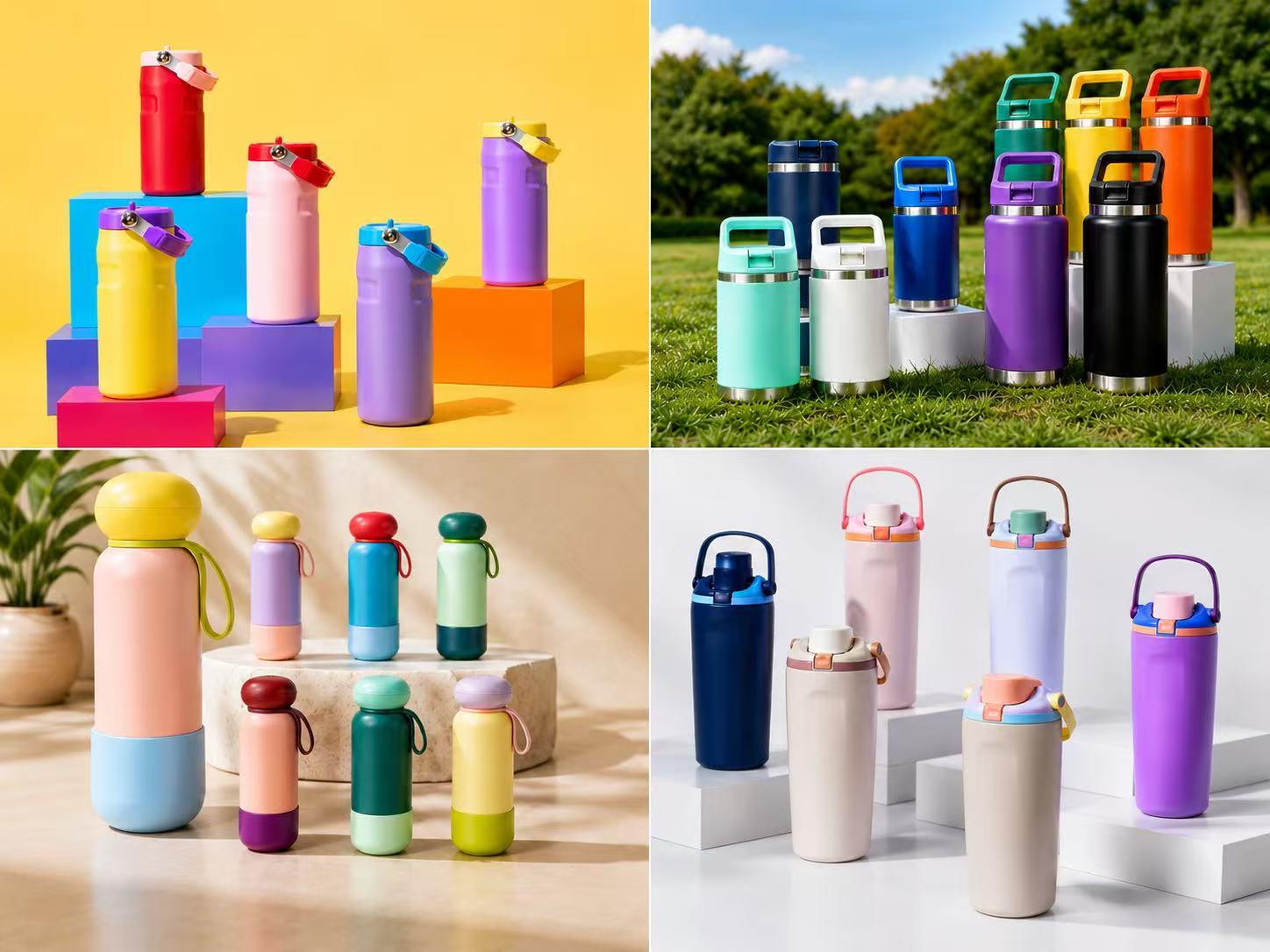
Choose the bottle based on:
- Material
- Capacity
- Lid structure
- Surface finish
- Target market
- Intended use
- Target price
Stainless steel bottles and insulated tumblers are commonly selected for premium retail, corporate gifts, Amazon products, and daily-use drinkware.
Tritan bottles can be suitable for sports, kids, fitness, and promotional programs.
2. Prepare the Logo Artwork
For the sharpest result, vector files are preferred whenever possible.
Common artwork formats include:
- AI
- EPS
- SVG
- Editable PDF
For full-color digital or UV printing, high-resolution artwork should be provided.
Buyers should also confirm:
- Brand colors
- Pantone references
- Logo dimensions
- Printing position
- Number of print locations
- Additional artwork
For event projects, additional artwork may include an event name, date, sponsor logo, QR code, website, social handle, or campaign message.
3. Choose the Logo Method
The decoration method should match both the artwork and bottle surface.
Simple single-tone logo?
→ Consider laser engraving.
Simple one- or few-color artwork at volume?
→ Consider screen printing.
Full-color illustration, gradient, or complex graphic?
→ Consider UV printing.
4. Confirm Logo Size and Position
Logo placement should be evaluated on the actual bottle shape.
Important considerations include:
- Front logo position
- Back logo position
- Distance from the bottom
- Distance from handles
- Bottle curvature
- Maximum printable area
- Wraparound requirements
5. Approve a Physical Sample
A physical sample helps confirm:
- Logo size
- Position
- Color
- Engraving contrast
- Edge clarity
- Ink adhesion
- Overall appearance
6. Start Bulk Production and QC
After approval, the physical sample and confirmed artwork should become the production reference for bulk manufacturing and final inspection.
FACTORY NOTE
A digital mockup is useful for checking layout, but it cannot fully represent bottle curvature, coating texture, engraving contrast, or actual printed color. For color-sensitive or premium projects, physical sample approval is recommended before mass production.
Laser Engraving
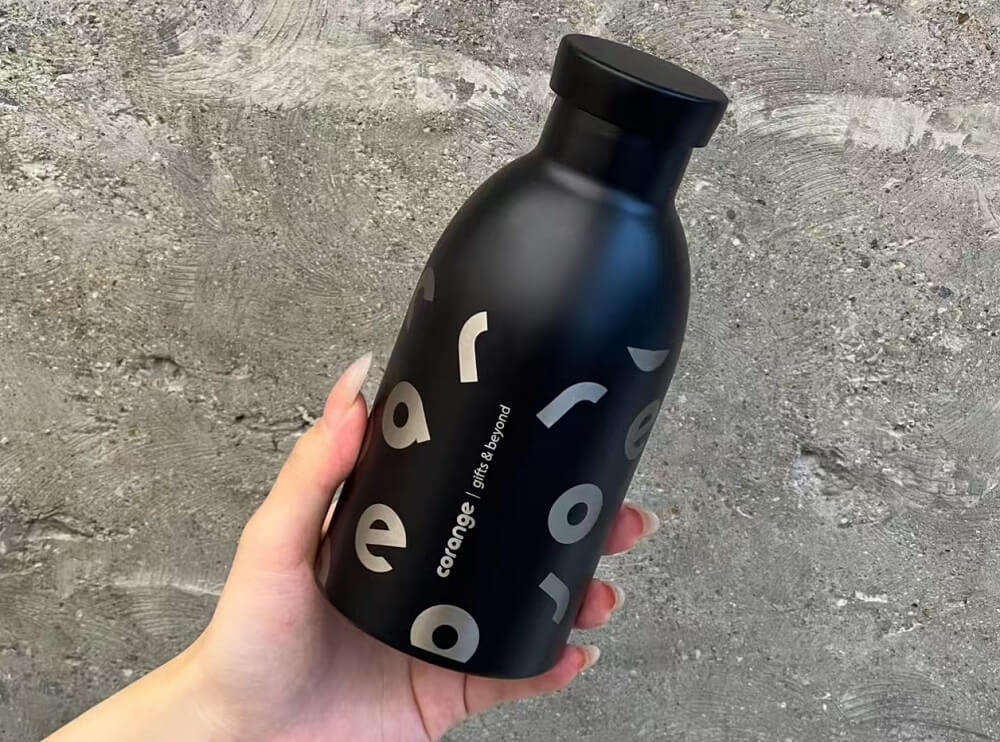
Laser engraving uses a focused laser beam to remove or modify the bottle surface or coating, creating a permanent mark without adding a printed ink layer.
It is especially suitable for stainless steel water bottles, powder-coated bottles, insulated tumblers, corporate gifts, premium retail drinkware, and personalized products.
Best For
Laser engraving works particularly well for:
- Simple logos
- Text
- Names
- Serial numbers
- Minimalist branding
- Premium corporate gifts
- Outdoor drinkware
- Daily-use tumblers
Advantages of Laser Engraving
Excellent durability
The logo is not simply printed on top of the surface, so it has strong resistance to wear during normal use.
Premium appearance
Laser engraving creates a clean, understated appearance that works well for premium and minimalist brands.
No ink layer
There is no printed ink layer that can peel from the bottle surface.
Good for personalization
Individual names, numbers, or selected variable information can be engraved.
Limitations of Laser Engraving
Laser engraving normally creates a single-tone effect based on the bottle surface and underlying material.
It is therefore not the best option for:
- Full-color logos
- Photographs
- Gradients
- Complex multi-color artwork
FACTORY NOTE
Laser engraving usually creates stronger visual contrast on darker powder-coated bottles such as black, navy, forest green, burgundy, and charcoal because removing the coating exposes the stainless steel underneath.
Screen Printing
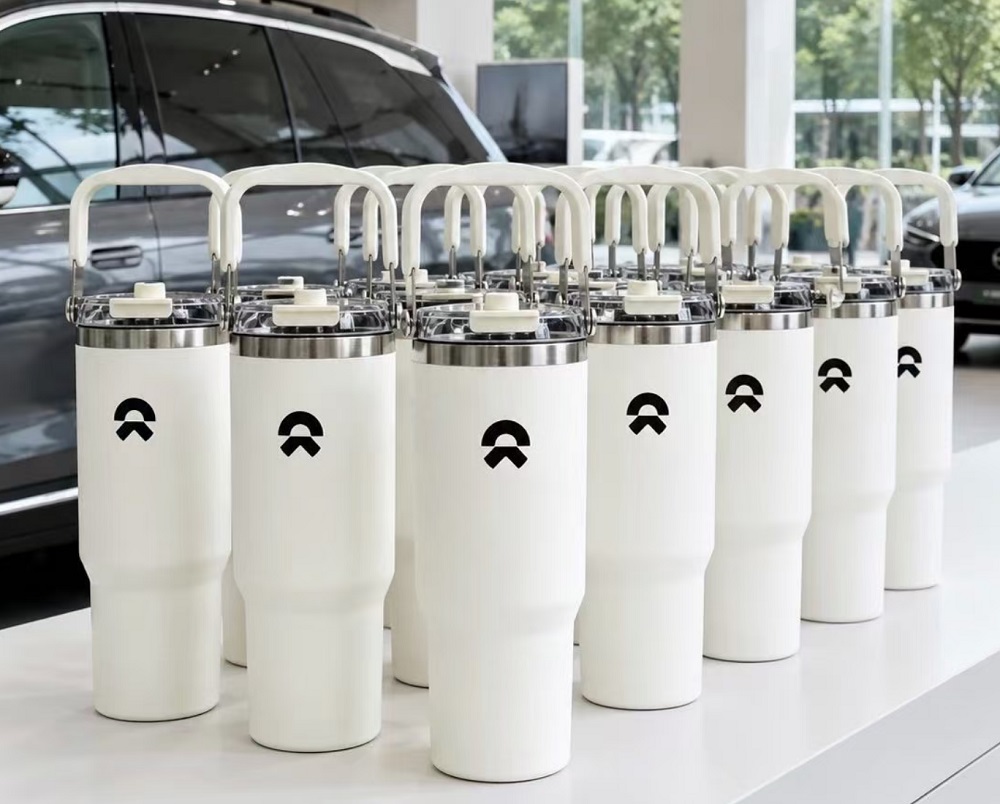
Screen printing transfers ink through a mesh screen onto the bottle surface.
For multi-color logos, each color normally requires a separate printing setup.
It is one of the most established decoration methods for promotional drinkware, corporate gifts, wholesale bottles, and larger-volume branded orders.
Best For
Screen printing is suitable for:
- One-color logos
- Few-color logos
- Bold artwork
- Promotional bottles
- Corporate programs
- Larger-volume orders
Advantages of Screen Printing
Cost-effective at volume
For simple artwork and larger quantities, screen printing can provide good production efficiency.
Strong solid colors
It works well for logos with clear blocks of color and simple graphic elements.
Widely applicable
Screen printing can be used on many stainless steel and plastic drinkware surfaces when the correct ink and process are selected.
Limitations of Screen Printing
Screen printing is less suitable for:
- Photographs
- Detailed gradients
- Highly complex artwork
- Very fine text
- Designs requiring many colors
For multi-color logos, registration between colors must also be controlled carefully.
Ink adhesion and curing are important because insufficient surface preparation or curing can reduce logo durability.
UV Printing
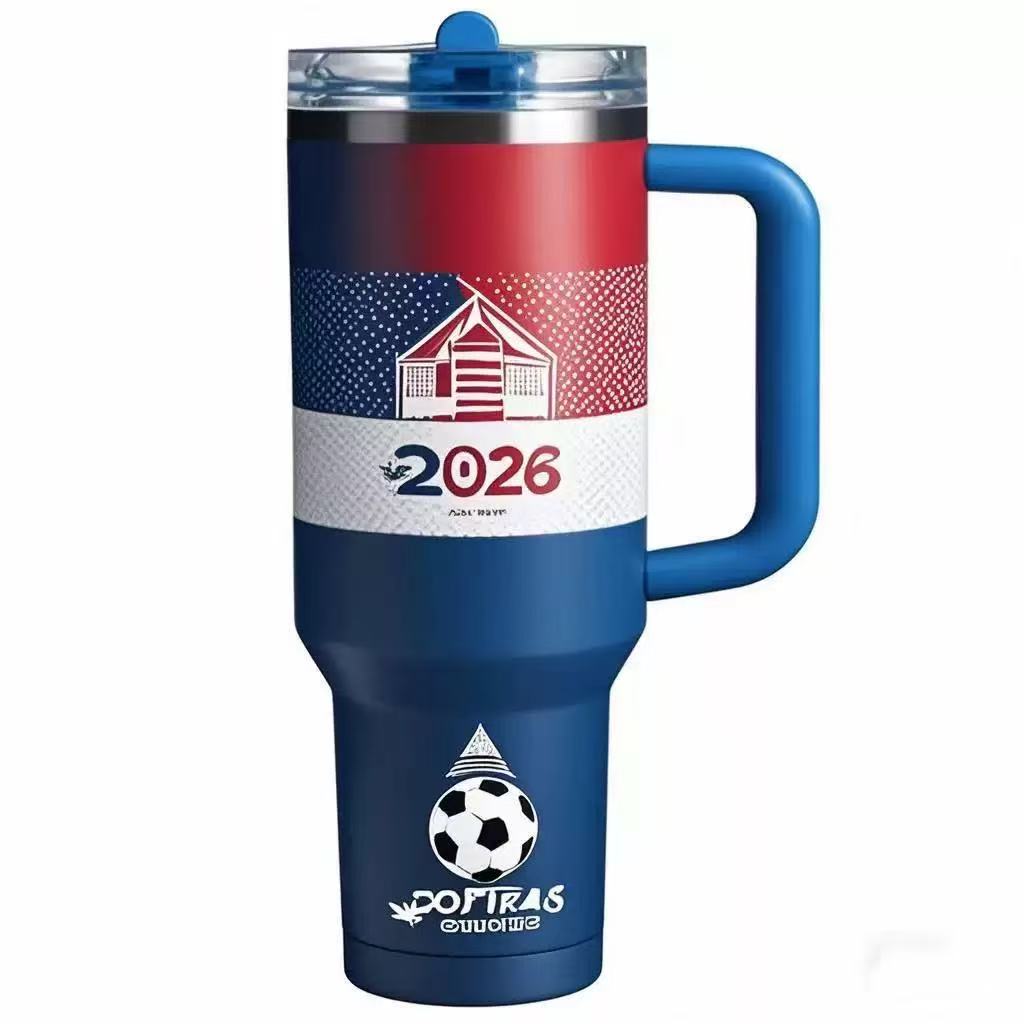
UV printing applies ink directly onto the bottle surface and cures it using ultraviolet light.
It is especially useful when the design requires multiple colors, gradients, illustrations, detailed graphics, or strong visual differentiation.
Best For
UV printing works well for:
- Full-color logos
- Gradients
- Illustrations
- Mascots
- Detailed graphics
- Lifestyle drinkware
- Limited-edition designs
- Colorful retail products
Advantages of UV Printing
Full-color capability
UV printing offers significantly more color flexibility than laser engraving or conventional screen printing.
Suitable for complex artwork
Detailed illustrations and multi-color graphics can be reproduced more easily.
Strong visual differentiation
It can help retail and e-commerce products stand out in photography, product listings, and displays.
Limitations of UV Printing
UV printing creates a printed layer on the bottle surface.
Its long-term durability can therefore depend on:
- Surface preparation
- Bottle coating
- Ink system
- Curing
- Product use
- Abrasion
- Washing conditions
For products exposed to heavy daily wear, laser engraving may provide greater long-term durability.
FACTORY NOTE
A UV printing mockup may look different on the actual curved, powder-coated bottle surface. For color-sensitive projects, approve a physical sample before mass production to confirm color, position, and overall appearance.
Which Logo Method Lasts Longest on Water Bottles?
For coated stainless steel drinkware, laser engraving is generally the most wear-resistant option when properly processed because the logo is created directly on or through the bottle surface rather than applied as a printed ink layer.
Screen printing can also perform well when the bottle surface is properly prepared and the ink is correctly cured.
UV printing can provide good durability for colorful designs, but it remains a printed surface layer and is generally less permanent than laser engraving.
| Method | Durability | Color Capability | Best Use |
|---|---|---|---|
| Laser engraving | Excellent | Single-tone effect | Long-term daily use |
| Screen printing | Good when properly processed | Solid colors | Bulk promotional orders |
| UV printing | Good with correct ink and curing | Full color and gradients | Retail and lifestyle designs |
Durability should not be evaluated by the printing method alone. Bottle coating, surface preparation, curing, washing conditions, and daily use also affect the final result.
Which Logo Method Is Best for Different Artwork?
Artwork complexity is one of the easiest ways to narrow down the decoration method.
| Artwork Type | Recommended Method |
|---|---|
| Simple one-color logo | Laser engraving or screen printing |
| Two- or few-color logo | Screen printing |
| Full-color logo | UV printing |
| Gradient | UV printing |
| Detailed illustration | UV printing |
| Photograph | UV printing, heat transfer, or sublimation depending on bottle surface |
| Individual names | Laser engraving |
| Minimalist premium branding | Laser engraving |
| Large simple promotional logo | Screen printing |
The logo method should be confirmed together with the actual bottle surface because the same artwork can perform differently on stainless steel, powder coating, plastic, or glass.
Can You Print a Logo on a Powder-Coated Water Bottle?
Yes. Powder-coated stainless steel water bottles can typically be customized with laser engraving, screen printing, or UV printing. Laser engraving removes or modifies the coating to create a contrasting mark, while screen printing and UV printing apply artwork over the coated surface.
The right method depends on:
- Artwork
- Required durability
- Number of colors
- Desired appearance
- Bottle coating
- Order quantity
- Product positioning
For premium minimalist branding, laser engraving is often preferred.
For simple colored logos, screen printing can be practical.
For detailed full-color designs, UV printing provides greater design flexibility.
Choosing a Logo Method by Bottle Surface
| Bottle Surface | Suitable Logo Methods | Key Consideration |
|---|---|---|
| Powder-coated stainless steel | Laser engraving, screen printing, UV printing | Contrast and coating adhesion |
| Bare stainless steel | Laser engraving, screen printing | Logo visibility |
| Painted metal surface | Screen printing, UV printing, selected laser processes | Surface compatibility |
| Tritan plastic | Screen printing, UV printing, pad printing | Ink adhesion and material compatibility |
| Glass | Screen printing, UV printing, decals | Adhesion and packaging protection |
| Aluminum | Screen printing, UV printing, sublimation depending on coating | Coating compatibility |
A physical sample is particularly valuable when the final logo appearance depends strongly on coating texture, curvature, or color.
What Affects Custom Logo Cost and MOQ?
Custom logo cost and MOQ depend on the bottle model, decoration method, logo size, number of colors, printing positions, artwork complexity, bottle surface, and order quantity. Logo customization generally has less impact on MOQ than new product tooling or structural customization.
Important cost factors include:
- Logo method
- Number of colors
- Logo size
- Number of printing positions
- Artwork complexity
- Bottle surface
- Order quantity
- Sample requirements
| Factor | Typical Cost Impact |
|---|---|
| Simple laser logo | Low–Medium |
| Large engraving area | Medium |
| One-color screen printing | Low–Medium |
| Multiple screen-print colors | Medium–High |
| Full-color UV printing | Medium–High |
| Multiple logo positions | Higher |
| Individual personalization | Project dependent |
| Complex wraparound artwork | Higher |
The lowest decoration price is not always the best choice.
A more useful comparison is:
Decoration Cost + Durability + Brand Positioning + Order Quantity + Expected Product Life
For buyers comparing order quantities, color requirements, packaging, and tooling, a dedicated Custom Tumbler MOQ Guide can provide a clearer basis for planning the complete project.
Which Logo Method Is Best for Different Buyers?
Different buyers often prioritize different things.
Amazon & E-commerce Sellers
Amazon sellers often need visual differentiation while controlling cost and inventory risk.
Common choices:
- Laser engraving for premium products
- UV printing for colorful differentiation
- Screen printing for simple higher-volume branding
Product photography and listing appearance should be considered together with durability.
Corporate Gift Buyers
Corporate gift projects often prioritize:
- Clean branding
- Logo durability
- Professional appearance
- Reliable delivery
- Gift-ready packaging
Laser engraving and screen printing are common choices depending on artwork and budget.
Retail Brands
Retail products may require stronger visual differentiation.
UV printing can be suitable for:
- Colorful graphics
- Seasonal collections
- Illustrations
- Lifestyle designs
Laser engraving can be more suitable for premium minimalist collections.
Promotional Product Buyers
Promotional projects often prioritize:
- Target cost
- Quantity
- Delivery date
- Logo visibility
Screen printing is frequently practical for simple, larger-volume promotional orders, while laser engraving can add perceived value to premium programs.
Logo Quality Control Checklist Before Bulk Production
Before bulk production, buyers should confirm logo size, position, color, edge clarity, adhesion, rub resistance, and packaging protection against the approved sample. For engraved logos, engraving clarity and contrast should also be checked. These controls help reduce peeling, misalignment, inconsistent appearance, and transportation damage.
| QC Item | What to Check |
|---|---|
| Artwork file | Correct version and approved design |
| Logo size | Matches approved dimensions |
| Logo position | Correct height, alignment, and orientation |
| Color | Matches approved reference or Pantone requirement |
| Edge clarity | No blurred or broken edges |
| Adhesion | Printed layer adheres correctly |
| Rub resistance | Logo withstands agreed abrasion test |
| Engraving clarity | Engraving is clean and consistent |
| Logo contrast | Engraved logo remains visually clear |
| Packaging protection | Logo surface is protected during transport |
For bulk orders, QC should compare production units against the approved sample and confirmed artwork rather than relying only on visual judgment.
Artwork File Requirements for Custom Logo Bottles
Good artwork preparation helps reduce sampling delays and production errors.
For laser engraving and screen printing, vector artwork is generally preferred.
Recommended formats include:
- AI
- EPS
- SVG
- Editable PDF
For UV printing and other full-color methods, high-resolution files may also be required.
Before sample production, confirm:
- Final logo version
- Pantone colors
- Logo dimensions
- Print position
- Number of sides
- Artwork orientation
- Special text
- QR codes
- Individual names or numbers
Do not rely on low-resolution screenshots when precise logo reproduction is required.
Common Logo Customization Mistakes
1. Choosing the Method Only by Price
The cheapest printing method may not provide the required durability or appearance.
Compare the total product requirement rather than decoration cost alone.
2. Ignoring the Bottle Surface
A method that works well on one coating may perform differently on another.
Surface compatibility should be confirmed before bulk production.
3. Using Low-Resolution Artwork
Poor artwork can create blurred edges, incorrect proportions, or unnecessary sample revisions.
Use vector files whenever possible.
4. Approving Only a Digital Mockup
A flat digital image cannot fully represent:
- Bottle curvature
- Coating texture
- Engraving contrast
- Printed color
- Actual logo scale
For important projects, approve a physical sample.
5. Ignoring Packaging Protection
A logo can leave the production line correctly and still become scratched during packing or transport.
Packaging protection should therefore be included in logo QC.
TOPNOVO’s Recommendation
There is no single logo method that is best for every custom water bottle.
| Project Goal | Recommended Method |
|---|---|
| Maximum durability | Laser engraving |
| Premium minimalist appearance | Laser engraving |
| Simple logo at larger volume | Screen printing |
| Promotional cost control | Screen printing |
| Full-color branding | UV printing |
| Gradients and illustrations | UV printing |
| Individual names | Laser engraving |
| Colorful retail differentiation | UV printing |
As a custom drinkware manufacturer, TOPNOVO recommends confirming the bottle surface, artwork, decoration method, and physical sample together rather than selecting a logo method based on price alone.
For brands developing a complete bottle program, customization should also be considered together with bottle selection, Pantone color, lid design, packaging, quality control, and bulk production requirements.
Frequently Asked Questions
What Are the Best Types of Bottles to Print Logos On?
Powder-coated stainless steel bottles, insulated tumblers, Tritan plastic bottles, glass bottles, and aluminum bottles can all be customized with logos. Powder-coated stainless steel is especially versatile because it can support laser engraving, screen printing, and UV printing.
Which Logo Method Lasts the Longest on Water Bottles?
Laser engraving is generally the most durable option for stainless steel and powder-coated drinkware because the mark is created directly on or through the surface instead of relying on a printed ink layer.
Can Laser Engraving Produce a Color Logo?
Laser engraving normally creates a single-tone effect determined by the bottle surface and underlying material. For full-color graphics, UV printing is generally more suitable.
Is Screen Printing Suitable for Custom Water Bottles?
Yes. Screen printing is especially suitable for simple one- or few-color logos and medium- to large-volume promotional orders.
Is UV Printing Durable on Water Bottles?
UV printing can provide good durability when the bottle surface, ink, and curing process are properly matched. However, because it remains a printed surface layer, laser engraving is generally more wear-resistant for heavy long-term use.
Can You Print a Logo on a Powder-Coated Water Bottle?
Yes. Powder-coated stainless steel bottles can typically use laser engraving, screen printing, or UV printing. The best method depends on the artwork, durability requirements, color, and desired appearance.
Which Printing Method Is Best for Full-Color Water Bottle Logos?
UV printing is generally better for full-color logos, gradients, illustrations, and detailed artwork. Laser engraving is more suitable when permanent single-tone branding and durability are the priorities.
Should I Approve a Physical Logo Sample Before Bulk Production?
Yes. A physical sample helps confirm logo size, position, color, engraving contrast, ink adhesion, and appearance on the actual curved bottle surface before mass production.
Which Logo Method Is Best for Amazon Sellers?
It depends on the product positioning. Laser engraving is suitable for premium and durable products, UV printing can create stronger visual differentiation, and screen printing can be cost-effective for simple logos at larger quantities.
Final Thoughts
Choosing a logo method is part of product strategy, not just a printing decision.
Laser engraving is generally the strongest option for durability and premium single-tone branding.
Screen printing is practical and cost-effective for simple logos and larger promotional orders.
UV printing provides greater flexibility for full-color graphics, gradients, illustrations, and visually distinctive retail products.
The right method depends on:
Artwork + Bottle Material + Surface Finish + Order Quantity + Durability + Target Cost + Product Positioning
Before bulk production, confirm the bottle surface, logo method, artwork, physical sample, and QC standard together.
Planning a custom water bottle project? Share your bottle style, logo file, quantity, surface color, target market, and packaging requirements with TOPNOVO. The appropriate decoration method can then be evaluated before sample production.
Explore Custom Water Bottle Manufacturing →
View Customization Capabilities →
Request a Sample / Start Your Project →