
Quick Answer: How Are Stainless Steel Water Bottles Tested for Leaks?
Manufacturers test a stainless steel water bottle by filling it, closing it with the final production lid and checking the complete assembly under defined positions and movement conditions.
Common methods include:
- Inverted leak test
- Horizontal side-placement test
- Shaking or dynamic-movement test
- Pressure or air-leak test
- Dedicated straw-lid or valve test
The bottle body, lid, silicone gasket, straw, valve and vent should be evaluated together. Testing only the bottle body or an unrelated lid cannot confirm the leak resistance of the finished product.
For custom projects, buyers should define:
Liquid · Fill level · Temperature · Lid-closing method · Bottle position · Test duration · Sample quantity · Pass/fail criteria
Leak resistance should be checked during sample approval, monitored during production and verified before shipment.
Brands developing a custom stainless steel water bottle should confirm the lid and leakage requirements before approving mass production.
What Makes a Stainless Steel Bottle Leakproof?
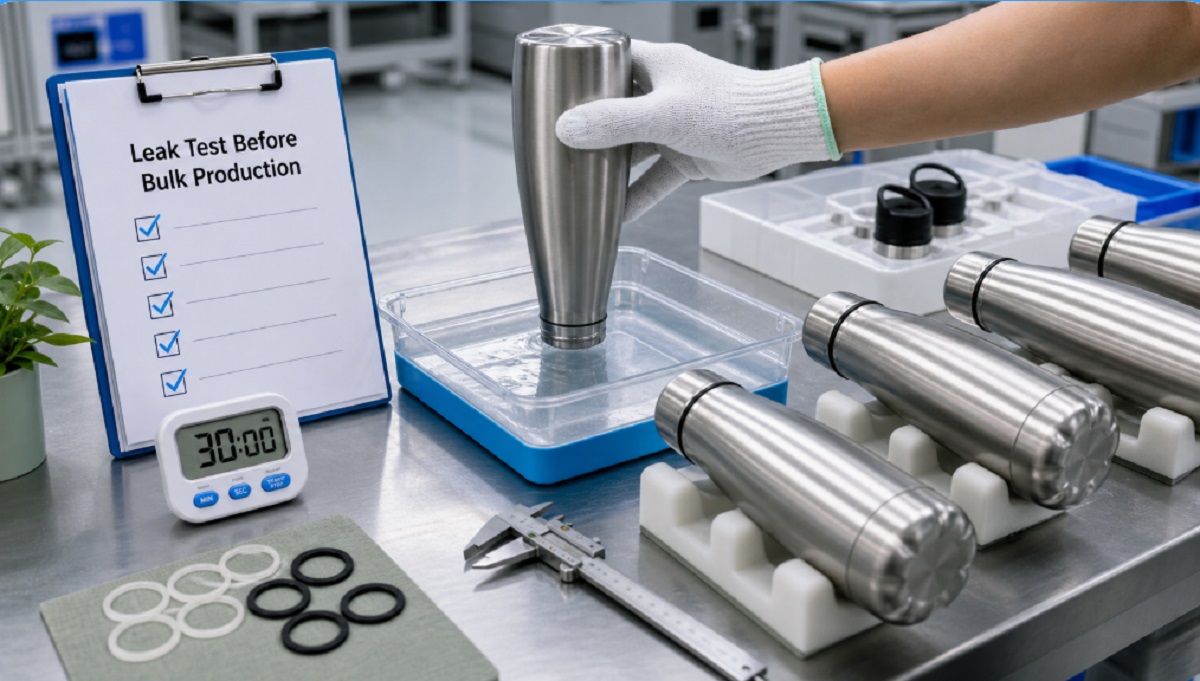
A leakproof bottle is a sealing system, not simply a stainless steel container with a tightly closed lid.
Reliable sealing depends on:
- Bottle-mouth dimensions
- Lid and bottle thread compatibility
- Silicone gasket size, hardness and position
- Straw valve or drinking-spout design
- Vent-hole design
- Locking force
- Plastic-component tolerances
- Correct assembly
- User closing instructions
A bottle can look correct and still leak when one component is deformed, incorrectly installed or dimensionally incompatible.
“Leakproof” should therefore describe verified performance under defined test conditions. It should not be used as an unsupported absolute claim.
Leakproof vs Splash-Resistant
These terms do not mean the same thing.
| Claim | Practical meaning | Typical use |
|---|---|---|
| Leakproof | Designed to prevent liquid escape when correctly closed under defined test conditions | Bottles carried inside bags |
| Leak-resistant | Reduces leakage risk but may not prevent every drop in every position | General travel and sports bottles |
| Splash-resistant | Helps reduce splashes while upright | Desk tumblers and coffee lids |
| Spill-resistant | Helps limit accidental spills during normal use | Everyday drinkware |
A press-fit tumbler lid may be splash-resistant while upright but leak when placed horizontally. A screw lid with a correctly fitted gasket is generally more suitable when bag-carry performance is required.
Before selecting a lid, read TOPNOVO’s water bottle lid types guide.
Why Do Stainless Steel Water Bottles Leak?
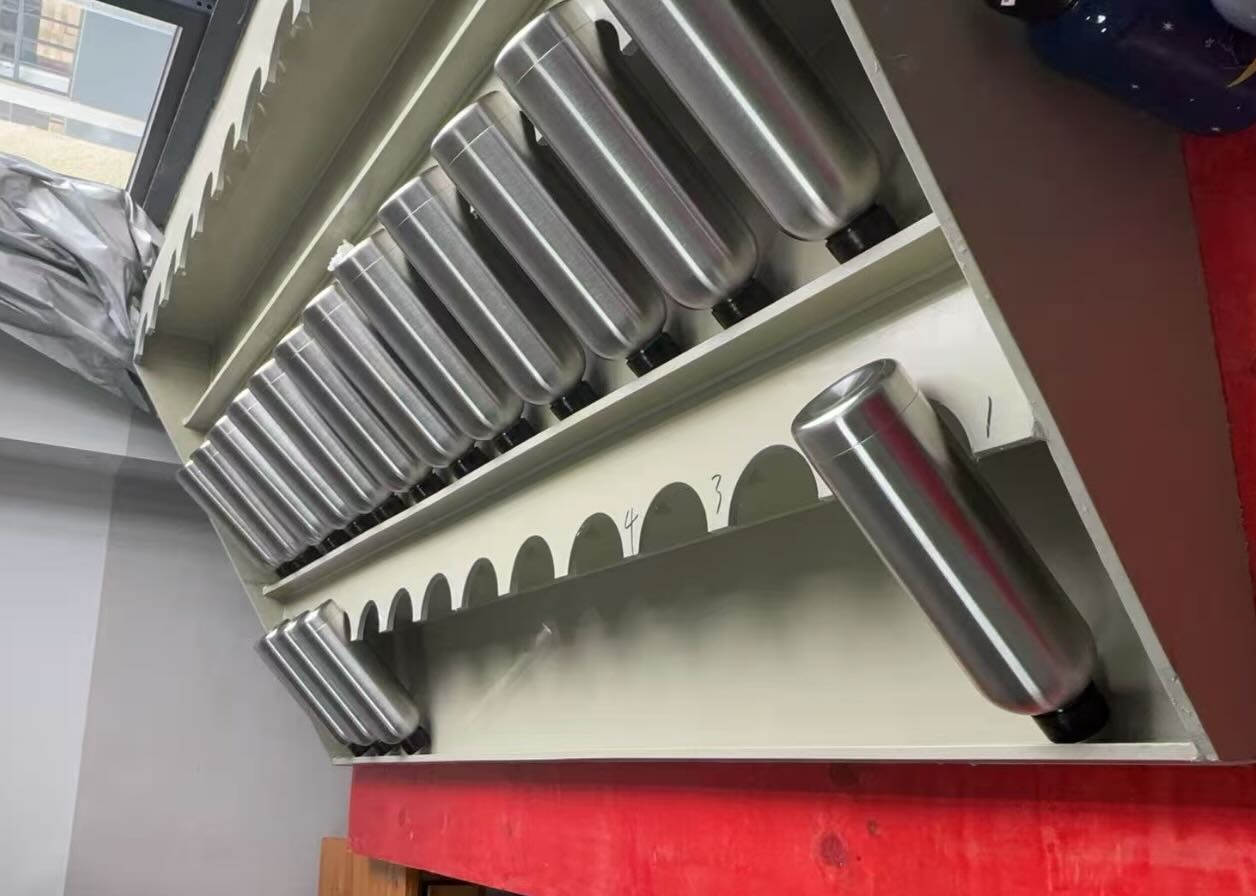
Most leakage problems originate in product design, component variation or assembly.
| Leakage point | Possible cause | What QC should check |
|---|---|---|
| Silicone gasket | Incorrect size, hardness, position or deformation | Material, dimensions and assembly |
| Bottle thread | Loose, damaged or mismatched fit | Thread dimensions and compatibility |
| Straw valve | Valve does not close consistently | Valve structure and movement |
| Flip lid | Weak lock, hinge or closing force | Opening, closing and locking |
| Vent hole | Vent does not seal correctly | Vent design and seal |
| Plastic lid | Warping or molded-part variation | Dimensions and component consistency |
| Bottle mouth | Out-of-round or dimensional variation | Mouth diameter and shape |
| Assembly | Missing or incorrectly installed seal | Assembly instructions and inspection |
Leakage can also appear after impact, repeated opening, incorrect gasket installation or use outside the intended conditions.
For a new or modified lid, sealing performance should be reviewed during product development rather than left for final inspection.
Water Bottle Lid Types and Leakage Risk
| Lid type | Main benefit | Primary leakage concern |
|---|---|---|
| Screw lid | Simple structure and strong sealing potential | Thread and gasket fit |
| Straw lid | Convenient one-handed drinking | Straw valve, vent and mouthpiece |
| Flip lid | Fast access | Hinge, button, lock and silicone seal |
| Chug lid | Faster water flow | Spout closure and vent sealing |
| Press-fit tumbler lid | Easy to open and clean | Often splash-resistant rather than leakproof |
| Coffee sip lid | Convenient for hot drinks | Drinking opening may not fully seal |
A more complex lid is not automatically inferior, but it contains more potential leakage points. Each valve, vent, hinge, button and seal needs suitable functional control.
The best lid depends on where the product will be used. A bottle carried inside a backpack has different sealing requirements from a handled tumbler used upright in a car cup holder.
Five Common Water Bottle Leak Tests
Inverted Leak Test
Fill and close the bottle, then place it upside down for an agreed period.
Inspect:
- Bottle-to-lid connection
- Silicone gasket
- Drinking opening
- Straw valve
- Vent hole
This test identifies obvious sealing problems but does not reproduce every movement experienced during carrying.
Horizontal Side-Placement Test
Place the closed, filled bottle horizontally.
This simulates storage in a backpack, gym bag, vehicle or shipping carton. A bottle that performs normally while upright may reveal a slow leak when left on its side.
Dynamic-Movement Test
Shake or repeatedly move the filled bottle according to an agreed method.
This test can reveal intermittent leakage caused by:
- Gasket movement
- Valve opening
- Vent instability
- Loose thread fit
- Inconsistent locking
Dynamic testing is particularly relevant to straw, flip and multi-part lids.
Pressure or Air-Leak Test
Pressure-based or air-leak equipment can help detect small sealing defects that may not be immediately visible during a water test.
The appropriate pressure, equipment and acceptance limit depend on the bottle and lid structure. Buyers should not copy one pressure setting across every product without technical validation.
Straw-Lid and Valve Test
A straw lid should be checked at every potential leakage path:
- Straw connection
- Drinking valve
- Mouthpiece
- Vent hole
- Silicone seal
- Flip cover
- Locking mechanism
A straw bottle may pass a static inverted test and still leak during movement if the valve or vent does not close consistently.
How Should a Leak-Test Requirement Be Written?
“Must be leakproof” is not a complete QC instruction.
A measurable requirement should define:
| Test variable | What to specify |
|---|---|
| Test sample | Final bottle, lid, gasket, straw and valve |
| Liquid | Water or agreed test liquid |
| Fill level | Defined percentage, volume or fill line |
| Temperature | Agreed test temperature |
| Lid preparation | Gasket installation and closing method |
| Position | Inverted, horizontal or specified angle |
| Duration | Agreed testing period |
| Movement | Static, shaking or repeated movement |
| Sample quantity | Agreed sampling plan |
| Acceptance | No visible leakage or agreed allowable result |
Example wording:
Fill the finished bottle to the agreed level with water at the specified temperature. Install the final gasket and lid according to the approved instructions. Place the bottle horizontally for the agreed duration, then inspect all sealing points for visible leakage.
This is a specification example, not a universal industry test standard. The conditions should match the product design, intended use and buyer requirements.
When Should Leak Testing Be Performed?
During product development
Evaluate thread geometry, gasket dimensions, valve function, vent design and component tolerances before locking the lid structure.
During sample approval
Test the final bottle, lid, gasket, straw and valve combination. Keep the approved sample and written specification as production references.
At the start of production
Confirm first articles before full production continues. This can identify component or assembly problems early.
During mass production
Use in-process checks to monitor lid fit, gasket installation, molded-component variation and finished-product sealing.
Before shipment
Include leakage in the agreed final inspection plan. Confirm that the correct bottle, lid, accessories and packaging have been inspected.
The main principle is:
Do not wait until final inspection to discover a sealing-design problem.
TOPNOVO’s drinkware testing and quality control process covers controls before, during and after production.
What Should Buyers Approve Before Production?
Before approving a custom leakproof bottle, confirm:
- Final bottle and lid model
- Bottle-mouth and thread fit
- Silicone gasket material and position
- Straw, valve and vent function
- Locking and closing method
- Intended beverage and temperature
- Leak-test conditions
- Sample quantity and acceptance criteria
- Approved physical sample
- Written specification and artwork version
If the lid, gasket, valve or bottle mouth changes after approval, review whether another leak test is required.
Leak Testing vs Complete Bottle Testing
Leak testing confirms sealing performance. It does not confirm complete product quality.
| Leak testing covers | Complete validation may also cover |
|---|---|
| Lid sealing | Materials |
| Gasket fit | Capacity and dimensions |
| Thread compatibility | Insulation |
| Straw and valve sealing | Coating and logo durability |
| Vent sealing | Drop and impact performance |
| Assembly leakage | Packaging and final inspection |
The detailed material, insulation, coating, drop, packaging and AQL checks belong in the bulk-production water bottle testing guide. Keeping these topics separate prevents both pages from competing for the same search intent.
How TOPNOVO Controls Leakage Risk
TOPNOVO treats leakage as both a product-development issue and a production-control issue.
Before production
The team reviews the product specification, lid structure, components, approved sample and test requirements.
During production
QC checks relevant areas such as lid fit, gasket assembly, component consistency and leakage performance.
Before shipment
Finished products are inspected against the approved specification and quality plan.
TOPNOVO reports operating a 24,000㎡ manufacturing facility with 16 full-time quality-control inspectors. Specific testing scope and sampling requirements should be confirmed for each project.
Suggested real-photo caption:
Stainless steel water bottles undergoing inverted leak testing during production to verify lid and sealing performance at TOPNOVO.
Only use this caption with a genuine TOPNOVO factory photograph. Do not use an AI-generated image as evidence of actual testing.
Questions to Ask a Water Bottle Manufacturer
Ask the supplier:
- Is this lid described as leakproof, leak-resistant or splash-resistant?
- How is the completed bottle tested?
- Are the final bottle and lid tested together?
- How are silicone gaskets controlled?
- Are straw lids tested under movement?
- Which test variables and acceptance criteria are used?
- At which production stages is leakage checked?
- What happens when a sample or production batch fails?
- Will the approved sample remain the production reference?
- Will changing the lid or gasket require retesting?
A useful supplier answer should describe the method, test stage and acceptance criteria—not only state that the product is “100% leakproof.”
Frequently Asked Questions
How do manufacturers test stainless steel bottles for leaks?
They fill and close the completed bottle, then evaluate the bottle-and-lid assembly under defined positions and movements. Tests may include inverted, horizontal, shaking, pressure and straw-valve checks.
Why does a bottle leak when the lid is closed?
Possible causes include a misplaced gasket, thread mismatch, lid deformation, poor valve sealing, bottle-mouth variation or incorrect assembly.
Are straw lids harder to make leakproof?
They can be more complex because they contain additional valves, vents, mouthpieces and seals. Each component introduces another possible leakage path.
Should the final production lid be used for testing?
Yes. The final bottle, lid, gasket, straw and valve should be tested together because compatibility and assembly directly affect sealing.
When should leakage be tested?
Leak resistance should be evaluated during development and sampling, monitored during production and verified before shipment.
Does passing a leak test prove the entire bottle is high quality?
No. Leakage testing covers sealing. Complete quality validation may also include material, insulation, coating, durability, appearance and packaging checks.
Develop a Custom Leakproof Water Bottle
A reliable sealing system starts with the correct bottle, lid, gasket and test requirement.
Send TOPNOVO your:
Target market · Bottle model · Lid type · Intended use · Beverage temperature · Quantity · Required leakage claim
We can review available bottle and lid options, prepare samples and define a suitable inspection plan before mass production.
Explore Custom Stainless Steel Water Bottles
See TOPNOVO Quality Control
Request a Custom Sample