
Stanley and Owala succeeded because they turned drinkware from a simple container into a lifestyle product. Stanley demonstrated the demand for large-capacity tumblers with handles, strong colors and cup-holder compatibility. Owala differentiated itself through lid design, drinking experience and playful color combinations.
For new drinkware brands in 2026, the goal should not be to copy either company. A stronger strategy is to understand why customers use these products and develop a bottle, tumbler or mug around a specific daily routine.
Quick Answer: What Are the Main Drinkware Trends in 2026?
The most important drinkware trends in 2026 are:
- Functional and easier-to-clean lids
- Portable capacities designed around daily routines
- Matte powder coatings and coordinated color collections
- Minimalist laser engraving and subtle branding
- Cup-holder-compatible tumblers
- Modular lids, silicone boots and accessories
- Practical durability instead of disposable novelty
- Market-specific products for office, gym, school and travel
For B2B buyers, the key lesson is that a successful drinkware product must combine appearance, function, manufacturability and consistent quality. A visually attractive bottle will not build repeat demand if its lid leaks, coating scratches or packaging arrives damaged.
2026 Drinkware Trend Summary
| Trend | Customer value | B2B manufacturing focus |
|---|---|---|
| Functional lids | Easier drinking and carrying | Leakage, cleaning and component fit |
| Portable capacity | Fits commuting and daily routines | Size, weight and cup-holder compatibility |
| Matte finishes | Modern appearance and better grip | Coating adhesion and color consistency |
| Laser engraving | Durable, premium branding | Artwork, contrast and position |
| Modular accessories | More product combinations | Component compatibility |
| Giftable packaging | Better perceived value | Inserts and shipping protection |
| Practical durability | Longer product life | Insulation, coating and drop testing |
Why Stanley and Owala Changed the Market
Reusable drinkware is no longer purchased only for temperature retention. Consumers carry bottles to offices, gyms, schools, cars and outdoor activities. The product becomes part of their routine and personal style.
Stanley made the large handled tumbler feel like an everyday lifestyle accessory. Owala grew through a different product feature: the lid. Its drinking system helped the bottle feel distinctive in a crowded category.
The lesson for emerging brands is simple:
Winning drinkware brands do not only sell stainless steel. They build products around a repeatable daily habit.
1. Functional Lids Matter More Than Ever
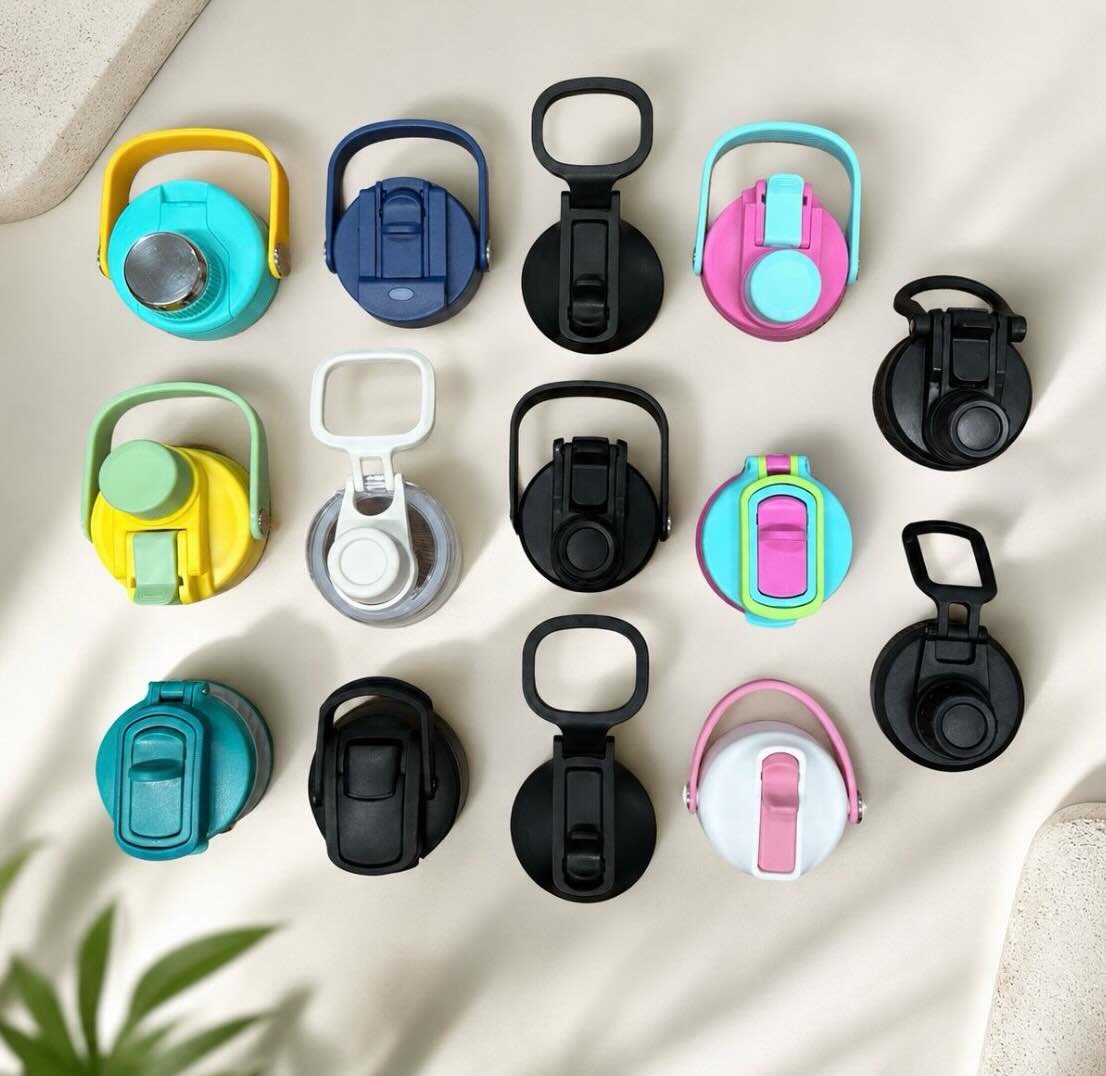
The lid affects drinking comfort, leakage, carrying, cleaning and customer reviews. A visually attractive bottle can still fail if the lid is difficult to use or clean.
| Use case | Suitable lid direction |
|---|---|
| Gym and sports | Chug lid or flip lid |
| Office and commuting | Leak-resistant screw lid or sip lid |
| Kids and school | Locking straw lid or flip lid |
| Travel | Handle lid or secure straw lid |
| Coffee | Sip lid with splash control |
| Daily hydration | Straw lid or dual-drink lid |
Brands should select lids according to the intended use rather than copying a famous patented structure.
A gym user may want fast water flow. A student needs leak control. A coffee buyer needs comfortable sipping and splash resistance. Components should also be removable enough for practical cleaning.
Topnovo’s guide on how to choose a water bottle lid can help buyers compare straw, flip, screw, chug, handle and coffee lids.
2. Capacity Should Match the Customer’s Routine

Large-capacity tumblers remain popular, particularly in 30 oz and 40 oz sizes. They reduce refills and work well for desks, vehicles and gyms.
However, not every new brand needs another oversized tumbler. Smaller products can succeed when they address a more specific use case.
| Product direction | Best for | Main advantage |
|---|---|---|
| 12–16 oz coffee tumbler | Office and corporate gifts | Compact and portable |
| 20–24 oz slim bottle | School and commuting | Easier to carry |
| 30 oz tumbler | Daily hydration | Balanced capacity |
| 40 oz handled tumbler | Gym, desk and lifestyle | Strong perceived value |
| Kids bottle | School and family markets | Clear use case |
| Outdoor bottle | Travel and hiking | Durable positioning |
Capacity also affects product weight, carton size, shipping cost, retail price and cup-holder compatibility.
Brands comparing product sizes can use Topnovo’s water bottle size guide for brands before finalizing a collection.
3. Color Strategy Can Create Repeat Purchases

Color is one of the simplest ways to differentiate an existing bottle without developing a new mold.
Popular color directions include:
- Soft neutrals for office and lifestyle brands
- Earth tones for outdoor and sustainability-focused products
- Bright contrast colors for youth and sports markets
- Seasonal colors for limited campaigns
- Matte black and white for corporate collections
- Metallic and gradient finishes for gift programs
The 2026 wholesale insulated bottle trends also highlight minimalist styling, muted colors and matte powder-coated surfaces.
Color should not be selected separately from the coating, logo method, packaging and target price. The same Pantone reference can appear different on stainless steel, plastic, silicone and printed paper because each substrate reflects light and accepts color differently.
For B2B production, a digital color reference is not enough. Buyers should approve a physical color sample and define an acceptable tolerance before mass production.
4. Minimalist Laser Engraving Is Growing
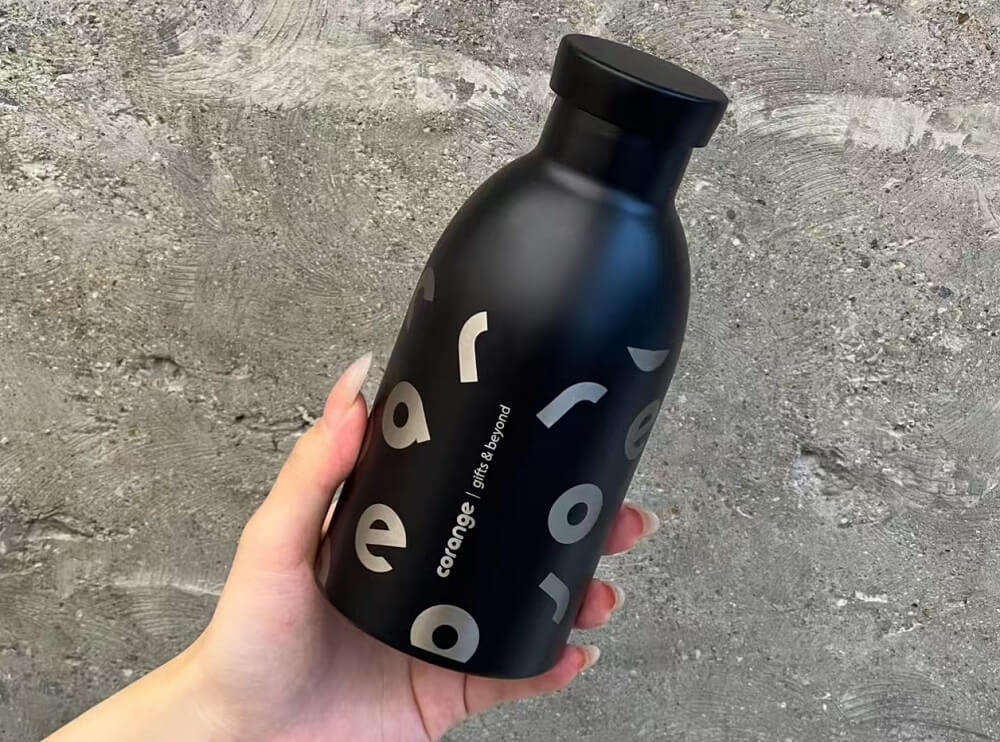
As bottle shapes and color palettes become more minimalist, many brands are replacing oversized graphics with smaller and more durable laser-engraved designs.
Laser engraving is especially suitable for powder-coated stainless steel because the laser removes the coating and reveals the metal underneath. This creates a clean contrast without adding an ink layer that may peel.
What Are Some Popular Designs for Laser Engraved Water Bottles?
Popular laser-engraved water bottle designs include minimalist brand logos, individual names, initials, monograms, short messages, geometric line art, outdoor symbols and commemorative dates.
| Laser-engraved design | Best for |
|---|---|
| Small company logo | Corporate gifts and employee programs |
| Individual name or initials | Personalized gifts and team bottles |
| Monogram | Executive and premium collections |
| Short slogan | Events and brand communities |
| Geometric line art | Minimalist lifestyle brands |
| Mountain, tree or compass icon | Outdoor and travel collections |
| Date or coordinates | Anniversaries and commemorative gifts |
| Department or employee number | Staff identification programs |
Matte black, cream, sage green, dusty blue, beige and stone gray are particularly suitable for minimalist branding. The exposed metal can create a clear contrast against these powder-coated surfaces.
However, designs must remain suitable for production. Extremely small text, very thin lines and large solid engraved areas may not produce the clearest result on a curved bottle.
Before mass production, buyers should confirm:
- Vector artwork
- Engraving dimensions
- Logo position
- Contrast against the coating
- Orientation relative to the lid or handle
- A physical engraved sample
For a complete comparison, review Topnovo’s guide to laser engraving, screen printing and UV printing.
5. Portable Large-Capacity Drinkware Is Replacing Bulkier Designs
Customers still want larger capacities, but portability is becoming more important.
Buyers are increasingly considering:
- Slimmer body profiles
- Comfortable handles
- Lower empty weight
- Cup-holder-compatible bases
- Secure lids
- Balanced weight when full
This creates opportunities for 30 oz and 40 oz tumblers that provide generous capacity without feeling unnecessarily bulky.
Product dimensions should be verified during sampling. A rendering cannot confirm handle comfort, balance, cup-holder fit or actual weight during daily use.
6. Accessories Can Extend a Product Collection
A brand does not always need a completely new bottle mold to create differentiation.
Accessories can include:
- Interchangeable lids
- Silicone boots
- Carry straps
- Replacement straws
- Cleaning brushes
- Tea infusers
- Name tags
- Gift-box components
Using one bottle body with several accessory combinations can help brands create different SKUs while reducing structural development risk.
Component compatibility must still be controlled. The factory should confirm thread fit, lid sealing, color consistency and packing accuracy for every approved combination.
7. Skinny Tumblers Remain Relevant
Skinny tumblers remain useful in 2026 because they are lightweight, easy to decorate and suitable for offices, coffee, gifts and daily hydration.
Most are 16–20 oz straight-wall stainless steel products, providing a relatively simple surface for laser engraving, screen printing and UV printing.
| Skinny tumbler option | Best for | Useful additions |
|---|---|---|
| 16 oz tumbler | Coffee and office gifts | Sip lid and gift box |
| 20 oz tumbler | Hydration and promotions | Straw and cleaning brush |
| Powder-coated tumbler | Retail and Amazon | Silicone boot and color box |
| Gift-set tumbler | Corporate programs | Straw, brush and branded packaging |
The opportunity is not only the tumbler itself. Coordinated lids, straws, boots and packaging can make a standard model feel like a complete product.
8. Useful Promotional Drinkware Beats Cheap Giveaways
For promotional and corporate gift buyers, daily usefulness is often more valuable than novelty.
A bottle people keep usually provides:
- Comfortable hand feel
- Reliable lid performance
- Useful capacity
- Effective insulation
- Attractive but practical color
- Durable branding
- Easy cleaning
- Suitable packaging
The lowest-priced bottle may reduce the initial purchase cost. However, if recipients do not use it, the campaign loses most of its long-term brand exposure.
Gift and promotional buyers can explore Topnovo’s custom drinkware solutions for promotional companies.
9. Sustainability Must Be Practical
A reusable bottle is not automatically sustainable if it leaks, scratches quickly or is replaced after limited use.
Practical sustainability includes:
- Durable stainless steel construction
- Replaceable lids and straws
- Strong coating performance
- Reduced unnecessary plastic packaging
- Recyclable paper packaging
- Clear material documentation
- Accurate demand planning
- Sample approval before large-scale production
For many daily-use bottles, 304 stainless steel is a practical material choice. Other material specifications should be selected according to the actual use case, target market and testing requirements.
The most credible sustainability strategy is to manufacture a product customers will keep and use.
What New Brands Should Not Copy
Trend analysis should inform product development, not encourage imitation.
New brands should avoid copying:
- Patented lid structures
- Exact bottle silhouettes
- Recognizable brand color combinations
- Competitor product names
- Protected logos or graphics
- Unsupported performance claims
- Viral styles without reliable quality control
A better question is not “How can we make another Stanley or Owala?” It is:
Which customer group can we serve more clearly, conveniently or consistently?
Product Strategy Matrix for New Brands
| Buyer type | Product direction | Differentiator | Factory priority |
|---|---|---|---|
| Amazon seller | 30–40 oz tumbler | Review-ready function | QC and packaging |
| Corporate gift buyer | Coffee tumbler or bottle | Subtle logo and gift box | Branding consistency |
| Retail brand | Coordinated collection | Color story | Finish consistency |
| Outdoor brand | Durable bottle | Rugged positioning | Material and coating tests |
| Kids brand | Locking straw bottle | Easy use and cleaning | Lid safety and drop testing |
| Wellness brand | Slim bottle | Soft colors and portability | Hand feel and repeat quality |
Product Development Checklist
Before requesting a quotation, confirm:
| Decision area | Information required |
|---|---|
| Target user | Office, gym, school, travel or outdoor |
| Product type | Bottle, tumbler, coffee mug or kids bottle |
| Capacity | 12 oz, 20 oz, 24 oz, 30 oz or 40 oz |
| Lid | Straw, flip, screw, chug, handle or sip |
| Material | Stainless steel and lid-component requirements |
| Finish | Powder coating, metallic, gradient or bare steel |
| Logo | Laser engraving, screen printing or UV printing |
| Packaging | White box, kraft box, color box or gift box |
| Testing | Leakage, insulation, coating, logo and packaging |
| Launch plan | Trial order, seasonal launch or full collection |
A good manufacturer should help buyers identify mismatches between product, use case, customization, packaging and budget before production begins.
Frequently Asked Questions
What are the biggest drinkware trends in 2026?
Major trends include functional lids, portable capacities, matte powder coatings, muted colors, minimalist laser engraving, interchangeable accessories and use-case-specific products.
Are 40 oz tumblers still popular in 2026?
Yes. However, buyers are paying more attention to weight, handle comfort, cup-holder fit and portability. Large capacity alone is no longer enough to differentiate a product.
What are popular designs for laser-engraved bottles?
Popular designs include small logos, individual names, initials, monograms, short slogans, geometric artwork, outdoor icons, dates and coordinates. Simple vector artwork generally produces the clearest result.
Is laser engraving better than printing?
Laser engraving is usually more durable and provides a premium single-tone effect. Screen printing is cost-effective for simple colored logos, while UV printing is more suitable for detailed full-color artwork.
Should new brands develop a completely new bottle mold?
Not always. An existing bottle can be differentiated through color, logo, lid, accessories and packaging. New tooling is more appropriate when a brand needs an exclusive structure or function and has sufficient development budget and order volume.
How Topnovo Supports New Drinkware Brands
Topnovo supports brands, wholesalers, Amazon sellers, retailers and promotional companies with:
- Custom stainless steel bottles and tumblers
- Existing-model customization
- OEM and ODM development
- Lid and accessory selection
- Pantone color matching
- Laser engraving, screen printing and UV printing
- Custom retail and gift packaging
- Sample development
- Leakage, insulation, coating and logo inspection
- Bulk manufacturing and shipment preparation
Brands ready to select a bottle can review Topnovo’s custom stainless steel water bottle manufacturing capabilities. Buyers planning a tumbler collection can explore the custom stainless steel tumbler manufacturer page.
Before bulk production, request a custom drinkware sample to verify the product, lid, finish, logo and packaging.
Final Thoughts
The main opportunity in 2026 is not to copy the largest drinkware brands. It is to understand one customer group better and build a product around that group’s daily routine.
Successful products combine:
Useful function → distinctive but practical design → production-ready customization → verified sample → consistent quality → clear market positioning
If you have a product direction, send Topnovo your reference model, target user, capacity, lid, colors, logo, estimated quantity, packaging and destination. The team can recommend a practical sample and production route for your next drinkware collection.