
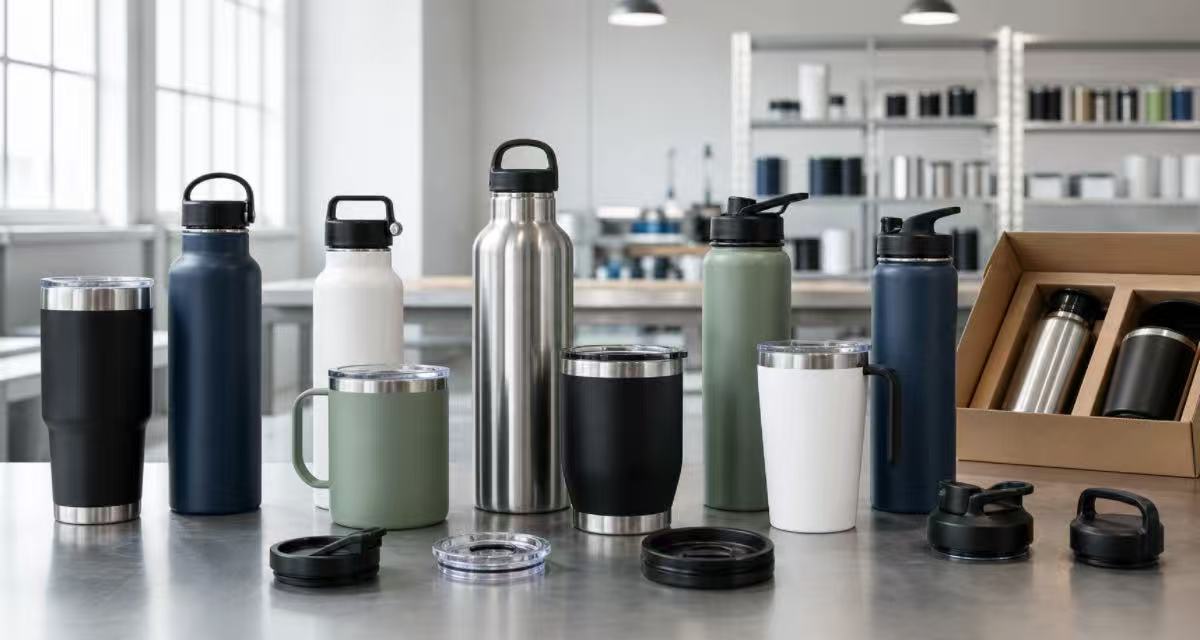
OEM drinkware manufacturing means the buyer provides the product concept, drawings, specifications, structure requirements, or performance standards, and the manufacturer develops and produces the product according to those requirements.
ODM drinkware manufacturing means the manufacturer already has an existing bottle, tumbler, mug, or lid design, and the buyer customizes it through logo, color, finish, lid, accessories, or packaging.
For most new drinkware brands, Amazon sellers, wholesalers, and promotional buyers, ODM or private label production is usually faster, less expensive, and easier to manage. OEM is more suitable for established brands that need a unique bottle shape, new lid structure, custom mold, exclusive design, or stronger product differentiation.
If you are not sure which model fits your project, the best choice depends on your budget, timeline, MOQ, customization level, product exclusivity, and quality-control requirements.
OEM vs ODM Drinkware Manufacturing: Simple Comparison
| Factor | OEM Drinkware Manufacturing | ODM Drinkware Manufacturing |
|---|---|---|
| Starting point | Buyer’s product concept or design | Manufacturer’s existing product platform |
| Product design | Mainly provided by the buyer | Mainly provided by the manufacturer |
| Customization level | High | Low to medium |
| Mold development | Often required | Usually not required |
| Development cost | Higher | Lower |
| Sample process | More complex | Faster |
| Time to market | Longer | Shorter |
| MOQ | Usually higher | Usually lower |
| Product uniqueness | Stronger | More limited |
| Best for | Established brands and exclusive products | Startups, Amazon sellers, fast launches |
| Main advantage | Differentiation and control | Speed and cost efficiency |
| Main risk | Development complexity | Limited exclusivity |
The most practical difference is simple: OEM begins with a buyer-led product requirement, while ODM begins with an existing manufacturer-developed product.
What Is OEM Drinkware Manufacturing?
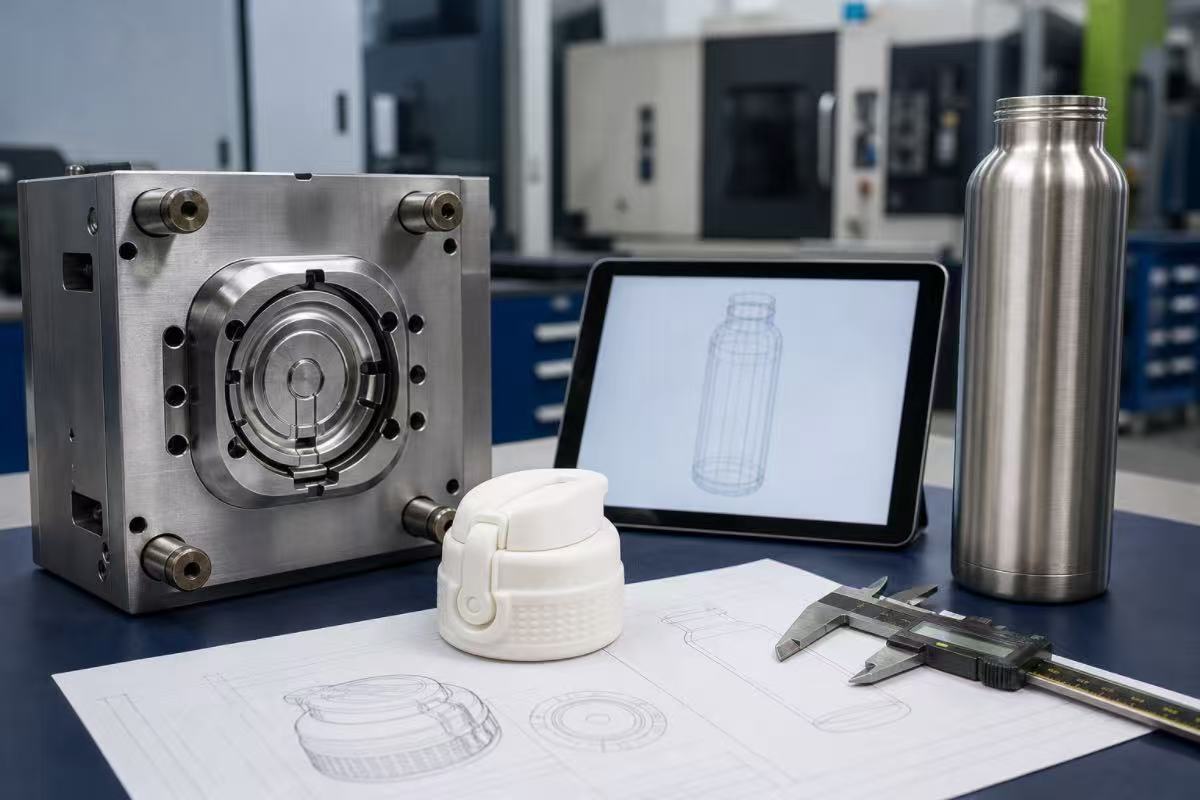
OEM stands for Original Equipment Manufacturer. In the drinkware industry, an OEM project usually begins when a buyer wants a product that cannot be fully created from an existing factory model.
The buyer may provide a product concept, reference sample, 2D drawings, 3D files, product dimensions, lid structure requirements, material specifications, packaging specifications, and testing requirements.
OEM can be used for:
- Custom stainless steel water bottles
- Unique insulated tumblers
- Travel mugs with exclusive handles
- New straw-lid structures
- Custom silicone parts
- Kids bottles with special components
- Exclusive bottle shapes
- Custom drinkware collections
For example, if your brand wants an insulated bottle with a new body shape, custom lid, locking mechanism, removable handle, specific cup-holder diameter, and exclusive packaging, this is usually an OEM or custom development project.
OEM gives buyers more control over product design, user experience, materials, branding, intellectual property, and long-term product strategy. The main disadvantage is that OEM requires more time, investment, testing, and technical communication.
What Is ODM Drinkware Manufacturing?
ODM stands for Original Design Manufacturer. In an ODM project, the manufacturer already has an existing product design, tooling, production process, and supply chain.
The buyer selects an existing model and customizes it to match the brand.
Common ODM customization options include:
- Logo printing
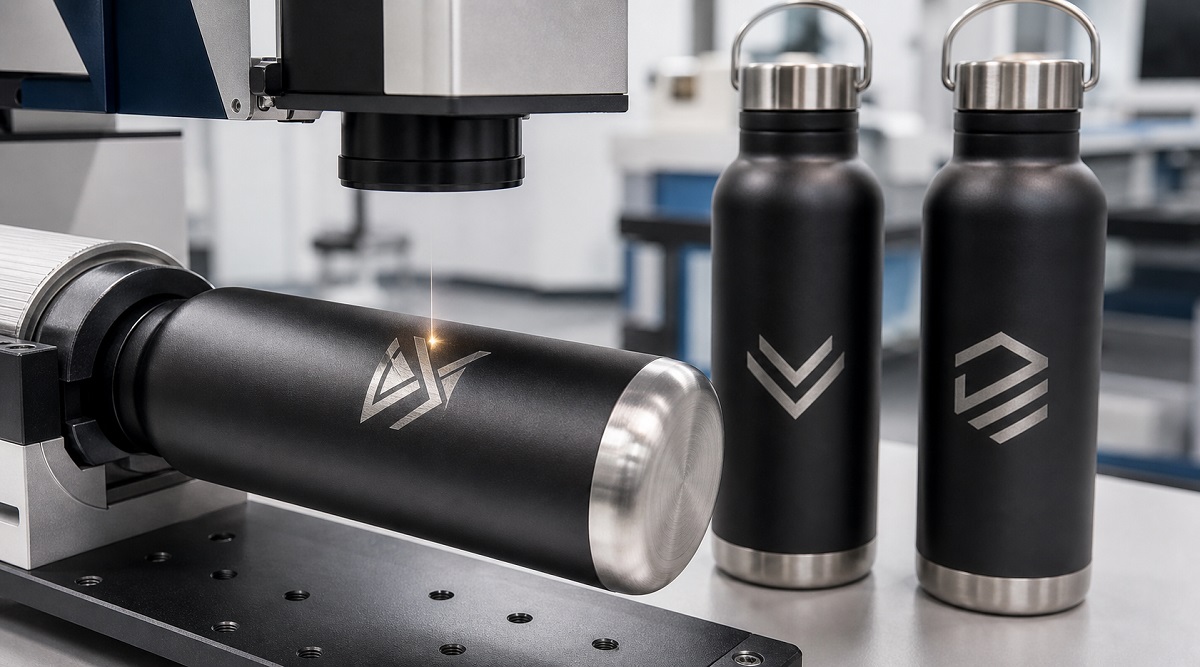
- Laser engraving
- Custom Pantone colors
- Powder coating
- Gradient finishes
- Lid selection
- Straw or handle options
- Retail packaging
- Gift boxes
- Insert cards
- Barcode labels
- Carton marks
A custom stainless steel water bottle made from an existing manufacturer model is usually an ODM or private label project. The bottle structure already exists, but the buyer can still create a differentiated product through logo, color, lid, packaging, and brand positioning.
ODM is generally faster to launch, less expensive to develop, easier to sample, and lower risk. It is especially useful for new brands, Amazon sellers, gift buyers, and wholesalers that want to test demand before investing in custom molds.
OEM vs ODM vs Private Label vs Custom Mold
Many buyers use these terms interchangeably, but they do not mean exactly the same thing.
| Production Model | What It Usually Means | Customization Level | Best For |
|---|---|---|---|
| Private label | Existing product with buyer’s logo and packaging | Low | New brands, promotional projects, market testing |
| ODM | Manufacturer’s existing design with multiple customization options | Medium | Faster launches and moderate differentiation |
| OEM | Buyer-led design or technical requirement produced by the factory | High | Established brands and unique products |
| Custom mold | New tooling for a unique shape, lid, or component | Very high | Mature brands with proven demand |
Private label usually focuses on branding an existing product with logo, color, packaging, barcode, or insert card.
ODM can go beyond private label by changing lids, coatings, accessories, packaging structures, and color systems.
OEM involves deeper product development based on the buyer’s design or technical requirements.
Custom mold development is often part of OEM when a new lid, handle, cap, silicone component, or bottle body shape is required.
Which Option Is Best for Your Business?
| Buyer Type | Recommended Starting Model | Reason |
|---|---|---|
| New drinkware brand | ODM or private label | Lower risk and faster product validation |
| Amazon seller | ODM | Faster launch and easier inventory testing |
| Corporate gift buyer | Private label or ODM | Logo and delivery time matter most |
| Promotional company | Private label | Existing models support fast customization |
| Retail brand | ODM first, OEM later | Test demand before tooling investment |
| Premium drinkware brand | OEM | Greater design control and differentiation |
| Large distributor | ODM or OEM | Depends on volume and exclusivity needs |
| Product inventor | OEM and custom mold | Unique structures require engineering |
A startup does not always need a custom mold. An established brand should not always rely on standard catalog models. The right choice depends on business stage, sales channel, and product strategy.
Cost, MOQ, and Timeline Comparison
| Project Type | Typical Sample Time | Typical MOQ | Timeline |
|---|---|---|---|
| Existing stock sample | 2-3 working days | Sample quantity | Very fast |
| Existing model with logo | 5-10 working days | Often lower | Short |
| Existing model with custom color | Project-dependent | Usually higher | Several weeks |
| Custom retail packaging | Project-dependent | Packaging MOQ applies | Several weeks |
| ODM with multiple customizations | Longer than logo sample | Higher than basic private label | Several weeks |
| New lid or component | Multiple prototype rounds | Higher MOQ | Often several months |
| Full custom mold | Project-dependent | Higher MOQ | About 2-3 months or longer |
For OEM projects, mold cost and prototype revisions can be significant. For ODM projects, packaging, coating, logo method, and testing can still affect the final unit price.
Buyers should compare total project cost, not only the base bottle price.
Drinkware-Specific Factors Buyers Should Evaluate
OEM and ODM decisions are not only commercial decisions. For stainless steel drinkware, product structure and quality control matter.
Buyers should evaluate:
- Stainless steel grade
- Material thickness
- Vacuum insulation
- Bottle weight
- Mouth diameter
- Cup-holder compatibility
- Lid sealing
- Straw performance
- Handle strength
- Coating adhesion
- Logo durability
- Packaging strength
- Food-contact materials
- Production consistency
A new lid can create risks involving leakage, airflow, cleaning difficulty, straw alignment, and assembly stability. A new bottle body may affect stainless steel forming, welding, vacuum performance, coating consistency, and packaging dimensions.
This is why a professional stainless steel drinkware manufacturer should explain production risks before mass production, not only say yes to every request.
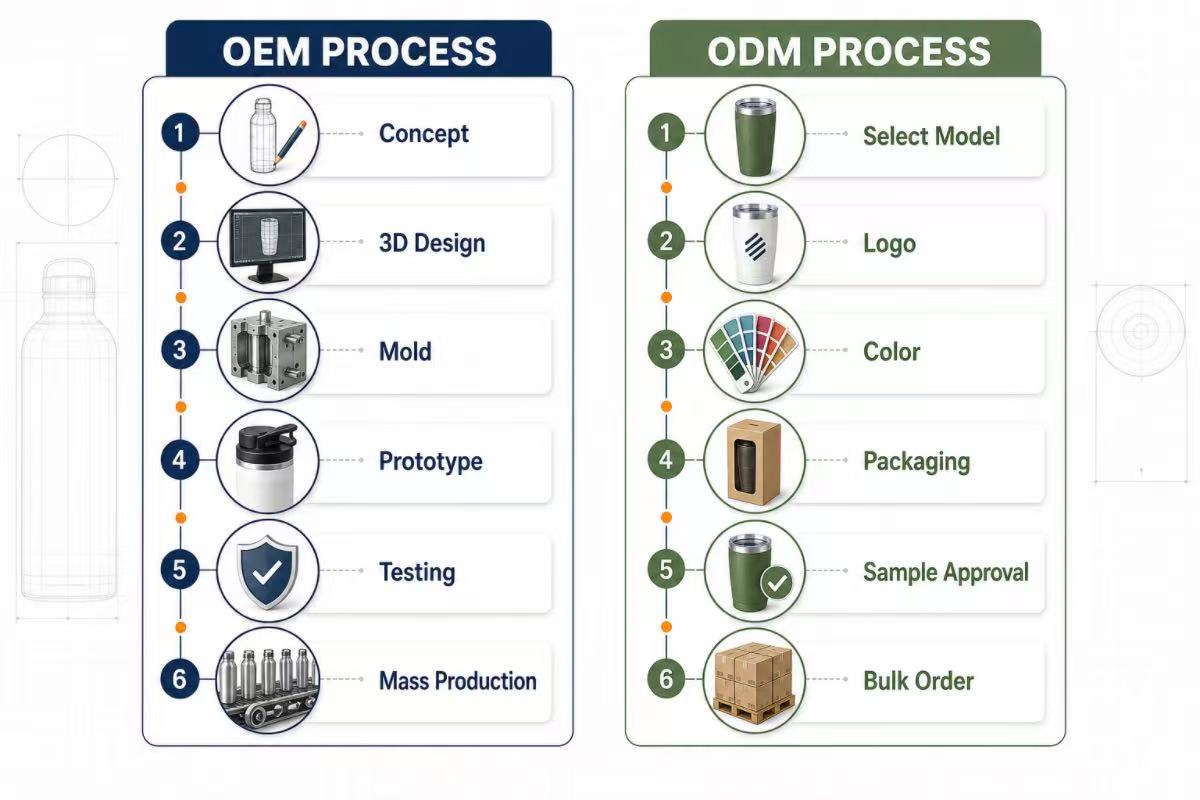
OEM Drinkware Development Process
A structured OEM project usually includes:
- Product concept review
- Technical feasibility review
- Drawing and specification confirmation
- Quotation and mold cost confirmation
- Prototype development
- Functional testing
- Pre-production sample approval
- Mass production
- Quality inspection
- Packing and shipping
Functional testing may include leakage testing, insulation testing, lid cycle testing, handle strength testing, coating adhesion testing, logo durability testing, and packaging testing.
Topnovo’s water bottle quality control process can be used as a useful internal reference for this section.
ODM Drinkware Project Process
ODM projects are usually shorter because the main product structure already exists.
A typical ODM project includes:
- Select an existing bottle or tumbler model
- Confirm capacity and lid
- Select colors and surface finishes
- Choose the logo method
- Confirm packaging
- Order customized samples
- Test leakage, insulation, coating, and logo
- Approve the sample
- Begin mass production
- Inspect goods before shipment
- Ship to buyer, retailer, warehouse, or Amazon FBA center
ODM is suitable when speed, cost control, and market testing are more important than complete exclusivity.
For logo options, buyers can review Topnovo’s custom logo water bottles page.
Quality-Control Differences Between OEM and ODM
| Quality Area | ODM Focus | OEM Focus |
|---|---|---|
| Leakage | Confirm existing lid performance | Repeatedly test new sealing structures |
| Insulation | Verify existing model performance | Validate prototype and production samples |
| Coating | Confirm color and adhesion | Test coating on new shape or finish |
| Logo | Approve placement and durability | Test logo on a new surface |
| Handle | Confirm assembly | Test new structure and loaded strength |
| Packaging | Confirm box fit | Develop packaging for new shape |
| Compliance | Match reports to actual configuration | Reassess new materials and components |
ODM products may have a more stable production history, but they still require inspection. OEM products require additional validation because new structures create new technical risks.
Compliance and Food-Contact Safety
Drinkware products may need food-contact compliance support depending on the sales market.
For the US market, buyers can refer to FDA food contact substances.
For the EU market, buyers can refer to EU food contact materials.
Depending on the product and market, buyers may also need to consider REACH or California Proposition 65.
Do not only ask whether a supplier has certificates. Ask whether the test report applies to the exact bottle, lid, silicone ring, coating, color, and material configuration you plan to order.
Intellectual Property and Mold Ownership
Before investing in OEM or custom mold development, buyers should confirm intellectual property and tooling arrangements in writing.
Questions to clarify:
- Who owns the product design?
- Who owns the 2D and 3D drawings?
- Who pays for the mold?
- Who owns the mold after payment?
- Can the manufacturer use the mold for another customer?
- Can the design be exclusive by country or globally?
- Is there a confidentiality agreement?
- Who pays for mold maintenance?
- What happens if the buyer does not reorder for several years?
For general intellectual property information, buyers can refer to the World Intellectual Property Organization.
Mold ownership is not always the same as design ownership. If the design is strategically important, verbal promises are not enough. Buyers should document exclusive use, mold identification, storage, maintenance, transfer rights, and confidentiality.
Practical Case: Moving From ODM to OEM
A common smart strategy is to start with ODM and move to OEM after market validation.
For example, a US e-commerce buyer may want to launch a new insulated tumbler line. Instead of starting with multiple custom molds, the buyer first selects an existing insulated tumbler platform.
The first ODM project includes:
- One proven bottle model
- Three custom colors
- Laser engraved logo
- Custom packaging
- Amazon labels
- Leakage and coating tests
After launch, the buyer collects customer feedback. Customers like the bottle but request a more comfortable handle, better straw storage, improved lid design, and a narrower base for cup holders.
The buyer then uses this real market data to start an OEM project with a redesigned lid, adjusted body dimensions, exclusive handle, and improved packaging.
This approach reduces initial risk and makes OEM development more practical.
Common OEM and ODM Mistakes
Avoid these common mistakes:
- Choosing OEM before demand is proven
- Assuming ODM means no differentiation
- Approving only a digital mock-up
- Not confirming mold ownership
- Ignoring quality risks in new lids or handles
- Comparing only unit price
- Not testing samples before bulk production
- Not confirming packaging and labels
- Not matching compliance reports to actual materials
A good manufacturer should help buyers avoid these risks before production begins.
Questions to Ask an OEM or ODM Drinkware Manufacturer
Before choosing a supplier, ask:
- Do you support OEM, ODM, private label, and custom mold projects?
- Which production processes are completed in-house?
- Which existing models can be customized?
- What is the MOQ for logo, color, packaging, and custom mold?
- Can you develop custom lids and molds?
- How long does sample development take?
- How do you test leakage and insulation?
- Can you support FDA, LFGB, REACH, or Prop 65 related testing?
- Who owns the mold?
- Can the design be exclusive?
- Do you sign confidentiality agreements?
- Do you accept third-party inspection?
- Can you support Amazon FBA packaging?
- How do you maintain color consistency for repeat orders?
Clear answers show whether the supplier truly understands custom drinkware manufacturing.
How Topnovo Supports OEM and ODM Drinkware Projects
Topnovo supports global brands, Amazon sellers, wholesalers, distributors, retailers, and promotional buyers with stainless steel drinkware manufacturing.
Topnovo’s capabilities include:
- OEM drinkware development
- ODM drinkware manufacturing
- Private label drinkware
- Custom stainless steel water bottles
- Custom insulated tumblers
- Travel mugs and coffee mugs
- Custom logo printing
- Laser engraving
- Pantone color matching
- Surface finish customization
- Packaging development
- Sample production
- Quality control
- Amazon FBA preparation
- Bulk international delivery
Topnovo has more than 10 years of drinkware manufacturing experience, a 24,000-square-meter production base, annual capacity of more than 9 million units, and 16 full-time QC inspectors.
For Amazon sellers, Topnovo also provides support for Amazon FBA water bottle sellers.
FAQ
Is OEM better than ODM for drinkware?
Not always. OEM is better when a brand needs an exclusive product, special structure, unique lid, or long-term differentiation. ODM is better when the buyer needs a faster launch, lower development cost, and easier market testing.
Is ODM suitable for a new water bottle brand?
Yes. ODM is often the most practical starting point because the brand can select an existing model and customize the logo, color, lid, finish, and packaging.
Does OEM always require a custom mold?
No. Minor changes may be possible using existing tooling. However, a new bottle shape, lid, handle, or structural component usually requires custom tooling.
What is the difference between private label and ODM drinkware?
Private label usually means adding a brand name and packaging to an existing product. ODM can include private labeling, but may also involve more changes to colors, lids, finishes, accessories, and packaging.
Which is better for Amazon sellers?
ODM is usually better for Amazon sellers launching a new product because it reduces development time and investment. OEM may become more suitable once the seller has stable sales and clear customer feedback.
What should buyers test before mass production?
Buyers should test leakage, insulation, lid function, handle strength, coating durability, logo quality, color accuracy, packaging strength, product dimensions, and real user experience.
Conclusion
OEM and ODM drinkware manufacturing serve different business goals.
ODM is usually better for faster launches, lower development costs, market testing, and lower initial risk. OEM is better for unique product designs, exclusive lids or structures, stronger brand differentiation, and long-term product ownership.
Many successful drinkware brands begin with ODM, collect market feedback, and then move into OEM development. This staged approach helps buyers reduce risk while gradually building a more differentiated product line.
Need help choosing between OEM and ODM drinkware manufacturing?
Topnovo can review your product idea and recommend whether an existing ODM model, private label solution, product modification, or full OEM development is more suitable.
Topnovo supports custom stainless steel water bottles, OEM/ODM insulated drinkware, private label packaging, custom logo water bottles, sample development, quality control, and bulk production for global B2B buyers.
Request a water bottle sample or contact Topnovo to discuss your OEM or ODM drinkware project.