
If you are planning to launch a water bottle brand, you will probably come across three terms very quickly: private label, OEM and ODM.
These terms are sometimes used interchangeably, but they do not always describe the same type of manufacturing project.
For water bottle buyers, the practical differences are:
- Where the product design comes from
- How much of the product can be customized
- Whether new tooling is required
- Who controls the product specifications
- How much development investment is needed
- How quickly the product can reach the market
Understanding these differences helps buyers choose a development route that balances product differentiation, budget, MOQ and launch time.
Quick Answer
Private label water bottles usually start with an existing, production-ready bottle. Buyers add their own logo, Pantone colors, surface finishes and packaging without changing the main product structure.
ODM water bottles generally start from a manufacturer-developed design or product platform. Buyers can select an existing product and modify components, appearance or selected functions for their market.
OEM water bottles are manufactured according to specifications, drawings or product requirements controlled by the buyer. OEM projects may involve new engineering, prototypes, testing and dedicated tooling.
In practice, manufacturers may use these terms differently. Buyers should focus less on the label and confirm:
- What can be customized?
- Who controls the design?
- Is new tooling required?
- Who owns the tooling and drawings?
- What is included in the quotation?
- Can the same design be supplied to another buyer?
Private Label vs OEM vs ODM Water Bottles at a Glance
| Factor | Private Label | ODM | OEM |
|---|---|---|---|
| Starting point | Existing bottle | Manufacturer-developed platform | Buyer specification or concept |
| Product structure | Usually unchanged | Existing or modified | Can be fully customized |
| Logo | Yes | Yes | Yes |
| Pantone color | Yes | Yes | Yes |
| Surface finish | Yes | Yes | Yes |
| Custom packaging | Yes | Yes | Yes |
| Lid modification | Limited | Possible | Possible |
| New bottle structure | Usually no | Sometimes | Yes |
| New tooling | Usually not required | Sometimes required | Often required for new structures |
| Development investment | Lower | Medium | Higher |
| Development time | Shorter | Medium | Longer |
| Product differentiation | Low–Medium | Medium–High | High |
| Best for | Market testing and faster launches | Brands needing more differentiation | Brands with defined or exclusive concepts |
The actual MOQ, tooling cost and custom water bottle lead time depend on the bottle, lid, color, components, packaging and required level of customization.
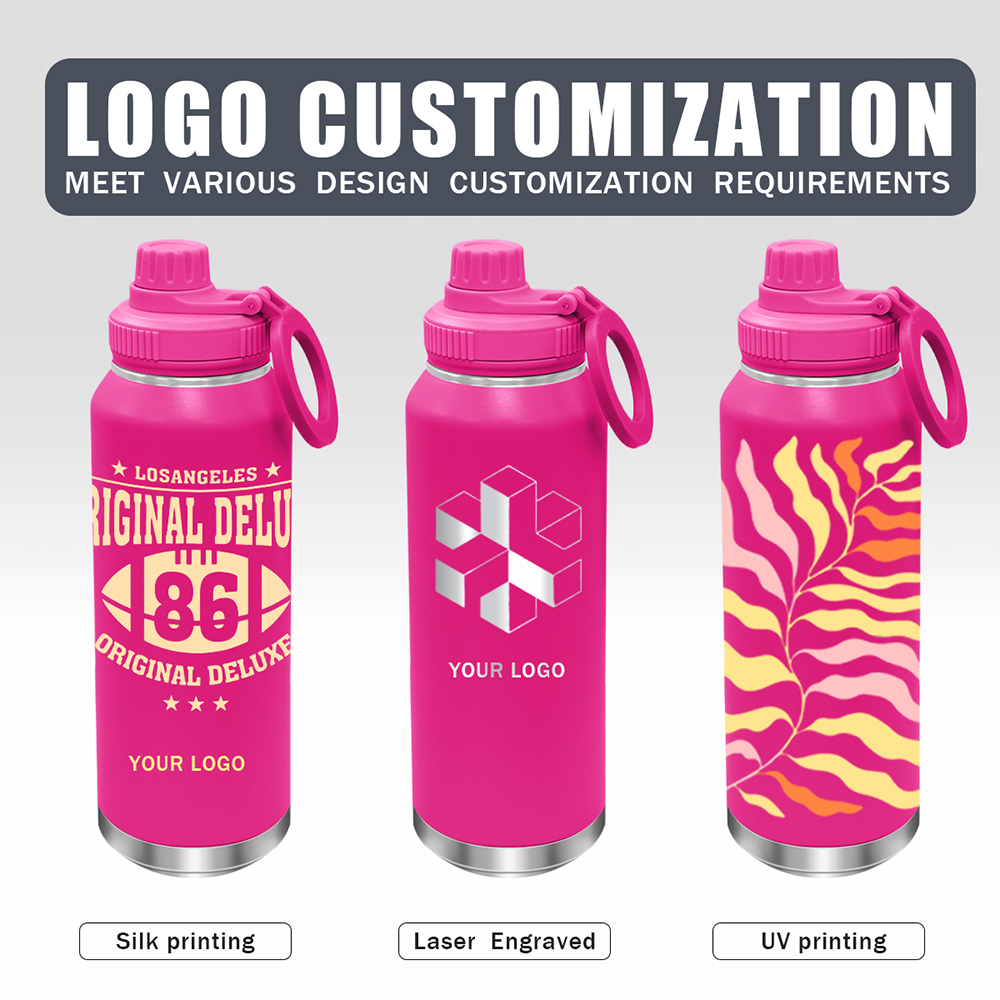
What Is a Private Label Water Bottle?
A private label water bottle is typically based on an existing manufacturer-developed bottle that is customized with the buyer’s brand identity.
Instead of engineering a new bottle structure, buyers select an existing model and customize elements such as:
- Logo
- Pantone color
- Powder coating
- Surface finish
- Retail packaging
- Barcode and labels
- Accessories
- Selected lid options
For example, a brand could select an existing 32 oz insulated stainless steel bottle, apply a custom Pantone color, laser engrave its logo and pack it in a branded retail box.
The finished product is sold under the buyer’s brand without requiring a completely new bottle to be engineered.
Private Label Is Best When:
- You are launching a new drinkware brand
- You want to test a new SKU
- Speed to market is important
- You want to limit initial tooling investment
- The existing bottle structure meets your requirements
- Differentiation mainly comes from branding, color, finish or packaging
For Amazon sellers and growing brands, private label can be a practical way to validate market demand before investing in a fully custom product.
What Is an ODM Water Bottle?
ODM stands for Original Design Manufacturer.
In an ODM project, the manufacturer already has product-development capabilities, existing designs, molds or engineering platforms that the buyer can use as a starting point.
For drinkware projects, ODM often sits between simple private labeling and completely new product development.
A buyer may start with an existing stainless steel bottle body but request:
- A different lid
- A modified handle
- A different straw system
- A new accessory combination
- A special surface finish
- Revised packaging
- Minor structural improvements
Instead of developing every component from zero, the manufacturer reuses existing bottle bodies, molds, components or production experience wherever practical.
This can reduce development risk, tooling investment and launch time.
ODM Is Best When:
- An existing bottle is close to what you need
- You want more differentiation than logo customization
- You do not have complete engineering drawings
- You need support from the manufacturer’s development team
- You want to control development cost
- You want to launch faster than a fully custom project
For many brands, ODM provides a practical balance between differentiation, development investment and speed to market.
What Is an OEM Water Bottle?
OEM stands for Original Equipment Manufacturer.
In an OEM project, the buyer normally has greater control over the required specifications, structure or performance. The manufacturer evaluates and produces the product according to those requirements.
An OEM project may begin with:
- Product drawings
- CAD or 3D files
- A physical reference sample
- Detailed specifications
- A functional concept
- A new lid mechanism
- A new bottle structure
The manufacturer then evaluates manufacturability, materials, tooling, prototypes, testing and mass-production requirements.
New tooling may be required for:
- Bottle bodies
- Plastic lids
- Handles
- Straw mechanisms
- Silicone components
- Accessories
OEM becomes more relevant when the product structure or function is intended to become part of the brand’s competitive advantage.
OEM Is Best When:
- You already have a defined product concept
- Existing market products cannot meet your requirements
- You need an exclusive bottle or lid structure
- The project requires new molds
- Product differentiation is strategically important
- Projected sales volume can justify the development investment
OEM generally requires more engineering, testing and product validation than private labeling.
For projects involving structural changes, review the complete drinkware product-development process before confirming the production route.
What Is the Real Difference for Buyers?
Instead of choosing based only on terminology, ask:
How much of the product actually needs to change?
If an existing bottle meets the functional requirements and you mainly need branding, private label may be sufficient.
If the product is close but you need modifications to the lid, handle, accessories or appearance, ODM may be more practical.
If your competitive advantage depends on a unique structure or functional feature, OEM development may be required.
A simple way to understand the three routes is:
Existing Product → Modified Product → New Product
Private Label → ODM → OEM
As customization becomes deeper, tooling requirements, development time, testing and commercial risk usually increase.
How Do Private Label, ODM and OEM Affect MOQ?
MOQ is not determined only by whether a project is called private label, ODM or OEM. It is influenced by every manufacturing process and component involved.
Lower Complexity
Existing bottle + existing color + logo
This route normally requires fewer production changes.
Medium Complexity
Existing bottle + custom Pantone color + logo + retail packaging
Color spraying, logo application and packaging production may each affect MOQ.
Higher Complexity
Existing bottle + modified lid + custom accessories + custom packaging
The lid, silicone parts, accessories and packaging may each have separate production minimums.
Full Development
New bottle structure + new lid + new tooling
Tooling, engineering, prototype testing and production setup normally require a larger commercial commitment.
This is why buyers should ask for the MOQ by customization level rather than asking only:
“What is your MOQ?”
For a more detailed breakdown, read the Custom Water Bottle MOQ Guide.
How Do the Three Routes Affect Lead Time?
Development depth affects the total project schedule.
A private label project can usually move faster because the main bottle and tooling already exist:
Model Selection → Color and Logo → Sample → Approval → Production
ODM may add:
Component Selection → Modification → Prototype → Testing
OEM development may require:
Concept → Engineering → Tooling → Prototype → Testing → Revision → Approval → Mass Production
Development time and mass-production lead time should be evaluated separately. A factory may be able to complete standard production within its normal schedule, but new tooling and prototype revisions add time before production can begin.
Buyers should also allow time for artwork approval, compliance testing, packaging production, inspection and shipping.
Existing Mold or New Mold?
You do not always need a new mold to create a differentiated water bottle.
Before investing in tooling, consider whether differentiation can be achieved through:
- Bottle color
- Surface texture
- Logo method
- Lid selection
- Handle design
- Straw
- Accessories
- Custom packaging
- Product bundles
Using an existing platform can significantly reduce development risk for a new brand.
New tooling becomes more valuable when it creates a meaningful product advantage, such as:
- Better leak resistance
- A different drinking experience
- A new locking mechanism
- Improved ergonomics
- Exclusive bottle geometry
- A functional feature unavailable in existing products
A new mold should solve a product or market problem—not simply make the project appear more customized.
Who Owns the Tooling and Product Design?
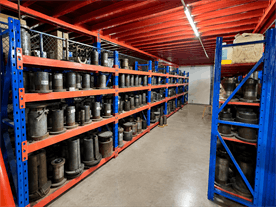
Tooling payment does not automatically answer every question about ownership, exclusivity or intellectual property.
Before approving an OEM or modified ODM project, buyers should clarify in writing:
- Who owns the bottle, lid and component molds?
- Who owns the CAD drawings and engineering files?
- Is the final design exclusive to the buyer?
- Can the manufacturer use the mold for another customer?
- Can the tooling be transferred to another factory?
- Who pays for mold maintenance, repair or replacement?
- How long will the factory store inactive tooling?
- What happens to the molds when cooperation ends?
- Who owns improvements made during development?
According to the World Intellectual Property Organization’s overview of industrial designs, registered design rights may allow their owner to prevent unauthorized commercial copying, subject to the relevant country’s laws.
However, paying a development or tooling fee is not a substitute for a written ownership agreement. Buyers should address tooling use, confidentiality, exclusivity and intellectual-property ownership in the applicable contract and seek qualified legal advice when necessary.
Which Manufacturing Route Should Your Brand Choose?
Choose Private Label If You Want To:
- Launch quickly
- Test market demand
- Keep initial development investment lower
- Customize branding rather than structure
- Build several SKUs from proven bottle platforms
Choose ODM If You Want To:
- Start from a proven product
- Make functional or visual modifications
- Use the manufacturer’s engineering experience
- Create stronger differentiation without developing everything from zero
Choose OEM If You Want To:
- Develop a unique product
- Control detailed specifications
- Create new molds or structures
- Build proprietary functional features
- Support a long-term differentiated product strategy
A brand does not need to use the same manufacturing model for every SKU. It may use private label for market testing, ODM for product upgrades and OEM for its most important long-term products.
A Practical Development Strategy for Growing Brands
One of the lowest-risk approaches is to increase customization as market confidence grows.
Stage 1 — Test
Use an existing bottle and customize:
Color + Logo + Packaging
The goal is to validate demand, price positioning, customer response and the sales channel.
Stage 2 — Differentiate
Keep the proven bottle platform but improve:
Lid + Finish + Accessories + Packaging
The goal is to build stronger differentiation without recreating the entire product.
Stage 3 — Develop
After volume and market feedback justify the investment, consider:
New Structure + New Lid + New Tooling
The goal is to develop a product that is harder for competitors to reproduce.
This approach allows development investment to follow real market validation instead of assumptions.
What Should You Send a Water Bottle Manufacturer?
Regardless of the manufacturing route, a clear project brief improves quotation accuracy.
Send the manufacturer:
- Reference image or product concept
- Bottle type and capacity
- Material requirements
- Estimated quantity by SKU and color
- Target market
- Target price range
- Pantone color or finish
- Logo method, size and position
- Preferred lid and accessories
- Packaging requirements
- Compliance and testing requirements
- Shipping destination
- Required delivery date
For an OEM project, also provide available CAD files, drawings, functional descriptions or physical samples.
Use the Custom Drinkware RFQ Checklist to prepare the information required for a more accurate and comparable quotation.
Quality Control Should Not Depend on the Manufacturing Model
Private label does not mean quality control should be simplified.
Whether a bottle is private label, ODM or OEM, bulk production should evaluate:
- Material consistency
- Vacuum insulation
- Leak resistance
- Lid function
- Product capacity
- Coating adhesion
- Color consistency
- Logo quality
- Component assembly
- Packaging accuracy
- Final inspection
The approved sample, artwork, specification sheet and packaging standard should become the reference for bulk production.
For repeat orders, the manufacturer should also control consistency between the original approved sample and future production batches.
This process-oriented approach aligns with the quality-management principles described by ISO, including customer focus, process control and continual improvement.
Learn more about TOPNOVO’s water bottle quality-control process.
Private Label, ODM or OEM: Which One Is Better?
There is no single manufacturing model that is best for every water bottle project.
- Private label is usually the simplest route when an existing bottle already meets the functional requirements.
- ODM is appropriate when you want to modify a proven product platform.
- OEM is more suitable when the project requires buyer-controlled specifications, new engineering or exclusive structures.
The right route provides enough differentiation for the target market without adding unnecessary tooling, MOQ, development time or production risk.
Before asking whether a factory provides OEM or ODM services, ask:
What can remain existing, what should be customized, and what must be developed from scratch?
That question normally leads to a more useful sourcing decision.
Frequently Asked Questions
Is Private Label the Same as OEM?
Not exactly. Private label usually refers to an existing product sold under the buyer’s brand after logo, color or packaging customization. OEM generally involves manufacturing according to specifications controlled by the buyer. Terminology varies, so the exact development scope should always be confirmed.
Is ODM Cheaper Than OEM Water Bottle Development?
ODM can require less development investment when existing bottle bodies, molds or components can be reused. OEM projects requiring completely new engineering and tooling usually involve higher development costs.
Can I Start With Private Label and Move to OEM Later?
Yes. A brand can validate demand with an existing bottle and invest in modified or fully custom products after sales volume and customer feedback justify the additional development.
Do Private Label Water Bottles Require New Molds?
Usually not when the project only changes the logo, color, finish and packaging of an existing product. New molds may be required if the bottle structure, lid or functional components change.
Who Owns an OEM Water Bottle Mold?
Ownership depends on the written agreement between the buyer and manufacturer. Paying a tooling fee does not by itself define every ownership, exclusivity, storage or transfer condition. These terms should be confirmed before tooling begins.
What Can Be Customized on a Private Label Stainless Steel Water Bottle?
Common options include Pantone colors, powder coating, laser engraving, screen printing, UV printing, packaging, labels and selected accessories or lids, depending on the bottle model.
What Information Should I Provide for an OEM Project?
Provide reference images, drawings or CAD files where available, required capacity, materials, lid structure, functionality, quantity, target market, packaging, testing requirements and expected delivery date.
Planning a Private Label, ODM or OEM Water Bottle Project?
TOPNOVO supports brands, Amazon sellers, retailers, importers and distributors—from existing drinkware models to modified and fully customized product development.
Send us:
Product or Reference Image · Quantity · Capacity · Logo · Color · Lid · Packaging · Target Market
If you are unsure which route is appropriate, we can evaluate which parts can use existing solutions and which may require modification, tooling or new development.
Explore Custom Stainless Steel Water Bottles →
Learn About Drinkware Product Development →
Prepare Your Custom Drinkware RFQ →
Better Drinkware. Easier Business.
16:12