
Top 10 Water Bottle Manufacturers in China for B2B BuyersStarting a water bottle brand involves more than choosing a bottle and adding a logo. You need to identify a real customer need, select the right product, validate samples and build a reliable supply plan.
Quick Answer: How Do You Start a Water Bottle Brand?
To create your own water bottle brand:
- Define your target customer.
- Research competitors and customer complaints.
- Establish clear brand positioning.
- Create your brand name and visual identity.
- Choose the right bottle, capacity and lid.
- Select a private-label, modified or custom development route.
- Evaluate water bottle manufacturers.
- Test and approve physical samples.Top 10 Water Bottle Manufacturers in China for B2B Buyers
- Confirm MOQ, packaging, compliance and production.
- Launch, collect feedback and improve the next order.
For most new brands, starting with an existing bottle platform and customizing its color, logo, finish and packaging is usually faster and involves less development risk than creating new molds immediately.
A practical growth path is:
Start With One Product → Validate Demand → Improve the Product → Reorder → Expand the Range
Water Bottle Brand Creation Process
A water bottle brand should connect product strategy with manufacturing execution:
Customer → Market Research → Positioning → Brand Identity → Product → Development Route → Manufacturer → Sample Approval → Production → Launch and Improvement
The objective is not simply to create an attractive bottle. It is to develop a product that fits a customer need and can be produced consistently at the required quality, quantity and cost.
Step 1:Define Your Target Customer
Start with the customer before selecting the bottle.
| Target customer | Typical product priorities |
|---|---|
| Fitness users | Capacity, straw lid, grip and easy drinking |
| Office workers | Clean design, insulation and cup-holder fit |
| Children | Appropriate size, simple operation and easy cleaning |
| Outdoor users | Durability, insulation and carrying comfort |
| Corporate gift buyers | Logo, packaging, price and delivery |
| E-commerce customers | Differentiation, packaging and consistent quality |
A bottle intended for a school bag should not be developed using the same priorities as a large handled tumbler for desk use.
Define:
- Who will use the product?
- Where will they carry it?
- What will they drink from it?
- How often can they refill it?
- Which current product problems should it solve?
- What retail price will the customer accept?
These answers guide decisions about capacity, lid, material and packaging.
Step 2: Research the Market
Study what customers already buy and what they repeatedly complain about.
Review:
- Competing products
- Customer reviews
- Retail shelves
- E-commerce listings
- Product questions and returns
- Price ranges
- Packaging and product claims
Look for repeated problems such as:
Leaking lids · Weak coating · Poor insulation · Difficult cleaning · Uncomfortable handles · Damaged packaging
Do not copy a popular bottle simply because it is trending. Identify the customer need behind its success and find an original way to address that need.
Market research should answer:
- Which customer segment is underserved?
- Which product features matter most?
- Which complaints appear repeatedly?
- What useful improvement can your brand offer?
Step 3: Define Your Brand Positioning
Your positioning should explain why someone should choose your bottle.
Examples include:
- Compact insulated bottles for office and commuting
- Easy-clean bottles for school and everyday use
- High-capacity bottles for sports and outdoor activities
- Premium branded drinkware for corporate gifting
Avoid positioning the product only as “high quality.” That statement is too broad to distinguish the brand.
A stronger position connects:
Target Customer + Use Scenario + Product Benefit
For example:
An easy-clean insulated bottle for commuters who want reliable one-handed drinking without carrying an oversized container.
This statement is more useful for product selection, packaging and marketing.
Step 4: Build Your Brand Identity
Brand identity includes:
- Brand name
- Logo
- Colors
- Typography
- Packaging
- Photography
- Communication style
Before investing in packaging and inventory, check whether the proposed brand name may conflict with existing trademarks in your target market. U.S. sellers can begin with the USPTO trademark search system.
Trademark availability in one country does not automatically establish availability worldwide. Obtain appropriate professional advice when necessary.
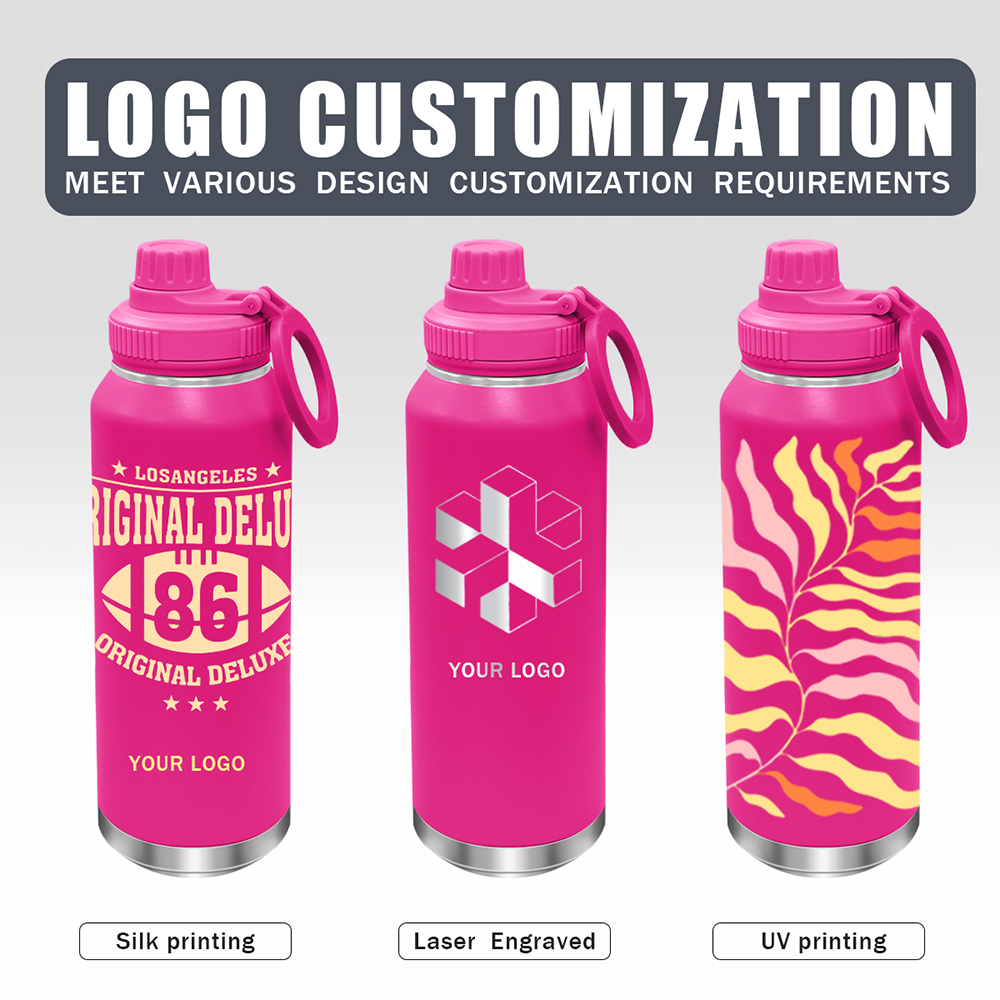
Your logo must also work on a curved product surface. The most suitable decoration method depends on the artwork, bottle material, finish, order quantity and durability requirement.
Compare laser engraving, screen printing and UV printing for custom water bottles before approving the final artwork.
Step 5: Choose the Right Water Bottle
For a new brand, starting with one or two strong products is usually more practical than launching a large collection.
Evaluate:
| Product decision | Why it matters |
|---|---|
| Material | Affects function, weight, durability and positioning |
| Capacity | Must fit the user and carrying situation |
| Lid | Affects drinking, cleaning and leakage risk |
| Insulation | Supports temperature-performance positioning |
| Surface finish | Affects appearance, grip and durability |
| Mouth opening | Affects filling, ice access and cleaning |
| Dimensions | Affect handling, cup holders and packaging |
| Logo method | Affects branding appearance and durability |
For insulated stainless steel bottles, 304 stainless steel is commonly used for the food-contact inner wall. The complete product specification should also cover the plastic, silicone and coating components.
Use our water bottle size guide for brands to compare 12oz–40oz capacities.
To review available products and customization, visit TOPNOVO’s custom stainless steel water bottle manufacturing page.
Step 6: Select a Development Route
A new brand does not automatically need new tooling.
| Situation | Recommended starting route |
|---|---|
| Testing a new market | Existing bottle with custom logo and packaging |
| Need distinctive brand presentation | Existing platform with color, finish and packaging |
| Need functional improvements | Modify a suitable existing component or platform |
| Have validated demand and an original concept | Custom development and tooling |
Existing product
Customize:
Color · Logo · Finish · Packaging
This generally offers the shortest development route and lower tooling exposure.
Modified product
Retain an existing platform while changing selected features such as:
Lid · Handle · Straw · Accessories · Finish
Technical feasibility, tooling and testing still need to be evaluated.
Full custom development
Develop new:
Bottle Body · Lid Structure · Components · Tooling
This can provide greater differentiation but generally requires more engineering, investment, testing and time.
Compare the routes through TOPNOVO’s custom drinkware product development process.
Step 7: Evaluate Water Bottle Manufacturers
Your manufacturer affects quality, timing and repeat-order consistency.
Ask:
- Does the supplier regularly manufacture this product type?
- Is it a factory, service company or trading company?
- Who controls production and quality?
- Can it support private label, modification and custom development?
- Who produces the lid and silicone components?
- How are samples approved?
- How are production problems recorded and corrected?
- Can third-party inspection be arranged?
- How are tooling ownership and confidentiality documented?
Do not compare quotations until product specifications are aligned. A lower price may reflect a different material, lid, coating, packaging or inspection plan.
Use our guide to evaluating water bottle manufacturers in China when building your supplier shortlist. Replace this URL if the manufacturer article is published under a different final address.
Step 8: Test and Approve Physical Samples
Never approve a water bottle from a rendering or photograph alone.
Evaluate the sample as a customer would use it:
- Capacity and dimensions
- Filled weight and handling
- Lid opening and closing
- Drinking flow
- Leakage under the agreed use conditions
- Insulation performance
- Cleaning and disassembly
- Coating and color
- Logo appearance
- Packaging fit and protection
Record approved specifications and keep the final sample as the production reference.
A sample passing one test does not automatically confirm the complete product. Follow our guide to testing insulated water bottles before bulk production.
You can also review TOPNOVO’s quality control process from pre-production confirmation through final inspection.
Step 9: Confirm MOQ, Packaging, Compliance and Production
Before placing the order, confirm the final specification in writing:
Bottle Model · Capacity · Materials · Lid · Color · Finish · Logo · Packaging · Quantity · Testing · Delivery
MOQ
MOQ can depend on:
- Bottle model
- Quantity per color
- Logo method
- Custom coating
- Packaging
- Lid changes
- New tooling
Read the custom water bottle MOQ guide before dividing an order across multiple SKUs.
For selected TOPNOVO projects, existing platforms may start from approximately 500–1,000 pieces, depending on the bottle, color, lid, logo and packaging. This is a planning range, not a guaranteed MOQ for every product.
Timeline
At TOPNOVO, existing samples may take approximately 2–3 days, while customized samples may take around 5–10 days. Typical mass production may require approximately 25–35 days after sample and order approval.
Actual timing depends on the project. Review the custom water bottle production lead-time guide before setting a launch date.
Packaging
Approve the bottle and packaging together.
Packaging may affect:
- Product protection
- Retail presentation
- Barcode accuracy
- Carton efficiency
- E-commerce fulfillment
- Shipping damage
Compare TOPNOVO’s custom drinkware packaging options.
Compliance
Requirements depend on the destination market and final product configuration.
For the United States, buyers can review FDA information on food-contact substances. For the European Union, consult the European Commission’s food-contact materials guidance.
Do not ask only whether a supplier “has certificates.” Confirm whether the relevant documentation applies to the actual materials, components and product being purchased.
Before requesting prices, use the custom drinkware RFQ checklist to prepare comparable requirements.
Step 10: Launch, Collect Feedback and Improve
After launching, monitor:
- Sales and conversion
- Product reviews
- Returns
- Customer-service questions
- Repeated defects
- Packaging damage
- Requests for new sizes or colors
Separate marketing problems from product problems.
Low traffic may indicate a visibility problem. Low conversion may point to positioning, price or presentation. Repeated returns for leakage, coating or broken components indicate a product or quality-control problem.
Use the findings to improve the next order before adding too many SKUs.
A practical development cycle is:
Launch → Collect Evidence → Identify Repeated Problems → Correct → Reorder → Expand
How Long Does It Take to Launch a Water Bottle Brand?
There is no universal launch timeline.
An existing bottle with a logo and standard packaging can generally move faster than a project requiring custom color development, retail packaging, component modifications or new tooling.
The complete timeline may include:
Product Selection → Quotation → Sample → Revision → Approval → Packaging → Production → Inspection → Shipping
Manufacturing time is only one part of the schedule. Brand creation, trademark review, photography, listing preparation, shipping and fulfillment also require time.
Build the launch plan backward from the required delivery date.
Common Mistakes to Avoid
- Launching too many SKUs before validating demand
- Choosing a product only because it is trending
- Selecting a supplier only by unit price
- Ignoring lid function and cleaning
- Approving samples only from photographs
- Ordering packaging before final dimensions are confirmed
- Making compliance claims without supporting documentation
- Investing in tooling before validating the market
- Failing to use customer feedback in repeat orders
For most new brands:
Start Small → Test Carefully → Validate Demand → Improve → Scale
Water Bottle Brand FAQs
How much does it cost to start a water bottle brand?
Cost depends on product, quantity, customization, tooling, packaging, testing, freight, branding and sales activities. An existing platform generally requires less development investment than a new custom product.
What type of water bottle is best for a new brand?
The best type fits a defined customer and use case. Insulated bottles, sports bottles and children’s bottles can all work when product function, price and positioning are aligned.
Do I need a custom mold?
No. Many brands begin with an existing bottle and customize its color, logo, finish and packaging. New tooling is more suitable when demand and functional requirements are clearly validated.
Should I start with private label or custom development?
Private label is generally the more practical route for early market testing. Custom development may be appropriate when the brand has a validated concept, sufficient budget and a clear differentiation strategy.
What should I test before production?
Test the complete product for dimensions, handling, lid operation, leakage, insulation, cleaning, coating, logo, assembly and packaging.
Is stainless steel always better than plastic?
No. Stainless steel suits insulated and premium positioning, while appropriate plastics can suit lightweight, sports or children’s products. The better material depends on use, design and target market.
How do I choose a manufacturer?
Evaluate product specialization, development capability, samples, documented quality control, communication, production capacity and written commercial terms—not price alone.
Ready to Build Your Water Bottle Brand?
Start with an existing bottle, modify a proven platform or develop an original product based on your market, budget and launch plan.
Explore TOPNOVO’s custom stainless steel water bottle manufacturing capabilities to compare bottle styles, lids, colors, finishes, logos and packaging.
Send us your target customer, product reference, capacity, quantity, customization and required delivery date. We can evaluate a practical development and sampling route.
Discuss Your Project and Get a Quote